In the history of American cinema, the 1950's and 1980's stand out as decades where cheap sci-fi films about animals gone mad garnered their share of the box office.
But sci-fi meets sci-fact in the Everglades. Despite a stint on the endangered species list and a whole lot of bad press, the American Alligator has been deposed as the king of the Everglades food chain.
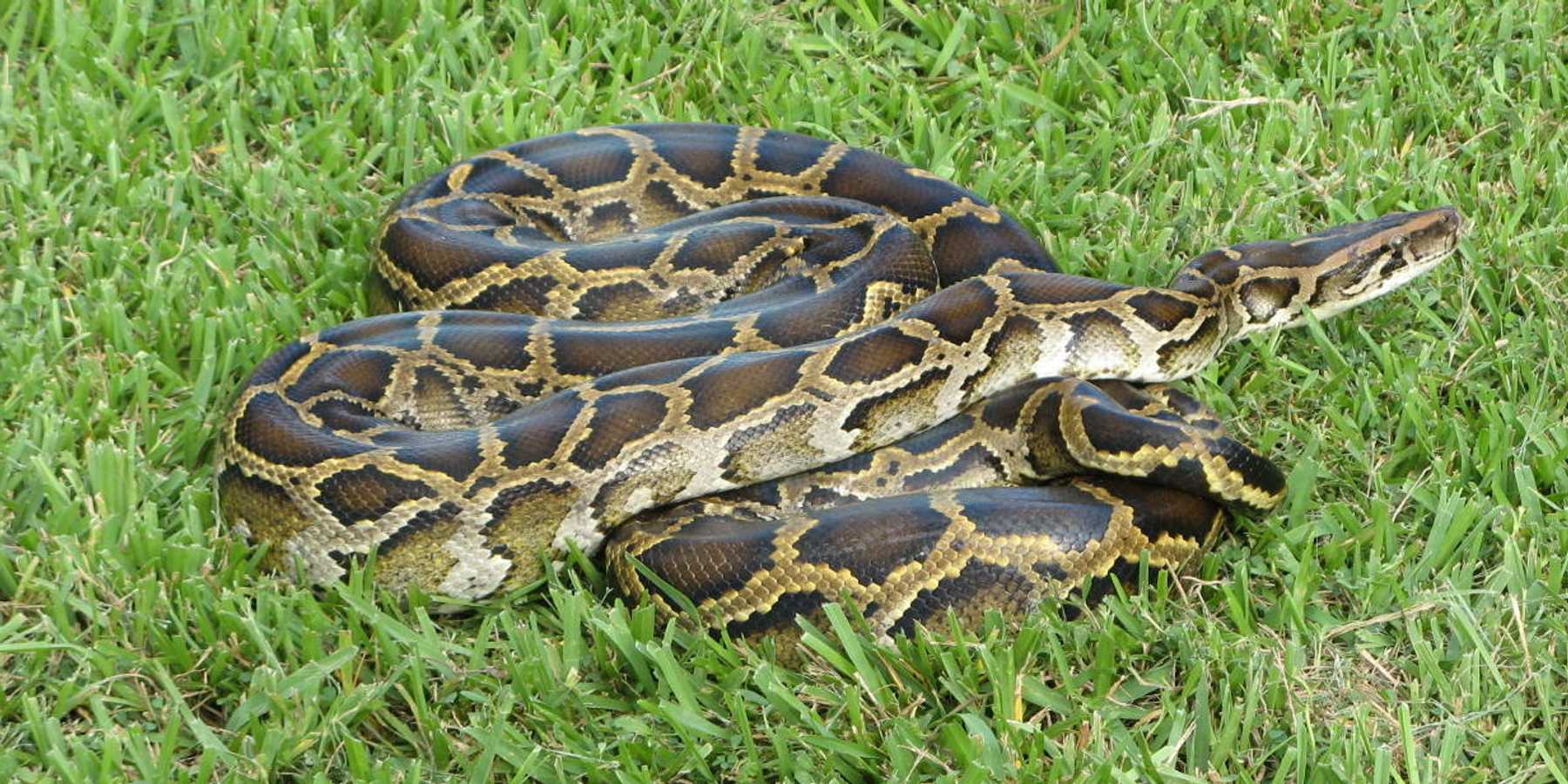
Last week, the Miami Herald reported on Mike Kimmel, a trapper who, for the third time in his career, found himself saving a gator from the grips of the new king, a Burmese Python. While neither was the biggest of its species, the 10-foot snake was constricting the four-foot gator in a pinnacle example of reptile-on-reptile violence.
The rise of the pythons in south Florida is not a new story. When it dawns upon exotic pet owners that a two-or-three-foot baby snake inevitably becomes a 16-foot adolescent snake, they lose interest, and, rather than face the daunting task of flushing a 16-foot snake down the toilet, they liberate it in the Everglades.
Wildlife biologists estimate that the released pythons and their spawn now number in the tens of thousands, or maybe the hundreds of thousands, nobody knows. And pythons, not the gators, now rule.
Screenplay writers take note: Invasive wildlife stories now abound. Asian carp are in several Midwest river systems, out-eating native fish while displaying a Three Stooges-like behavior. The sound of boat engines in the water makes them crazy, with fish up to 20 pounds breaching out of the water and occasionally hitting a fisherman or reporter upside the head. A frenetic, costly effort is underway to keep the fish out of the Great Lakes.
Lionfish are exotically beautiful creatures with poisonous spines. More dignified than a breaching Asian carp, the lionfish are simply devouring their way from their native Asia to the Caribbean and up the U.S. Atlantic coast.
Armadillos, while hardly a threat to anything, have set a steady course from Mexico to what some biologists think will eventually include Washington DC as a northernmost extent of their range.
Why aren't they asked to help pay for the Wall?
Exceptions that prove the rule
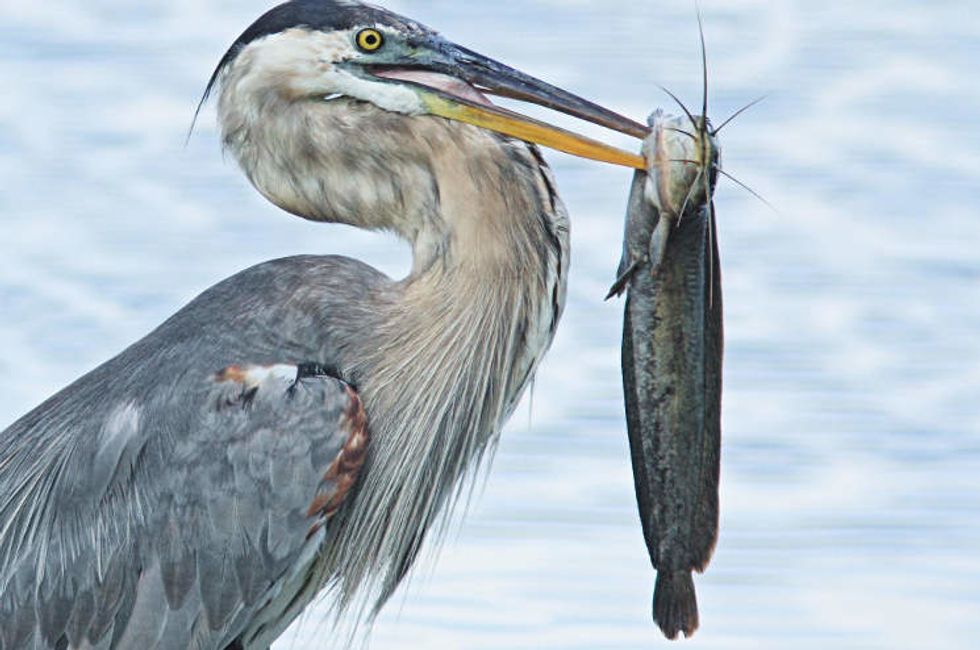
Great Blue Heron with Walking Catfish. (Credit: Kenneth Cole Schneider/flickr)
At least three feared-and-loathed invasive species have underperformed their fierce reputations. Africanized "killer bees" were predicted to overwhelm their more docile cousins, bringing lethal stinging swarms northward from Mexico. Alas, the bees only killed as a recurring Saturday Night Live skit.
Similarly, walking catfish, like the pythons imported to Florida from Southeast Asia, were feared to walk on their stubby pectoral fins, colonizing pond after pond. Hasn't happened. Neither have we been overrun by snakeheads, another Asian import.
And finally, the brown tree snake, native of Indonesia, colonized Pacific islands courtesy of World War II-era troop and cargo ships. In Guam the snakes wiped out every bird species on the island.
The mildly venomous, semi-aquatic menaces frequently short out the island's power grid by slithering from line to line. They're the object of a few bizarre reports of slithering out of toilets to bite unsuspecting victims in extremely unfortunate places. Multiple books have been written about the snakes, including Mark Jaffe's And No Birds Sing and Alan Burdick's Out of Eden.
So support your local wildlife. And please dispose of your 16-foot pythons responsibly.
Top Weekend News
Must-read series from the AP's Seth Borenstein & colleagues: What's happened -- or not -- since James Hansen's historic climate change testimony 30 years ago. https://apnews.com/tag/30YearsofWarming
But wait!! There's More! Another multi-story dive into climate change, 30 years after Jim Hansen's historic Senate testimony. From Axios.
Shhhh! There's a potential drinking water crisis at 126 US military bases. Emily Atkin reports for The New Republic.
You know The Onion is satire, right? God deploys 100,000 more mosquitoes to the United States.Fascinating, from The Revelator: Ranking the world's cities by worst light pollution.
Opinion Pieces and Editorials
Houston Chronicle editorial on Scott Pruitt's "Wide-ranging and comic portfolio of petty grifts."
In the New York Times, Justin Gillis looks back at just how right James Hansen was 30 years ago.
Paleobiologist Nick Pyenson on what it means to be as big as a whale. (New York Times)
The Week In Trump
When asked to produce Scott Pruitt's email traffic to those outside EPA, his staff said he's only sent one such email. (Politico)
Congressional Democrats are demanding answers from Interior Secretary Ryan Zinke after the forced transfers and resignations of several senior National Park Service veterans. (AP)
Mark Schliefstein of the New Orleans Times-Picayune reports on how Trump's plans to reorganize government will impact environment-related agencies like the Army Corps of Engineers and the National Marine Fisheries Service.
Podcasts of Note
EHN/Daily Climate Editor Brian Bienkowski on environmental justice, endocrine disruptors, and more
On PRI's Living On Earth, host Steve Curwood and EHN/Daily Climate's Peter Dykstra on Costa Rica's lofty fossil-fuel-free goals and good news on cleaning up the Chesapeake Bay.