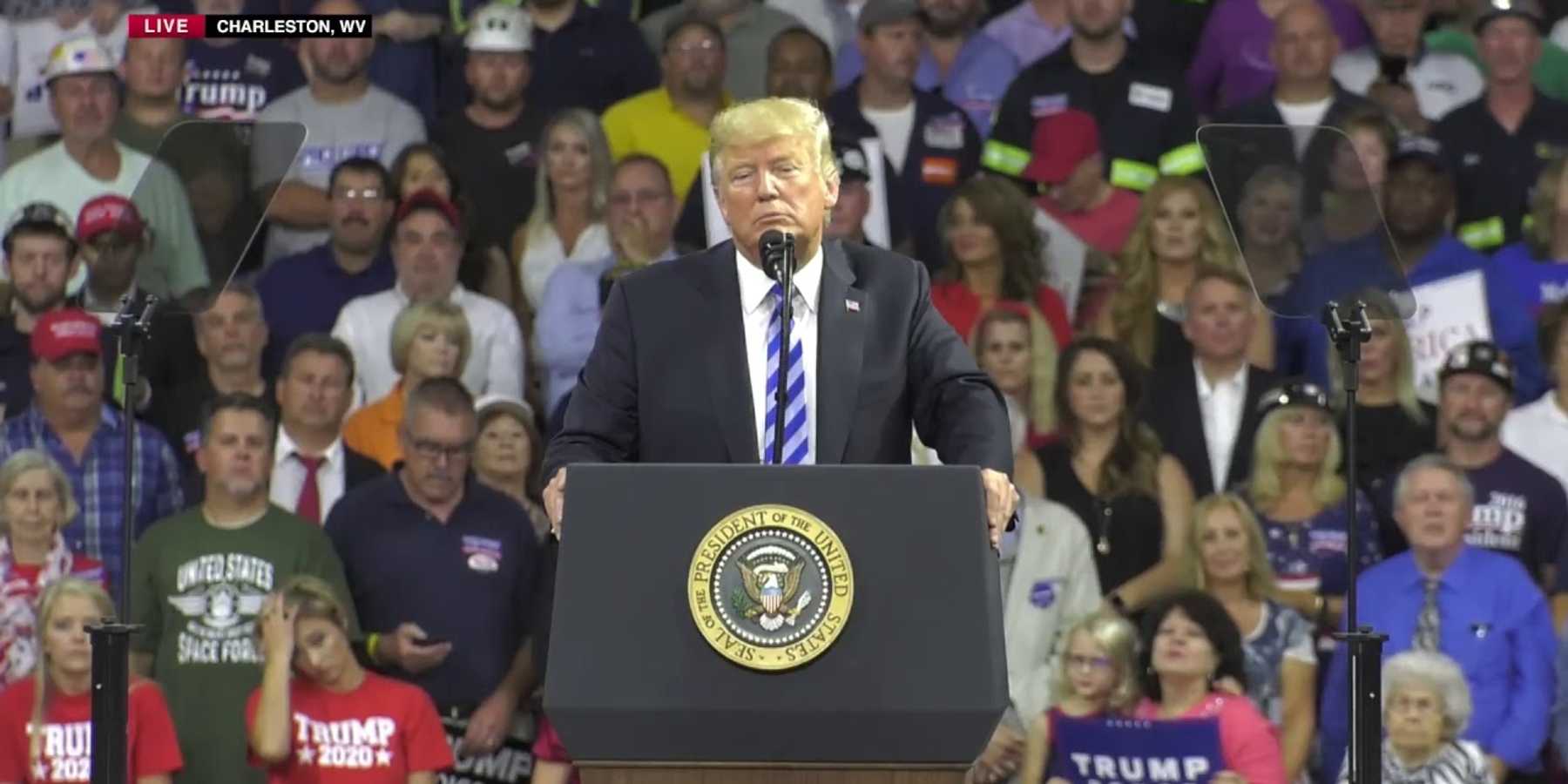
Press reports described the Charleston Civic Center, capacity 13,500, as "packed" as a host of West Virginia politicos took the stage Tuesday in support of the headliner, President Donald Trump.
The crowd booed the Fake News and chanted "Build the Wall" and "Lock Her Up" as though they were Trump's long-lost hits revived at an oldies concert. They cheered his declaration of "No Collusion" despite the fact that two key Trump associates became multi-count felons earlier that day.
But, this being West Virginia, Trump sang a special tune. The President crooned for the Mountain State's heart as if he were an apricot-colored John Denver. Behind him on the podium, a curiously diverse group of supporters held up pre-fab placards about how Trump keeps promises, and how he "Digs Coal." Several wore miners' hardhats, giving the whole thing a bit of a Village People ambience.
Jim Justice, a millionaire coal baron who promptly switched to the GOP after his election as a Democratic Governor in 2016, sang the president's praises. Trump returned the favor by calling the six-foot-seven governor six-foot-eleven, exaggerating the success of the governor's thyroid.
Then Trump got down to the realities of the American Coal industry. In a wartime scenario, he said, windmills can be bombed back to the Stone Age. So, despite their many other blessings, could pipelines. For good measure, he added that "you could do a lot of things to solar panels.'
But coal, "clean, beautiful West Virginia coal," he said, was "indestructible." Coal, its jobs, and West Virginia's economy, were all roaring back.
Take a few minutes to watch the C-SPAN video of the speech. Trump's coal paean begins about four minutes in. Later, he praises Appalachia's "crystal clear water," despite findings that the region's water is some of the most polluted in America.
In June, a leaked National Security Council memo revealed a strategy to prop up economically failing coal and nuclear plants in the name of saving the electrical grid. There were few takers on this novel threat, though.
Related: Past deadline and over budget, nuclear energy is struggling
Hours before Trump's West Virginia rally, Acting EPA Administrator Andrew Wheeler introduced the Affordable Clean Energy Plan, the administration's dramatic rollback of Obama's Clean Power Plan. It would ease the regulatory burden on coal, and punt most of the enforcement power to states hard-pressed to regulate anything. The likely result is that some coal-fired power plants slated to close would limp on for a few years.
Another likely result: 1,400 premature deaths a year by 2030 due to an increase in fine particulate matter that spurs heart and lung disease.
West Virginians were left with two choices: The President's vision of clean, beautiful coal providing West Virginia jobs till Kingdom Come, and the notion of the state as an economically barren hellhole. Which to pick?
Trump's adoring crowd knew the answer. Elsewhere, a few dissenting voices begged to differ. Nick Mullins, a fifth-generation miner, told the New York Times in a video op-ed that the industry isn't coming back. Period.
Coal stocks scraped bottom in 2016, and have since bounced back an average of 26 percent. Some closed Appalachian mines have re-opened, and there has been a slight rise in mining jobs since 2016. But the prevailing economic view is that the industry's brief growth spasms are a prelude to its slow death.
Forest fantasy
Credit: USFS
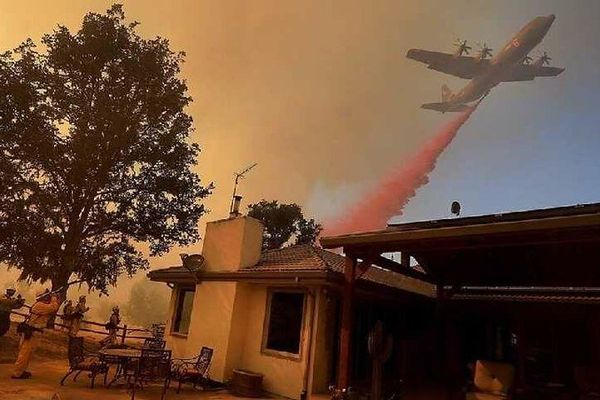
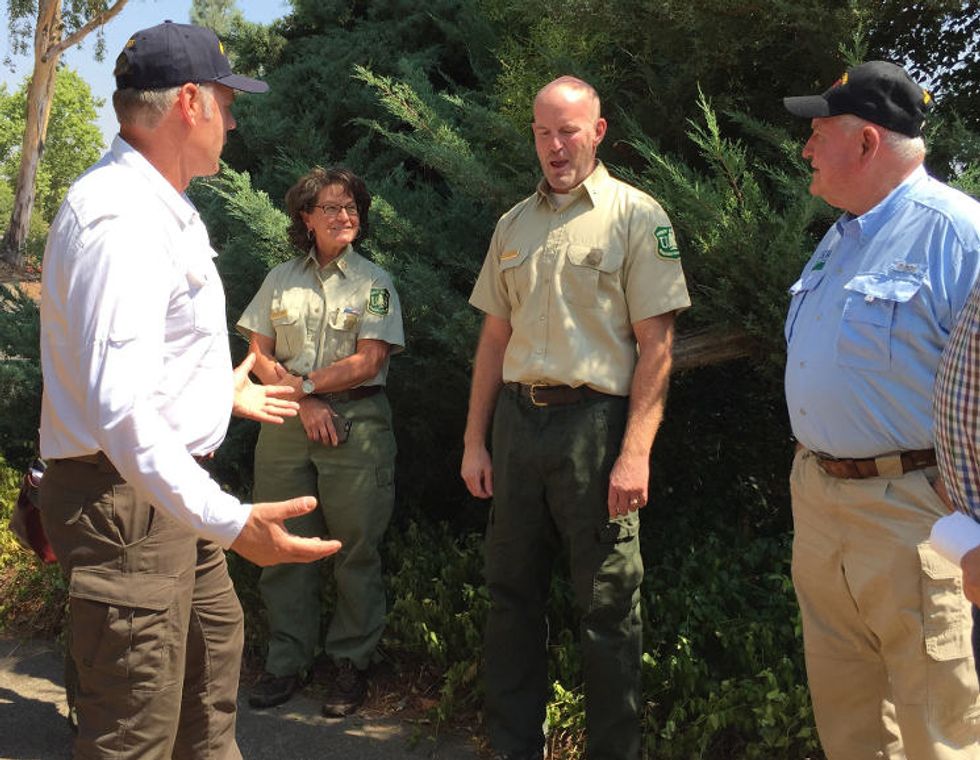
The president wasn't the only administration bigwig diving deeply into fantasy recently. In an interview with the conservative website Breitbart, Interior Secretary Ryan Zinke said terrorism had a hand in the recent wildfire outbreaks in the West.
"We have been held hostage by these environmental terrorist groups that have not allowed public access — that have refused to allow [the] harvest of timber," Zinke told Breitbart.
"Eco-terrorism" is not a new concept. Zinke went there, but in a different sense than it's been used, or imagined, in the past. In the 1980's and 1990's some applied the T-word to tree-spikers from Earth First! or animal rights activists who specialized in property damage, like burning down fur farms and releasing minks to a wilderness that the animals had never experienced. Grist's Kate Yoder took a dive into the history of the eco-terror canard this week.
So there you have it: Trump feeds an empty promise to a region desperate to hear it; Zinke draws a bright terrorism line connecting the Wilderness Society to ISIS.
Like climate denial, this stuff has an irrational durability among those who are eager believers. Just like Hillary's prison stretch, draining the swamp, and the Mexican-funded border wall, they are myths that will be hard to defeat with facts.