Government climate data quietly removed as Trump administration reshapes policy

Since Donald Trump returned to office, thousands of federal climate and environmental data sets have been deleted or altered, raising concerns about transparency and public access to critical information.

Nicola Jones reports for Yale Environment 360.


In short:

  • Around 2,000 records have disappeared from Data.gov since January, including tools tracking climate risks and environmental justice concerns.
  • The Biden-era Climate and Economic Justice Screening Tool and the EPA’s EJScreen were quickly removed, but researchers managed to preserve copies.
  • Legal challenges are emerging, with groups suing federal agencies to restore missing public health and climate resources.

Key quote:

“When you start taking down this information, changing how issues are described and doing so in misleading ways, really, what it is, is censorship and propaganda.”

— Eric Nost, geographer, University of Guelph

Why this matters:

The restriction of public access to government environmental data has far-reaching consequences, affecting scientists, policymakers, and communities alike. Without open access to records on pollution levels, climate trends, and public health risks, it becomes much harder to track environmental hazards and plan for their impacts.

For marginalized communities — often the most vulnerable to pollution and climate change — the loss of accessible data makes it more difficult to advocate for protections and hold industries or agencies accountable. While some information may still exist within government databases, the reduction of public availability raises concerns about transparency and oversight. Scientists warn that limiting access to climate and pollution data could slow research and policy efforts aimed at addressing environmental crises. Meanwhile, environmental advocates argue that such moves undermine the public’s right to know about risks that affect air, water, and overall well-being.

Related: Farmers take legal action over removal of climate data from USDA websites

Solar panels, wind turbines, and large battery containers for energy storage
Credit: Malp/Big Stock Photo

Trump dismantles programs designed to cut electricity demand

Federal energy efficiency programs that once enjoyed bipartisan support are disappearing as data centers ramp up power consumption.
Marina Silva speaking with reporters
Photo credit: Marina Silva https://www.flickr.com/photos/marina-silva/ Creative commons: https://creativecommons.org/licenses/by/2.0/

Opinion: ‘The dinosaurs didn’t know what was coming, but we do’: Marina Silva on what needs to follow Cop30

Exclusive: Brazil’s environment minister talks about climate inaction and the course we have to plot to save ourselves and the planet.

A pair of old gas pumps—one white, one red—juxtaposed side-by-side
Photo by Jim Witkowski on Unsplash

Trump expected to significantly weaken fuel economy rules

Executives from top automakers were invited to attend the announcement at the White House on Wednesday.
Two construction workers on a hot roof
Credit: JSB Co.For Unsplash+

New analysis provides more evidence that heat standards save lives

As the Trump administration is expected to finalize a standard to prevent heat-related injury and illness for workers by early next year, a new study shows that clear, comprehensive rules save lives.
A row of gas meters mounted on outside of building
Credit: Photo by Doris Morgan on Unsplash

Colorado mandates ambitious emissions cuts for its gas utilities

Resisting industry pressure, regulators ordered a 41% emissions reduction by 2035 — a move that supports Colorado’s climate goals and could guide other states.

Women riding on back of rescue worker in flooded street outside home
Photo credit: Texas National Guard; https://www.flickr.com/photos/thenationalguard/ (Photo by 1Lt. Zachary West, 100th MPAD) Creative commons https://creativecommons.org/licenses/by/2.0/

Kerr County was among dozens of Texas communities to turn down state flood money, saying it wasn’t enough

Texas earmarked $1.4 billion to help fund flood prevention projects. But after learning that so many communities turned down the money, two lawmakers who approved the program acknowledged it was flawed.
An illustration with green grass and 'H2' hovering above the ground

Germany's green hydrogen industry is running out of time

Germany’s green hydrogen sector is struggling to scale up as demand remains far below expectations, leaving manufacturers with excess capacity and mounting financial strain.

From our Newsroom
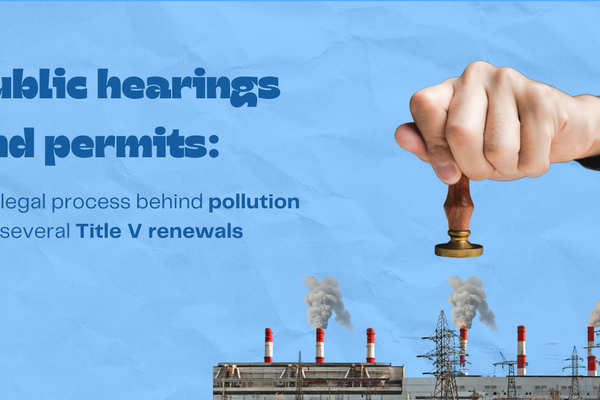
Multiple Houston-area oil and gas facilities that have violated pollution laws are seeking permit renewals

Multiple Houston-area oil and gas facilities that have violated pollution laws are seeking permit renewals

One facility has emitted cancer-causing chemicals into waterways at levels up to 520% higher than legal limits.

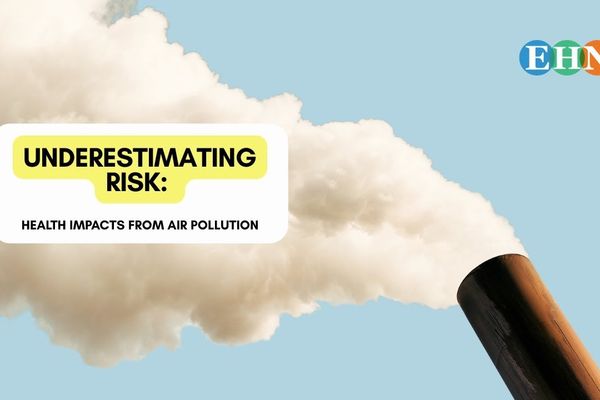
Regulators are underestimating health impacts from air pollution: Study

Regulators are underestimating health impacts from air pollution: Study

"The reality is, we are not exposed to one chemical at a time.”

Pennsylvania governor Josh Shapiro speaks with the state flag and American flag behind him.

Two years into his term, has Gov. Shapiro kept his promises to regulate Pennsylvania’s fracking industry?

A new report assesses the administration’s progress and makes new recommendations

silhouette of people holding hands by a lake at sunset

An open letter from EPA staff to the American public

“We cannot stand by and allow this to happen. We need to hold this administration accountable.”

wildfire retardants being sprayed by plane

New evidence links heavy metal pollution with wildfire retardants

“The chemical black box” that blankets wildfire-impacted areas is increasingly under scrutiny.

Stay informed: sign up for The Daily Climate newsletter
Top news on climate impacts, solutions, politics, drivers. Delivered to your inbox week days.