Environmentalists are challenging the EPA’s repeal of the “endangerment finding,” which empowered it to regulate greenhouse gases. Whether or not the action holds up in court, now is the time to develop climate strategies that can be pursued when the political balance shifts.
Opinion
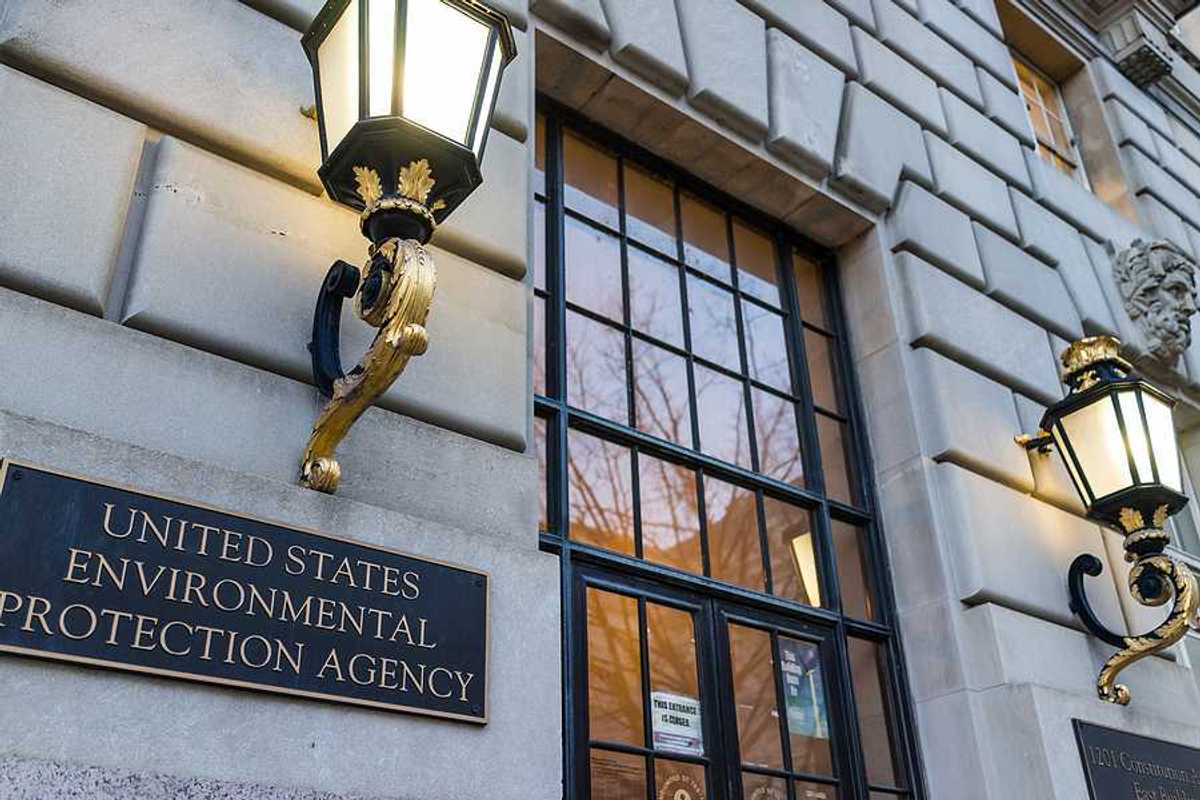

Opinion: Trump’s EPA wants us to cover our eyes
24 February
On climate policy, the Trump administration is willfully burying its head in the sand. It’s crucial newsrooms don’t follow.
The U.S. Environmental Protection Agency's climate rollback comes just as Wisconsin communities, farms and businesses invest in clean energy and resilient infrastructure.
It took an FOI request to bring this national security assessment to light. For ‘doomsayers’ like us, it is the ultimate vindication, says Guardian columnist George Monbiot.
New disclosures reveal that China’s planned super-dam on the Yarlung Tsangpo — the world’s highest-altitude major river, better known as the Brahmaputra — is not a single structure. Rather, it is a a vast, tunnel-linked hydropower and water-diversion complex, spanning roughly 150 kilometers through the Himalayas.
Venezuela became a target. That’s bad for the climate. And for Canada.
Construction generates between 10 and 20 per cent of the world's greenhouse gas emissions, but cities can slash their climate impact by designing buildings in a more efficient way.
This is the latest in the relentless purge of climate researchers who refuse to be co-opted by the fossil fuel industry.
Exclusive: Brazil’s environment minister talks about climate inaction and the course we have to plot to save ourselves and the planet.
As Australians face a maelstrom of interconnected disasters, the climate catastrophe has become just one of many things to doomscroll about

An open letter from EPA staff to the American public
20 March 2025
Editor’s note: This op-ed was written by a group of current and former employees of the U.S. Environmental Protection Agency (EPA), who have asked to remain anonymous due to concerns about retaliation.
The Trump administration is making accusations of fraud, waste, and abuse associated with federal environmental justice programs under the Inflation Reduction Act (IRA) as justification for firing federal workers and defunding critical environmental programs. But the real waste, fraud, and abuse would be to strip away these funds from the American people.
As current and former employees at the U.S. Environmental Protection Agency (EPA) who developed and implemented the agency’s environmental justice funding and grant programs, we want to offer our first-hand insights about the efficiency and importance of this work. This is not about defending our paychecks. This is about protecting the health of our communities.
IRA funding is often described as a “once-in-a-generation investment,” putting billions of dollars toward improving the lives of American families in red, blue, and purple states. Working with communities, we’ve been placing these resources directly into their hands, supporting people to better protect the air we breathe, the water we drink, and the land where we live, learn, work, play, and grow — including key protections from natural disasters.
As civil servants, we took an oath to protect and invest in the American public. We are committed to providing effective programs and being responsible stewards of taxpayer dollars, and there are many policies in place to ensure our accountability. But despite our careful planning and oversight, the new administration is halting programs Americans depend on for their health and wellbeing.
We should work together to demand that the Trump administration restore this critical funding back to the people.
The risks of losing a once-in-a-generation investment
The Bush administration introduced environmental equity (and justice) programming to the EPA in the 1990s. EPA staff working on environmental justice programs partnered with communities to meet their needs and used rigorous systems to track funds and results.
The Trump administration recently paused many of these environmental justice programs that fund community-led projects like air, water, and soil testing; training and workforce development; construction or cleanup projects; gardens and tree planting; and preparing and responding to natural disasters. Other examples of the EPA’s environmental justice programs include providing safe shelters during and after hurricanes, land cleanups to reduce communities’ exposure to harmful pollutants, and providing water filters to protect residents from lead in drinking water.
This administration has halted funds, claiming “the objectives of the awards are no longer consistent with EPA funding priorities.” In reality, these funds were approved by Congress, and these grants remain in alignment with the agency’s mission to protect human health and the environment. Even though there are court orders to unfreeze billions of dollars in federal grants, the Trump administration continues to withhold this critical money from the people who need it most.
We cannot stand by and allow this to happen. We need to hold this administration accountable to serving the American people, applying the same mandates that we have held our federal workforce and grant recipients to: follow the law, follow the science, and be transparent.
Terminating the EPA’s environmental justice programs is hurting our communities and the economy

Credit: Ellie Storms/Unsplash
Some grant recipients who have lost access to EPA funding had already been working for more than a year on projects that must now be paused. Many recipients have hired local employees and made commitments in their communities.
Now that funds are being pulled back, these organizations have had to lay off staff, pause local contracts with private companies and small businesses, and shut down community-driven projects. These attacks will impact the integrity of programs funded by our hard-earned tax dollars and take money away from communities across the country.
By withholding promised funding and terminating existing contracts, the Trump administration is exposing the EPA to increased risks of litigation. Relationships that were built through years of meaningful engagement between communities and the federal government are being jeopardized. Organizations, institutions, and companies will likely shy away from future federal grant or contracting opportunities because no one wants to work with someone who doesn’t pay their bills and backs out on their promises.
It is a waste of taxpayer dollars for the U.S. Government to cancel its agreements with grantees and contractors. It is fraud for the U.S. Government to delay payments for services already received. And it is an abuse of power for the Trump administration to block the IRA laws that were mandated by Congress.
How to take action to restore funding to the American people
It can feel impossible to keep up with the news right now, but this story touches all of us. We should pay attention to what’s going on in our communities and find ways to stay engaged, like attending town halls to hear about the local impacts of federal policies and making your voice heard.
If you are interested in advocating for the return of federal funding to the American people, we urge you to:
- Advocate for funding to be restored in your community. Take part in local town hall and other events in your area to advocate for federal funding to be returned to the people. Make your voice heard and claim your right to clean water, clean air, and a safe environment.
- Learn how the EPA’s environmental justice programs are investing in your state, city, or community. View this environmental justice grants map to see where IRA dollars and funding from the EPA’s environmental justice programs were invested.
- Learn how federal cuts are impacting your communities. Stay tuned to view a Federal Cuts Tracker Map (we’ll add a link here when it’s live) to read and share stories about how federal cuts are currently impacting your communities.
- Share on social media. Share our story or similar news stories on social media with #federalfundingfreeze, #federalcuts, or #truthtopower.
Keep reading...Show less
Nicholas Kristof: Climate change’s overlooked impacts on daily life
18 September 2024
Rising global temperatures are quietly affecting human health, education, and behavior, not just fueling apocalyptic scenarios.
In short:
- Extreme heat is linked to more accidents, suicides, and violent crimes, as well as worse academic performance.
- Wildfires, exacerbated by climate change, are causing widespread air pollution, leading to thousands of premature deaths yearly.
- Rising temperatures disproportionately affect disadvantaged groups, worsening inequality in education and health.
Key quote:
“The familiar climate catastrophe framing may be missing some of the most important features of the real climate change story.”
— R. Jisung Park, economist at the University of Pennsylvania
Why this matters:
Climate change’s incremental effects are already taking a toll on human well-being. Focusing solely on catastrophic outcomes risks overlooking the current, tangible harm caused by even modest warming, especially among vulnerable populations.
Keep reading...Show less
Republicans’ growing distrust in science is a danger to public health
12 September 2024
A widening political divide shows Republicans increasingly losing faith in science, raising concerns about the public health impacts of this skepticism, especially as misinformation about vaccines and climate change spreads.
In short:
- Republican distrust in science has surged from 14% in 2020 to 38% in 2023, while Democrats’ confidence has remained relatively stable.
- Misinformation, amplified during the COVID-19 pandemic, has fueled skepticism of vaccines, climate change, and public health measures.
- Political identity, particularly within the MAGA movement, plays a crucial role in shaping these views, exacerbating the partisan gap.
Key quote:
“Americans died because they had read or heard that mRNA vaccines were more dangerous than a bout of Covid.”
— Matthew Dallek, political historian at George Washington University
Why this matters:
Science should be society’s best way of understanding the world, not a pawn in our political battles. The more we politicize it, the more we open the door for denialism to creep in, leaving us all worse off—environmentally and in terms of public health. Read more: America re-discovers anti-science in its midst.
Keep reading...Show less
Reimagining energy: The rise of free solar power
29 August 2024
A solar revolution is underway, with experts predicting that by 2030, solar power could be effectively free during daylight hours in many regions.
In short:
- Solar energy capacity saw an 80% increase in 2023, now providing nearly 6% of global electricity, with expectations to become the dominant source by the 2030s.
- The cost of solar panels has dropped dramatically, making solar the cheapest new electricity source for 95% of the world.
- The future may bring industries that adjust operations based on solar availability, with a growing focus on energy storage and transmission.
Key quote:
“The next tenfold increase will be equivalent to multiplying the world’s entire fleet of nuclear reactors by eight in less than the time it typically takes to build just a single one of them.”
— The Economist
Why this matters:
With fewer fossil fuels being burned, we could see a dramatic drop in pollution-related illnesses, cleaner air, and a significant cut in carbon emissions. The challenge now is to figure out how to harness this potential. Read more: Solving the climate crisis requires more than switching to renewables—everyone needs equal access.
Keep reading...Show less
The Department of Health and Human Services' focus on climate resilience is insufficient to address the extensive health impacts of climate change.
In short:
- The HHS Climate Action Plan emphasizes resilience without adequately addressing prevention.
- Resilience policies overlook the pervasive and constant health threats posed by climate change.
- The approach may lead to accepting climate disasters as inevitable, rather than preventable.
Key quote:
"Resilience is the categorical imperative of business-as-usual; it is crisis managers buying time. For others, resilience is exhausting."
— Ajay Singh Chaudhary, author of The Exhausted of the Earth.
Why this matters:
Focusing solely on resilience without prevention leaves populations, especially the vulnerable, in perpetual danger. This approach risks normalizing climate disasters instead of aiming to mitigate them.
Relevant EHN coverage:
Keep reading...Show less
As electricity demand spikes, a shift from traditional fossil fuel plants to renewable energy sources is critical to avoid compromising U.S. climate objectives.
In short:
- Utilities like Duke Energy plan to build more gas-fired plants to meet rising electricity needs driven by digitalization and electric vehicles.
- Innovative solutions such as virtual power plants and enhanced energy efficiency could meet these demands more sustainably.
- Changes in regulatory frameworks are being tested to incentivize utilities to invest in green technologies.
Key quote:
"We need to electrify everything from cars to appliances to slow climate change, but we won’t be able to reach our climate goals if we power all of those machines with dirty energy."
— Jonathan Mingle, independent journalist and the author of “Gaslight: The Atlantic Coast Pipeline and the Fight for America’s Energy Future”
Why this matters:
As demand for electricity increases, the adoption of sustainable practices and regulatory changes could significantly reduce carbon emissions and foster an equitable, modern electric grid.
Keep reading...Show less
Opinion: European court's climate ruling holds lessons for action on plastic pollution
24 April 2024
A recent landmark decision by the European Court of Human Rights held Switzerland accountable for inadequate climate policies, specifically highlighting the increased risk of heatwave-related deaths among older women. Plastic production is another case where governments have failed to protect vulnerable groups.
In short:
- The climate case focused on collective rights to a healthy environment.
- The ruling opens avenues for future legal actions against governments for failing to protect public health against environmental hazards.
- Plastic production, involving hazardous chemicals, represents a similar negligence, affecting reproductive health and increasing disease risks.
Key quote:
"This...decision is about the right of groups of people to enjoy a 'healthy environment'."
— Sian Sutherland, co-founder of A Plastic Planet
Why this matters:
The climate case underscores the legal leverage that groups can use against governments that neglect environmental health policies. As negotiators meet in Ottawa this week to move toward agreement on a binding agreement to control plastic pollution, it's a timely message. Here's what to know about the fourth round of plastic treaty talks.
Keep reading...Show less
We need to rethink the effectiveness of focusing solely on decarbonization to achieve true sustainability.
In short:
- Technological solutions like decarbonization might not address the deeper social and political issues affecting environmental sustainability.
- Emphasis on reducing carbon emissions often overshadows other environmental concerns such as biodiversity loss and pollution.
- The current strategy of reducing emissions through technological means may neglect the underlying economic and political factors contributing to environmental degradation.
Key quote:
"Technology can, at best, kick conflicts down the road. Peace cannot be engineered."
— Peter Sutoris, environmental anthropologist
Why this matters:
Relying solely on decarbonization to achieve sustainability overlooks several critical aspects of environmental and societal health. Decarbonization primarily focuses on reducing carbon emissions, particularly from energy production and industrial processes, which is undoubtedly essential. However, sustainability is a broader concept that includes economic, social, and environmental balance.
Keep reading...Show less
Journalism that drives the discussion
Copyright © 2017 Environmental Health Sciences. All rights reserved.