
automobile_trucks


China is winning the future. Here’s how.
When it comes to clean energy, the United States is falling behind a country that the president loves to hate.
This week, the front page of the New York Times described the Trump administration’s repeal of the Clean Power Plan, the Obama administration’s attempt to slash carbon emissions from coal-fired power plants. “The war on coal is over,” declared Environmental Protection Agency Administrator Scott Pruitt. Right under that article was an article from halfway around the world detailing China’s massive new investment in electric vehicles, part of Beijing’s determination to dominate the era of clean-energy technology. It is a tale of two strategies.
The Trump administration has decided to move into a new century: the 19th century. Coal has been in decline for at least seven decades. In 1950, it accounted for half of all U.S. electricity generation. It is now down to a third. Additionally, massive automation of mining has meant that the jobs in the industry are disappearing, down from 176,000 in 1985 to 50,000 in 2017. Machines and software are replacing coal miners just as surely as in other industries. Demand for coal is weak because of alternatives, chiefly natural gas. In the past couple of years, many of the top American coal companies have been forced to declare bankruptcy, including the largest, Peabody Energy.
Despite President Trump’s policy shift, these trends are unlikely to change. Reuters found that, of 32 utilities in the 26 states that filed lawsuits over the Clean Power Plan, “the bulk of them have no plans to alter their multi-billion dollar, years-long shift away from coal.” The reason utilities are shedding coal is economics — the price of natural gas has plummeted in recent years, and its share of U.S. electricity generation has nearly tripled since 1990. In addition, costs are falling dramatically for wind and solar energy.
And, of course, coal is the dirtiest form of energy in use. Coal-fired power plants are one of the nation’s leading sources of carbon-dioxide emissions, and most scientists agree those emissions lead to global warming. They also cause terrible air pollution, with all its attendant health problems and costs.
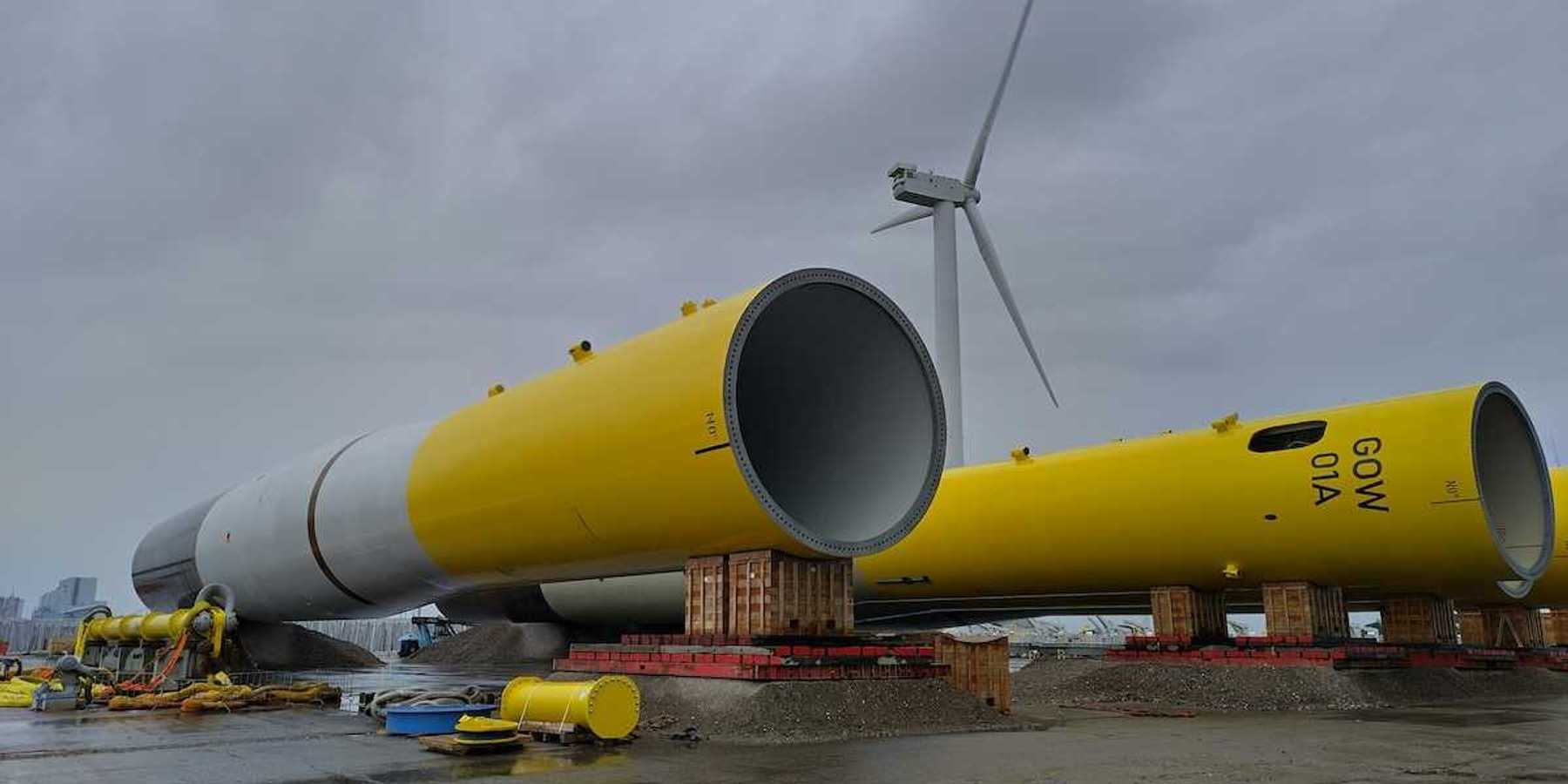
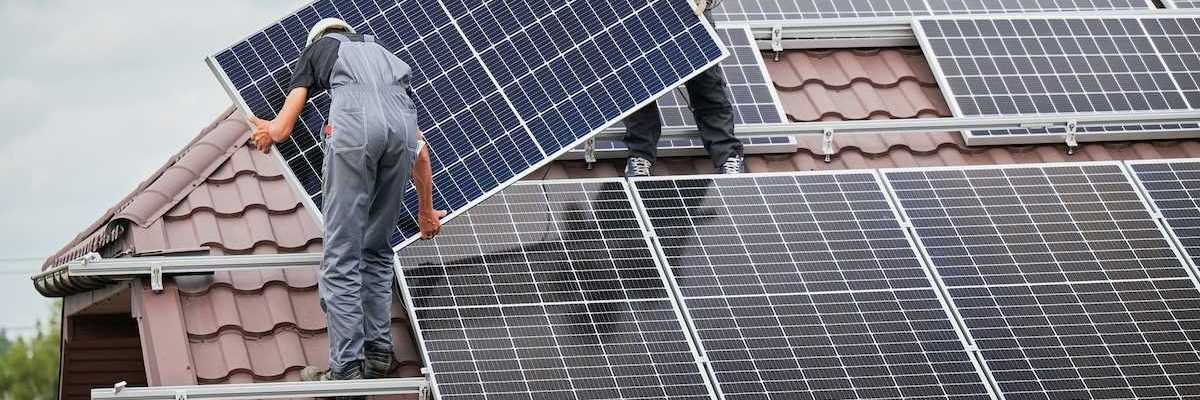
That’s one of the reasons China, which suffers more than a million deaths a year because of poor air quality, is making huge investments in clean energy. The country has become one of the world’s leading producers of wind turbines and solar panels, with government subsidies enabling its companies to become cost-efficient and global in their aspirations. In 2015, China was home to the world’s top wind-turbine maker and the top two solar-panel manufacturers. According to a recent report from the United Nations, China invested $78.3 billion in renewable energy last year — almost twice as much as the United States.
Now Beijing is making a push into electric cars, hoping to dominate what it believes will be the transport industry of the future. Already China has taken a large lead in electric cars. In 2016, more than twice as many were sold in China as in the United States, an astonishing catch-up for a country that had almost no such technologies 10 years ago. China’s leaders have let it be known that by 2025 they want 20 percent of all new cars sold in China to be powered by alternative fuels. All of this has already translated into jobs, “big league” as President Trump might say: 3.6 million people are already working in the renewable-energy sector in China, compared with 777,000 in the United States.
China is still heavily reliant on coal, which it has in plentiful supply, and it has tried to find steady sources of other fossil fuels. It went on a shopping spree over the past two decades, making deals for natural resources and energy around the world, often paying at the peak of the commodities bubble in the mid-2000s. But over time, it recognized that this mercantilism was a bad strategy, tying Beijing up with expensive projects in unstable countries in Africa. Instead, it watched and learned from the United States as technological revolutions dramatically increased the supply and lowered the cost of natural gas and solar energy. China has now decided to put a much larger emphasis on this route to energy security, one that also ensures it will be the world’s leading producer of clean energy.
Trump has often talked about how China is “killing us ” and that he’s tired of hearing about China’s huge growth numbers. He should notice that Beijing is getting its growth by focusing on the future, the next areas of growth in economics and technology. The United States under Trump will be engaged in a futile and quixotic quest to revive the industries of the past. Who do you think will win?
Keep reading...Show less
Drilling in the Arctic Wildlife Refuge: How the GOP could finally break the impasse.
The prospects for opening the Arctic National Wildlife Refuge to oil and gas exploration are better than they have been in years.
The Trump administration and congressional Republicans in recent weeks have renewed the fight over opening part of an enormous wildlife refuge in northern Alaska to oil and gas exploration.
The battle over the Arctic National Wildlife Refuge, which pits Republicans in Washington and much of the political and business establishment in Alaska against congressional Democrats and environmental and conservation groups, has been going on for decades. With Republicans holding both houses of Congress and the presidency, the prospects for opening the refuge, at least to studies of its oil and gas potential, are better than they have been in years. And a budget resolution introduced late last month, and supported by Senator Lisa Murkowski of Alaska, may help pave the way.
“There seems to be a decent opportunity to get this done,” said Thomas J. Pyle, president of the Institute for Energy Research, which promotes fossil fuels.
Here’s a look at what is happening and why, and what is at stake.
What is the refuge?
The Arctic National Wildlife Refuge consists of about 19 million acres of pristine land in northeastern Alaska. Much of the acreage was first set aside in 1960 under President Dwight D. Eisenhower; the full refuge, which is about the size of South Carolina, was established through a congressional act in 1980. About 40 percent of the land, mostly in the Brooks Range, is designated as wilderness, to remain undeveloped with no human settlement.
The refuge, one of the largest in the United States, is the nesting place for several hundred species of migratory birds; home to wolves, polar bears, caribou and other mammals; and spawning grounds for Dolly Varden trout and other fish.
“I can say definitively that it is a national treasure,” said Nicole Whittington-Evans, Alaska regional director of the Wilderness Society.
There is private land within the refuge, including the Inupiat village of Kaktovik, A Gwich’in community, Arctic Village, is just outside the refuge. Outdoor activities, including hunting, are allowed, but there are no roads or facilities except in Kaktovik.
Why might drilling for oil and gas be allowed there?
When Congress established the refuge in 1980, it deferred action on the issue of whether oil and gas exploration should be allowed in part of it: 1.5 million acres of coastal plain between the Brooks Range and the Beaufort Sea. This land came to be called the “1002 area,” after the part of the act that refers to it, and it was thought likely to contain a lot of oil because it was not far from Prudhoe Bay and other parts of the North Slope where large oil fields had been discovered beginning in the 1960s.
But the 1002 area is also a critical habitat for much of the refuge’s wildlife. Polar bears make dens there, and it is where most of the huge Porcupine caribou herd — 200,000 animals in all — come in spring and early summer to calve and forage for food.
The 1980 act allowed for studies to determine the potential for oil and gas development in the 1002 area. In 1984 and 1985, a consortium of oil companies undertook seismic studies, in which special trucks “thumped” the ground and the reflected sound waves provided details about rock formations and potential oil and gas reserves in them. A 1998 assessment by the United States Geological Survey that relied in part on those seismic studies estimated that the 1002 area contained 4 billion to 12 billion barrels of recoverable oil. (The North Slope currently produces about 180 million barrels a year.)
Republicans have long wanted to open the area to drilling, or at least to allow new seismic studies using improved technology to get a clearer picture of where the oil is. Environmental groups say that even studying the land in this way damages it — they say there are still signs of the 1980s seismic work on the landscape — and that the area is too important to wildlife and should remain protected.
Many political leaders and business interests in Alaska favor opening the refuge. Producing more oil and gas would add to state revenues, which have fallen in recent years as North Slope oil production has declined and prices have fallen. Native Alaskans in the region tend to be divided on the issue.
Unlike some other federal lands that can be opened to drilling by Interior Department actions, opening the refuge requires congressional action.
How might drilling be allowed there?
This year, Republicans opened the fight on two fronts. In a memo in August, Interior Department officials proposed changing a rule that had limited exploratory studies in the refuge to the mid-1980s. Under the proposed change, such studies could now be undertaken anytime.
Then, in the past few weeks, Republicans in the Senate introduced a budget resolution that would in effect tie opening the refuge to the budget. The resolution would require the Senate Energy and Natural Resources Committee — headed by Ms. Murkowski, long a drilling proponent — to come up with a plan to generate $1 billion in new revenues over 10 years. A budget resolution introduced in the House in July would require a House committee to come up with a similar plan.
A compromise House-Senate plan, which presumably would involve selling oil and gas leases in the refuge as the way to generate the revenue, would eventually be voted on as part of the budget process. Only simple majorities would be needed for passage. Republicans in the Senate, who hold 52 seats, would not need the 60 votes required to overcome a filibuster.
This approach has been tried before, once during the Clinton administration — when it was vetoed by the president — and in 2005, when opposition from moderate Republicans scuttled the idea.
Senate Democrats immediately announced opposition to the budget move this time, but to block it they would need at least a few Republicans to join them.
The Interior Department’s proposed change to allow new seismic studies would have to go through a public comment period and would likely be challenged in court by environmental groups.
What would the impact be?
There is no certainty that oil companies would rush to study or further explore the potential for oil and gas production in the refuge, especially with oil prices, currently about $50 a barrel, far lower than they were earlier this decade. Shell pulled out of plans to drill for oil in Arctic waters off Alaska two years ago, citing high costs and other factors.
Mr. Pyle said there were many issues, including oil prices and production costs, that companies would have to consider before deciding to proceed in the refuge. But, he said, “the economics work better on land than offshore.”
If the refuge were opened, the first step would be to conduct new seismic studies, likely using technology that produces three-dimensional images of underground formations. Then, exploratory wells would be drilled; if they proved successful, production wells would follow. How long the process would take would depend on many factors, but one estimate is that oil could be flowing within five years.
Proponents of drilling in the refuge sometimes cite a proposal offered by Republicans more than a decade ago to limit the footprint of oil and gas wells and any related activities to 2,000 acres, just a tiny fraction of the refuge’s 19 million acres. They note that technologies like directional drilling, which allows multiple wells to be drilled outward from one platform, would reduce the overall impact.
But environmental groups say that the 2,000-acre footprint is misleading. Even if the wellheads cover relatively little area, roads, pipelines, facilities for workers and other structures could have a much bigger environmental impact. Among other things, they say, the infrastructure and activity could disturb caribou and lead them to abandon their usual calving sites for less suitable locations outside the 1002 area.
“There is a large and growing segment of the public that really understands there are some places we protect,” said Sarah Greenberger, vice president for conservation at the National Audubon Society. “And there’s a continued sense that this is one of those places.”
Follow @NYTClimate on Twitter
Keep reading...Show less
How a seed bank, almost lost in Syria's war, could help feed a warming planet.
A plant conservationist from Syria and his colleagues are safeguarding seeds that might be crucial when more parts of the world become as hot and arid as the Middle East.
TERBOL, Lebanon — Ali Shehadeh, a seed hunter, opened the folders with the greatest of care. Inside each was a carefully dried and pressed seed pod: a sweet clover from Egypt, a wild wheat found only in northern Syria, an ancient variety of bread wheat. He had thousands of these folders stacked neatly in a windowless office, a precious herbarium, containing seeds foraged from across the hot, arid and increasingly inhospitable region known as the Fertile Crescent, the birthplace of farming.
Mr. Shehadeh is a plant conservationist from Syria. He hunts for the genes contained in the seeds we plant today and what he calls their “wild relatives” from long ago. His goal is to safeguard those seeds that may be hardy enough to feed us in the future, when many more parts of the world could become as hot, arid and inhospitable as it is here. But searching for seeds that can endure the perils of a hotter planet has not been easy. It has thrown Mr. Shehadeh and his organization, the International Center for Agricultural Research in the Dry Areas, or Icarda, squarely at a messy intersection of food, weather and war.
Icarda, though it received no state funding, was once known as a darling of the Syrian government. Based in Aleppo, its research had helped to make Syria enviably self-sufficient in wheat production. But a drive to produce thirsty crops also drained Syria’s underground water over the years, and it was followed by a crippling drought that helped to fuel the protests that erupted into armed revolt against the government in 2011.
Icarda, in turn, became a casualty of the war. By 2014, the fighting drew closer to its headquarters in Aleppo and its sprawling field station in nearby Tal Hadya. Icarda’s trucks were stolen. Generators vanished. Most of the fat-tailed Awassi sheep, bred to produce more milk and require less water, were looted and eaten. Mr. Shehadeh and the other scientists eventually sent out what they could — including a few of the sheep — and fled, joining half the country’s population in exile.
And Icarda’s most vital project — a seed bank containing 155,000 varieties of the region’s main crops, a sort of agricultural archive of the Fertile Crescent — faced extinction.
But the researchers at Icarda had a backup copy. Beginning in 2008, long before the war, Icarda had begun to send seed samples — “accessions” as they are called — to the Svalbard Global Seed Vault, the so-called doomsday vault, burrowed into the side of a mountain on a Norwegian island above the Arctic Circle. It was standard procedure, in case anything happened.
War happened. In 2015, as Aleppo disintegrated, Icarda’s scientists borrowed some of the seeds they had stored in Svalbard and began building anew. This time, they spread out, setting up one seed bank in Morocco and another just across Syria’s border with Lebanon in this vast valley of cypress and grapes known as the Bekaa.
“We are doing our best to recreate everything we had in Aleppo,” Mr. Shehadeh said.
The Aleppo headquarters still contains the largest collection of seeds from across the region — 141,000 varieties of wheat, barley, lentils, fava and the like — though neither Mr. Shehadeh nor his colleagues know what shape it’s in. They haven’t been able to return.
Seed banks have always served as important repositories of biodiversity. But they’re even more crucial, said Tim Benton, a food security expert at the University of Leeds, at a time when the world needs crops that can adapt to the rapid onset of climate change.
“We have to grow considerably different things in considerably different ways,” Mr. Benton said. “Certainly for our prime crops, like wheat, the wild relatives are thought to be really important because of the genes that can be crossed back into the wheat lines we have in order to build resilience and adaptation to climate change.”
Especially important, Mr. Benton said, because they could easily vanish without protection.
How much Syria’s agricultural crisis was to blame for the outbreak of war is debatable. There is little debate, though, about the impact of global warming on the region, which seems certain to make agriculture here extremely precarious.
Temperatures have climbed by at least 0.2 degrees Celsius per decade across the Middle East from 1961 to 1990, and risen by close to 0.4 degrees Celsius in the period since then, according to Andrew Noble, who until recently was Icarda’s deputy director of research.
This summer, in already hot, dry countries like Iraq, temperatures shot up well past 50 degrees Celsius, about 120 degrees Fahrenheit, on some days. Droughts are more intense and more frequent. Where farmers rely entirely on the rains, as they do in most parts of the Middle East, the future of agriculture, Mr. Noble said bluntly, “is pretty bleak.”
This, Mr. Shehadeh says, is why he is obsessed with the wild relatives of the seeds that most farmers plant today. He eschews genetically modified seeds. He wants instead to tap the riches of those wild ancestors, which are often hardy and better adapted to harsh climates. “They’re the good stock,” he said.
He hunts for the genetic traits that he says will be most useful in the future: resistance to pests or blistering winds, or the ability to endure in intensely hot summers. He tries to select for those traits and breeds them into the next generation of seeds — in the very soil and air where they have always been grown.
Wheat is a staple of the Middle Eastern diet, and the Middle East is what Laura Wellesley, a researcher at the London think tank Chatham House, calls the “greatest wheat importing region in the world.” Syria was once the exception, but war has made wheat a potent weapon, and it, too, now imports wheat to feed its citizens who remain.
As summer draws to a close, Mr. Shehadeh’s greenhouses are nearly empty. In one, there are wild barley seeds, normally found in highland pastures, held together in small canvas pouches. In another, there are small pots of clover.
The seeds will soon be taken indoors, dried, bagged, and labeled. Some are for the collection here, contained in a series of walk-in cold storage rooms. Some are for farmers to try out in the fields. One full set of seeds is for Svalbard: Icarda is gradually putting back into the seed bank what it withdrew. In early September, Mr. Shehadeh carried 31 boxes of seeds in the latest shipment to Norway.
Icarda’s entire collection houses seeds that have sustained the people of the Middle East for centuries, including some 14,700 varieties of bread wheat, 32,000 varieties of barley, and nearly 16,000 varieties of chickpea, the key component of falafel. The Lebanon seed bank houses about 39,000 accessions, and Morocco, another 32,000. Most of it is backed up in Svalbard.
In Sudan, Icarda has introduced a wheat variety it hopes will be more resistant to drought and heat. It is breeding a fava bean variety that can withstand a parasitic weed and lentils that can mature in a short growing season.
That’s useful not just for the Middle East, Mr. Noble said. The hot, dry summers that are common to the Middle East may well become familiar to many other parts of the world. “The climates of the future will be similar to the climates we are experiencing,” he said.
Follow @NYTClimate on Twitter
Keep reading...Show less
Paris plans to banish all but electric cars by 2030.
Paris authorities plan to banish all petrol- and diesel-fueled cars from the world’s most visited city by 2030, Paris City Hall said on Thursday.
PARIS (Reuters) - Paris authorities plan to banish all petrol- and diesel-fueled cars from the world’s most visited city by 2030, Paris City Hall said on Thursday.
The move marks an acceleration in plans to wean the country off gas-guzzlers and switch to electric vehicles in a city often obliged to impose temporary bans due to surges in particle pollution in the air.
Paris City Hall said in a statement France had already set a target date of 2040 for an end to cars dependent on fossil fuels and that this required speedier phase-outs in large cities.
“This is about planning for the long term with a strategy that will reduce greenhouse gases,” said Christophe Najdovski, an official responsible for transport policy at the office of Mayor Anne Hidalgo.
“Transport is one of the main greenhouse gas producers...so we are planning an exit from combustion engine vehicles, or fossil-energy vehicles, by 2030,” he told France Info radio.
The French capital, which will host the Olympic Games in the summer of 2024 and was host city for the latest worldwide pact on policies to tame global warming, had already been eyeing an end to diesel cars in the city by the time of the Olympics.
Paris City Hall, already under attack over the establishment of no-car zones, car-free days and fines for drivers who enter the city in cars that are more than 20 years old, said it was not using the word “ban” but rather introducing a feasible deadline by which combustion-engine cars would be phased out.
There are about 32 million household cars in France, where the population is about 66 million, according to 2016 data from the Argus, an automobile industry publication.
Many Parisians do not own cars, relying on extensive public transport systems and, increasingly, fast-burgeoning networks offering bikes, scooters and low-pollution hybrid engine cars for shot-term rental.
The ban on petrol-fueled, or gasoline-engine vehicles as they are known in the United States, marks a radical escalation of anti-pollution policy.
Many other cities in the world are considering similar moves and China, the world’s biggest polluter after the United States, recently announced that it would soon be seeking to get rid of combustion-engine cars too.
Reporting By Brian Love, Editing by Sarah White and Angus MacSwan
Keep reading...Show less
US lawmakers propose making it easier to meet auto fuel rules.
A bipartisan pair of Michigan lawmakers introduced a bill to make it easier for automakers to comply with federal fuel efficiency requirements, as the Trump administration considers softening standards that require nearly doubling the fuel economy of the U.S. new vehicle fleet by 2025.
WASHINGTON (Reuters) - A bipartisan pair of Michigan lawmakers introduced a bill to make it easier for automakers to comply with federal fuel efficiency requirements, as the Trump administration considers softening standards that require nearly doubling the fuel economy of the U.S. new vehicle fleet by 2025.
The proposal, introduced late on Wednesday, would extend the life of fuel economy credits that would currently expire after five years, lift a cap on transferring credits between car and truck fleets and award automakers credits for emissions reductions not measured by existing test procedures.
The measure proposed by Representatives Fred Upton, a Republican, and Debbie Dingell, a Democrat, would also grant an industry wish by requiring that the Environmental Protection Agency and the National Highway Traffic Safety Administration reconcile their respective fuel economy standards so the industry can comply with just one set of rules.
The proposal comes on the heels of a bipartisan measure to create a single federal standard for self-driving cars, also backed by the industry, that is on track to passage.
The Union of Concerned Scientists said the harmonization legislation and a similar bill introduced in the Senate would allow manufacturers to make vehicles that are on average 3 miles a gallon less efficient in 2021.
The group estimated that would result in additional U.S. oil consumption of 350 million barrels of oil, costing drivers $34 billion and an additional 155 million metric
tons of greenhouse gases.
The Alliance of Automobile Manufacturers, a trade group representing General Motors Co, Toyota Motor Corp, Volkswagen AG (VOWG_p.DE) and others, praised the bill for “recognizing the consumer benefits that can come from better alignment of government programs.” The group noted there were significant differences between how the EPA and NHTSA award and allow use of credits.
Last week, automakers told U.S. regulators they should revise fuel efficiency mandates because the standards do not reflect how cheap gas prices are affecting consumer demand. Automakers want changes in the 2021-2025 requirements that would make it easier for them to comply with fuel economy standards.
Former President Barack Obama’s administration finalized rules in 2012 to double the fleetwide average fuel economy to 54.5 miles per gallon by 2025, but the EPA revised the target to 51.4 mpg based on rising truck sales. The Obama administration said the rules would save motorists $1.7 trillion in fuel costs but cost the auto industry about $200 billion over 13 years
Reporting by David Shepardson; Editing by Peter Cooney
Keep reading...Show less
Oxford aims for world’s first zero emissions zone with petrol car ban.
Petrol and diesels vehicles will be banned from Oxford city centre under plans to bring in what officials believe would be the world’s first zero-emissions zone.
Petrol and diesels vehicles will be banned from Oxford city centre under plans to bring in what officials believe would be the world’s first zero-emissions zone.
The proposals aim to slash air pollution in the historic university city, which has seen levels of the harmful pollutant nitrogen dioxide rise above legal limits in some areas.
Under the plans being put out for consultation on Monday, the ban would be introduced in phases, starting with preventing non-zero-emitting taxis, cars, light commercial vehicles and buses from using a small number of streets in 2020.
As vehicle technology develops, the zero-emissions zone will extend to cover all non-electric vehicles, including HGVs, in the whole of the city centre by 2035, according to the joint proposals by Oxford city council and Oxfordshire county council.
The introduction of the zero-emissions zone could see levels of nitrogen dioxide, much of which comes from traffic fumes, particularly diesel engines, fall by up to three-quarters by 2035, the councils said.
Data released by the World Health Organisation last year showed that Oxford was one of 11 British cities to breach the safe limits set for toxic particles known as PM10s. It also breached the limit for PM2.5s.
The city has already won £500,000 of government funding to install charging points for electric taxis, and £800,000 to install 100 electric vehicle charging points for residents, but officials say more will be needed to support the zero-emissions zone. Other schemes being considered to support the zone include reduced parking fees for electric vehicles, electric taxi-only ranks, and electric delivery vehicle-only loading areas.
Councillor John Tanner of Oxford city council said: “Toxic and illegal air pollution in the city centre is damaging the health of Oxford’s residents. A step change is urgently needed; the zero emissions zone is that step change.
“All of us who drive or use petrol or diesel vehicles through Oxford are contributing to the city’s toxic air. Everyone needs to do their bit, from national government and local authorities, to businesses and residents, to end this public health emergency.”
Oxfordshire county council councillor Yvonne Constance said: “We want to hear from everyone who uses the city centre, including businesses, bus and taxi firms and local residents ... Pragmatism will be an important part of anything we plan, but we have set the ambition.”
The mayor of London, Sadiq Khan, called last month for the environment department to amend the Clean Air Act to allow for the creation of zero-emission zones.
Other cities that have tried to introduce measures to tackle vehicle emissions include Madrid, whose city council ordered half of the city’s cars to be banned in 2016, and Oslo, where the authorities eventually backtracked on a plan to ban all private cars in the Norwegian capital.
Keep reading...Show less
Draughty homes targeted in UK climate change masterplan.
Millions of draughty homes in England and Wales will be insulated and overhauled by 2035 to save families as much as £300 a year on their energy bills, under the government’s climate change plans.
Millions of draughty homes in England and Wales will be insulated and overhauled by 2035 to save families as much as £300 a year on their energy bills, under the government’s climate change plans.
The long-delayed blueprint for how the UK will hit its binding target of cutting emissions by 57% by 2032 includes about 50 policies supporting everything from low-carbon power and energy savings to electric vehicles and keeping food waste out of landfill.
Big winners in the 164-page Clean Growth Strategy include offshore windfarm developers, which will be guaranteed a further £550m of subsidies. Experts believe that could more than double the UK’s existing offshore wind capacity.
Energy efficiency for businesses and householders is at the heart of the plan, which the government was required to publish under the Climate Change Act.
There is an aspiration that all houses will be brought up to the minimum of energy band C by 2035, but how that will be achieved is not spelled out. Existing schemes to improve insulation will be extended until 2028.
New nuclear power stations are encouraged, but they will only go ahead if developers can do so at competitive prices. Solar power was given tentative support, while onshore windfarms won partial backing.
The business secretary, Greg Clark, compared the changes under way in energy today to the big changes wrought by the UK’s first coal power station in 1882.
“This government has put clean growth at the heart of its industrial strategy to increase productivity, boost people’s earning power and ensure Britain continues to lead the world in efforts to tackle climate change,” he said, launching the plan at the Olympic Park in east London.
Green campaigners, industry groups and businesses mostly welcomed the plan but said it needed more ambition and lacked detail in some areas.
Robert Gross, the director of the Centre for Energy Policy and Technology at Imperial College London, said the politics of the strategy were key, and showed the greener wings of the Tory party had won out.
“In 2015 the government started hacking and slashing at all manner of green policies. This has stopped, and that’s very welcome,” he said.
Richard Black, the director of the Energy and Climate Intelligence Unit thinktank, echoed that view. He said the strategy showed a “sea change” in “top-line thinking about the low carbon economy”, with Theresa May’s government seeing it as an opportunity rather than a cost as it was viewed under David Cameron.
Claire Perry, the climate minister, said May’s foreword to the plan was important and showed how seriously the government was taking it.
Asked if the strategy showed green-minded Tories were winning out after a slew of climate programmes were axed by the Conservatives in 2015, she said: “This isn’t about factions winning, it’s about getting on with capturing the opportunity [for business].”
She told the Guardian: “This is doubling down on the green ambition, actually saying we see the economic benefit from doing this.”
The minister said there would be a new “triple test” for whether the government backed clean technologies. They would have to maximise the amount emissions come down; show they can become cheaper in the future; and be an area in which the UK could lead the world.
She said a proposed £1.3bn tidal lagoon at Swansea – which an independent government review backed in January but on which government has yet to signal its view – would have to pass that test.
New policies included a green light for onshore windfarms on remote Scottish islands being allowed to compete for subsidies. The move was welcomed by Orkney and companies including SSE, which plans a windfarm on Shetland, jointly owned with the community.
There is also £100m of funding for research on carbon capture and storage (CCS). However, that is a fraction of the £1bn government competition on the technology that was cut two years ago.
The plan is also scant on any detail of how the UK will cut emissions from heating, talking instead of simply exploring the best options. Low-carbon alternatives to gas include electrification via heat pumps, or using greener gases such as hydrogen.
Many of the ideas in the strategy have already been announced, such as phasing out petrol and diesel cars by 2040 and £246m to develop batteries for cars and energy systems.
Despite the wide-ranging policies, the strategy concedes that the UK is still not on track to meet its legally binding carbon targets for the late 2020s and early 2030s. The government noted it had ‘flexibilities’ on meeting the targets under the Climate Change Act, but might not need to use them.
The Committee on Climate Change, the UK’s statutory climate advisers, welcomed the strategy but warned ministers against using the law’s flexibilities in meeting its carbon targets. “This should not be the plan,” said Lord Deben, the group’s chairman. The authority will pass its verdict in January after analysing the plan.
Campaign group ClientEarth said it was weighing its options, given the legal requirement for government to close the gap.
Jonathan Church, a lawyer at the group, said: “The UK government is still in breach of the Climate Change Act. The UK is on course to miss its 2023-27 emissions reductions targets by 116MtCO2e – equivalent to more than the Philippines’ emissions in a whole year – and the clean growth strategy does not fix this.”
The Green party said the strategy was a missed opportunity. Caroline Lucas, the party’s co-leader, said: “Government has blown this enormous opportunity to put Britain on track to meet its climate target.”
Other observers, including the London School of Economics, said the broad thrust of the strategy was good, but it was too vague. The union Prospect said there were “still too many unanswered questions”.
Keep reading...Show less
ORIGINAL REPORTING


MOST POPULAR

CLIMATE