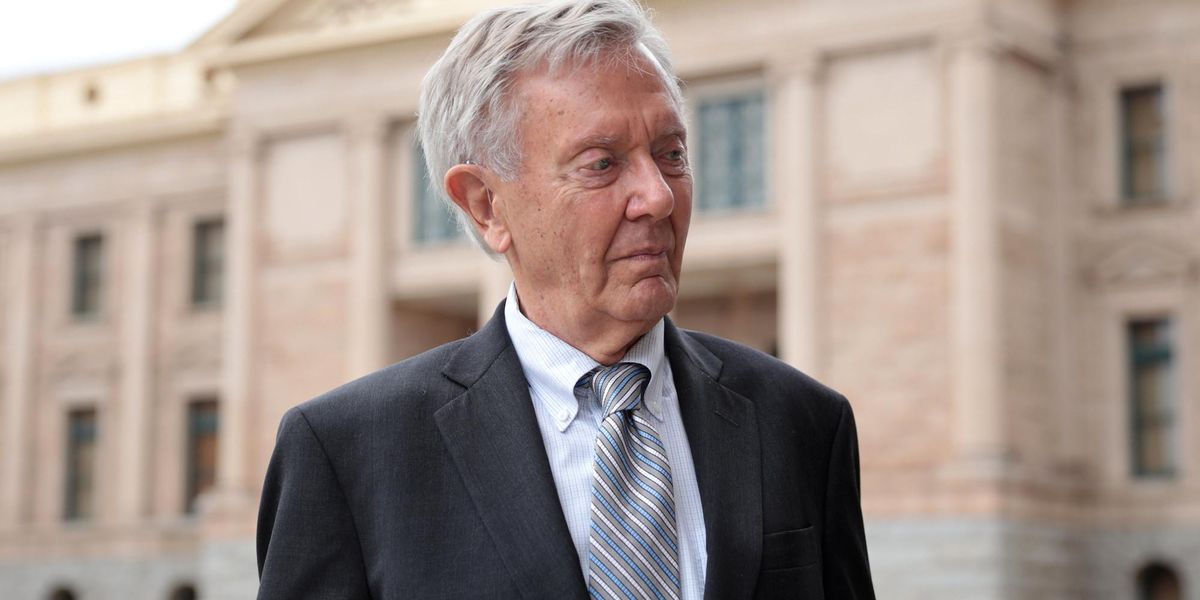
I'm almost certain that Bruce Babbitt is the only Interior Secretary—past, present or future—to appear on Saturday Night Live.
He appeared in a skit to drop a little self-deprecating humor on his brief 1988 presidential campaign. Prior to his 1993 to 2001 stint as Bill Clinton's Interior boss, he served as Arizona Governor and Chair of the National Governors Association.
After the Department of the Interior work, he joined a private law firm, arguing both for and against environmental activists in various water rights and land development cases. Babbitt also chaired the League of Conservation Voters and served as a Trustee of the World Wildlife Fund's U.S. chapter.
In 1999, Babbitt was investigated for allegedly killing a proposal by three Indian tribes to build a casino near Minnesota's Twin Cities, favoring some better-heeled tribes in the process. A grand jury failed to indict in what a vaguely racist press called "Wampumgate."
What made Ryan Zinke memorable for me in his less than two years as Donald Trump's scandal-plagued Interior Secretary? This bizarre photoshoot with Zinke in an Eagle Scout costume. Zinke, a real-life Eagle Scout back in the day, was only too happy to don the threads as a backdrop for Trump's visit to the 2017 National Scout Jamboree.
In the meantime, Zinke labored to open up public lands to oil and gas drilling and gin up sweetheart deals for cronies in his native Montana. Trump cut him loose at the start of his third year, elevating his #2, David Bernhardt, to the (interim) top job. Bernhardt, a veteran oil, coal and gas lobbyist, retained Zinke's policies but at least kept his big boy pants on.
As Zinke decamped, the Center for Biological Diversity called him the worst Interior Secretary in American history.
Well…maybe. Or maybe one of the Top Three.
God loves oil
I'm old enough to remember James Gaius Watt, who served from Ronald Reagan's 1981 inauguration to Watt's 1983 political self-immolation. Watt was a devoutly religious man whose spirituality drove his political ideology. He was offended that the bison symbol of the Department faced to the left, so he turned it around.
Watt felt it was destiny that the U.S. was entitled to every drop of oil it could find. He plotted to sell drilling rights to the entire coastal shelf, oil or no known oil.
But knuckleheaded policy wasn't Watt's downfall. Knuckleheaded statements were. He canceled a July 4 concert on the Washington Mall featuring the squeaky-clean Beach Boys, not knowing that First Lady Nancy Reagan was part of "the wrong element" they'd attract.
The final straw came in September '83, when he let loose an unfunny joke about diversity on a coal leasing advisory panel: "I have a Black, a woman, two Jews and a cripple. And we have talent."
Wah? Watt was quickly swapped out for Judge William Clark, a man given to Watt's rapacious policies but not his cringeworthy "jokes."
Oil bribes and the Fall guy
I'm not old enough to remember Albert B. Fall, nominated by President Warren G. Harding a century ago. When New Mexico achieved statehood in 1912, Fall was one of its first two elected Senators.
In 1921, DOI's domain grew when Harding gave Fall oversight on the Naval Petroleum Reserve sites in California and at Teapot Dome, Wyoming. Fall awarded leases to oilman Edward Doheny, but was accused of taking $386,000 in bribes. Doheny was never convicted, but Fall spent a year in jail.
Can you say "Fall Guy?"
Peter Dykstra is our weekend editor and columnist and can be reached at pdykstra@ehn.org or @pdykstra.
His views do not necessarily represent those of Environmental Health News, The Daily Climate, or publisher Environmental Health Sciences.
Banner photo: Former Interior Secretary Bruce Babbitt in 2019. (Credit: Gage Skidmore/flickr)
Currently, the federal data on extreme heat and wildfire smoke itself constitutes a major disaster.
Extreme heat and wildfire smoke should of course be defined as major disasters by the Federal Emergency Management Agency. According to the National Weather Service, heat kills more people in this nation than hurricanes, tornadoes, floods, and lightning combined.
The Washington Post reported that extreme heat recently killed at least 28 people across the nation.
Yet, despite several requests from states over the years, most recently California during a 2022 “heat dome” and wildfires, no White House has ever approved a disaster declaration for heat or smoke.
Some states outright ignore the dangers in the name of greed. Over the last 13 months, Texas and Florida have enacted laws that block localities from issuing heat protection rules for workers. Nationally, the Biden administration proposed on July 2 new rules to protect workers from heat. But the U.S. Chamber of Commerce and a host of construction and agricultural lobbying groups have opposed the prospect of rules for months and are sure to oppose them in the courts.
It is clear that the opposition is willing to risk sacrificing lower-wage construction and farm workers to the sun’s brutality as executives count the cash in air conditioned offices. Farm workers make an average $13.59 an hour. Hispanic construction laborers make $15.34 an hour, well below the $25-an-hour living wage for a family of four in the Massachusetts Institute of Technology’s Living Wage Calculator. Farm workers respectively have 35 times and 12 times higher risk of heat-related injuries than in all other industries.
Making the latest case for disaster declarations is a consortium of 31 environmental, public health, labor, and justice groups, led by the Center for Biological Diversity. In a June 17 petition to FEMA, the groups warned that the record-breaking heat and fire disasters we are already experiencing are likely only the beginning. The world’s nations, particularly the top burners of fossil fuels such as the United States, have yet to unify to prevent uncontrolled global warming.
“These may be the coolest days and the cleanest air of the 21st century,” the petition said, “and it is already unbearably hot and unsafe for too many Americans.”
The petitioners hope that disaster declarations can unlock federal funds for short-term relief such as cooling centers, water supplies, emergency air conditioning and air filtration systems, and financial assistance for evacuations. Declarations could also lead to money for long-term, proactive mitigation, such as renewable energy storage and microgrids to withstand utility blackouts, and retrofitting of homes and buildings to be more energy efficient and weatherized.
That is vitally important for disadvantaged families who are more likely to live on shadeless, asphalt and concrete “heat islands.” Such communities are often already overburdened with pollution associated with fossil fuel burning and proximity to polluting industries. The petition called extreme heat a “harm multiplier” for these communities because of poor housing stock, difficulty in paying utility bills, and pre-existing poorer health.
In making their case, the 31 environmental groups cite data from the Intergovernmental Panel on Climate Change, projecting that financial cost of extreme heat in the United States will explode fivefold to half a trillion dollars a year by 2050.
There is something else that would make their case even stronger: Data on people. The federal government is woefully behind university researchers in calculating the current and future mortality of heat and smoke.
It should be just as much an emergency for the government to tell us the toll of heat and wildfire smoke. Especially since the government itself says “most heat-related deaths are preventable.”
Death behind closed doors
Property damage from tornadoes, hurricanes, and floods is easy to visualize and leaves the costs of emergency assistance and repair without much question. Because of the nation’s overall wealth, which gives us relatively sturdier dwellings and stronger rebuilds, deaths from those weather disasters are a fraction of the fatalities suffered in lesser resourced parts of the world. For instance, while Hurricane Katrina took 1,400 lives in the US in 2005, Cyclone Nargis in the Bay of Bengal made landfall in Myanmar in 2008 and killed 140,000 people—100 times more people than Katrina.
People perishing by heat or smoke one by one in the privacy of their homes or in the sterility of hospitals is relatively invisible. An analysis of heat deaths by the Cincinnati Enquirer found that about half of heat deaths happen at home, often to people who lack air conditioning, are elderly with pre-existing medical conditions, or who are socially isolated.
The petition by environmental groups points to the current invisibility of heat deaths. It cites federal data saying there were 2,300 deaths last year where heat was listed as a factor on death certificates. That by itself was a record in nearly a half-century of such record keeping. But left as is, that toll would seem to pale next to last year’s nearly 43,000 car fatalities, nearly 43,000gun-related deaths, or 107,000 drug overdose deaths.
The number of heat deaths is assuredly far more. Heat is often not listed on death certificates as a contributing factor to the final cause of death, such as kidney failure, organ failure, and heart attack. There is no uniform protocol tying together how the federal government, the 50 states, or the nation’s 3,000 counties calculate heat-related deaths.
University scientists and health and safety groups are filling in the gaps as best they can.
In 2020, a study in the journal Environmental Epidemiology determined that 5,600 deaths a year were attributable to heat from 1997 to 2006, eight times higher than federal figures. In 2022, researchers at the University of Pennsylvania and the Philadelphia Veterans Administration Medical Center calculated that the number of people who died from heat-related causes between 2008 and 2017 was two to three times higher than federal figures. The Penn and Philadelphia VA researchers also found that extreme heat days were associated with “significantly higher” cardiovascular mortality among adults.
This spring, Texas A&M climate scientists Andrew Dessler and Jangho Lee told the Associated Press that last year’s real national annual heat death toll may be 11,000, nearly five times higher than the 2,300 cited by the government.
In the work world, the federal Bureau of Labor Statistics says 43 workers died in 2022 from heat. But reports by Public Citizen, the most recent being in May of this year, estimate that as many as 2,000 workers a year (46 times more) die from heat and another 170,000 are injuries triggered by heat, such as becoming dizzy and falling off a roof.
But the injury might simply be listed as a fall without mention of heat. Public Citizen says government figures are “decidedly unreliable” and “notoriously problematic” because they are based on self-reporting surveys of employers and “less than half of employers even maintain the required records.”
No matter what number you’re looking at, all of them are likely to soar much higher without concerted global action on climate change. Without a drastic and immediate cut in fossil fuel emissions, the planet is currently staring at a 5-degree Fahrenheit rise in temperatures this century, with the U.S. being the world’s biggest historical contributor to global warming gases.
According to a study published last year by Lee and Dessler in the journal GeoHealth, the US suffered an average of 36,444 deaths a year from extreme temperatures a quarter century ago, with most of those deaths being cold-related. With a rise of 5 degrees Fahrenheit, that number could explode to 200,000 a year this century, driven significantly by shifts of heat mortality to Northern cities. Among the cities with the highest projected temperature increases are Minneapolis, Milwaukee, and Muskegon, Minnesota.
Smoking out data
Parallel to that, and arguably worse, there is virtually no federal data on the fatal impacts of wildfire smoke. The National Oceanic and Atmospheric Administration (NOAA) lists a mere 535 deaths directly from wildfires over the last 45 years in its list of “Billion-Dollar Weather and Climate Disasters.” But there are likely thousands more from the smoke, which is associated with cardiovascular, ischemic heart disease, digestive, endocrine, diabetes, mental, and chronic kidney disease mortality.
Such smoke is not covered by the Clean Air Act, and there is growing evidence that it is eroding decades of gains in the nation’s air quality under the act. A new study by researchers at UCLA found that the fine particulate matter (known as PM2.5) in wildfire smoke that easily passes into the lungs and spreads throughout the body, contributed to the premature deaths of more than 50,000 people in California from 2008 to 2018, with an economic impact of between $432 billion and $456 billion.
Another study this spring by the National Bureau of Economic Research found that 16,000 people a year died from smoke PM2.5 across the US from 2011 to 2020. That study found that elevated long-term smoke concentrations “increase mortality rates at both low and high concentrations.” Wildfire smoke, as the nation found out last year with its orange-brown skies that dulled the sun into a moon-like disk, spreads for so many thousands of miles from its source that the study projects a “large mortality burden not only in regions where large fires occur but also in populous regions with low smoke concentrations (e.g., the eastern US).”
Juan Aguilera, a physician researcher at the University of Texas School of Public Health in El Paso, found that wildfire smoke stresses immune systems and triggers inflammation. He told National Public Radio that living in a wildfire-prone area is “something equivalent to smoking like one pack a day, or 10 packs a week.”
Today’s 16,000 deaths a year from wildfire smoke could grow to nearly 28,000 by mid-century under a high warming scenario and take a cumulative 700,000 lives by 2055, according to the National Bureau of Economic Research.
“Our research suggests that the health cost of climate-driven wildfire smoke could be among the most important and costly consequences of a warming climate in the US,” NBER scientists said.
That concern is bolstered by a new study by Australian researchers who found that the number of extreme wildfires has doubled since 2003, with the last seven years including six of the most extreme. Lead author Calum Cunningham told the New York Times last month, “That we’ve detected such a big increase over such a short period of time makes the findings even more shocking. We’re seeing the manifestations of a warming and drying climate before our very eyes in these extreme fires.”
Adaptation could cut into the mortality risk, but it alone is likely not enough, given how Lee and Dessler noted in their study: “Many adaptive responses (e.g., installing air conditioning, improved health care, better urban planning) are too expensive for poorer individuals or communities, so adaptation will necessarily require society to pay for much of the adaptation. This would represent a huge transfer of wealth from richer to poorer members of our society, a dicey proposition in today’s political environment.”
Even better, of course, would be a serious drive toward net-zero greenhouse gas emissions. The International Energy Agency says no new gas, oil or coal investment is necessary as renewables, energy efficiency and electrification already can deliver the vast majority of emissions reductions.
New mentality needed at FEMA
Though all heat-related disaster declaration requests to FEMA thus far have been denied, agency spokesperson Daniel Llargues told National Public Radio that “there’s nothing specific” in federal law that precludes such a declaration. “If a circumstance did occur where an extreme heat incident exceeded state and local capacity, an emergency or major disaster declaration request submission could be considered,” Llargues said in an email.
And the White House can make a disaster declaration regardless of FEMA’s recommendation. In May, President Biden overruled a FEMA denial of a major disaster declaration so parts of Massachusetts could get federal aid to recover from severe storms and flooding last September.
The process of FEMA better understanding a “circumstance” where extreme heat and wildfire smoke constitutes a disaster starts with a better understanding of the danger. Some parts of the government are trying to mine the data, such as the National Institute of Health’s Heat Information System.
Extreme heat and wildfire smoke also offers FEMA a fresh chance to create new paradigms of aid, to avoid inequities seen in other disasters. Current FEMA storm funding often maintains systemic racism, putting communities with more white residents and higher property values back on their feet, while low-income people and communities of color, historically hemmed into lower property values by redlining, are left on their knees.
As Politico wrote in 2022, FEMA grants to help richer families raise homes above flood levels “have helped turn dozens of wealthy or overwhelmingly white areas into enclaves of climate resilience. The communities are seeing rising property values and economic stability, while much of the nation faces devastating effects of rising seas and intensifying floods.”
One can only imagine the results if the same mentality is ultimately applied to communities marooned on “heat islands.” Seniors and Black adults are at disproportionate risk of cardiovascular deaths from extreme heat according to a Penn study last year. A 2022 Penn study warned, “As extreme heat events increase, the burden of cardiovascular mortality may continue to increase and the disparities between demographic subgroups may widen.”
The same can be said for those lower-wage farmworkers, construction workers and other industries where heat is a major risk. Often, the workers in those industries are disproportionately of color and immigrants. Other trades where heat is a high risk include landscaping, and indoor jobs in warehouses, restaurant kitchens, mills, and doing maintenance.
And let’s not forget public school teachers and staff, as huge percentages of the nation’s public school buildings are not equipped for the rising heat.
Better data needed
There are scientists, including UCS’s Juan Declet-Barreto, who have long called for standard methodology to more accurately determine whether excess deaths originated with heat or smoke exposure. Last year, Ashley Ward, the director of Duke University’s Heat Policy Innovation Lab, wrote in STAT that we need much better and uniformed coding for external causes of injuries and incentives for health systems to apply the codes for cases involving extreme heat. Without uniform coding, the public is left to weigh the emerging body of studies that have different estimations and may “add to the incorrect assumption that there is a lack of scientific consensus.”
Seconding the call for data collection is the Federation of American Scientists. Among its major list of recommendations is a “whole-of-government strategy to address extreme heat.” The federation said that true mortality counts are “essential to enhancing the benefit-cost analysis for heat mitigation and resilience.”
But having heat- and smoke-related mortality data is more than that. Knowing the true toll might help jolt the nation into action on climate change sooner and lessen the mitigation and resilience we will need. One only need think back to the peak of the COVID-19 pandemic and how critical data was to devise public health policy. Currently, the federal data on extreme heat and wildfire smoke itself constitutes a major disaster.
CAMERON PARISH, La. — Late into the night, John Allaire watches the facility next to his home shoot 300-foot flares from stacks.
He lives within eyesight of southwest Louisiana’s salty shores, where, for decades, he’s witnessed nearly 200 feet of land between it and his property line disappear into the sea. Two-thirds of the land was rebuilt to aid the oil and gas industry’s LNG expansion. LNG — shorthand for liquified natural gas – is natural gas that's cooled to liquid form for easier storage or transport; it equates to 1/600th the volume of natural gas in a gaseous state. It’s used to generate electricity, or fuel stove tops and home heaters, and in industrial processes like manufacturing fertilizer.
In the U.S., at least 30 new LNG terminal facilities have been constructed or proposed since 2016, according to the
Oil and Gas Watch project. Louisiana and Texas’ Gulf Coast, where five facilities are already operating, will host roughly two-thirds of the new LNG terminals – meaning at least 22 Gulf Coast LNG facilities are currently under construction, were recently approved to break ground or are under further regulatory review.
Although the U.S. didn’t ship LNG until 2016, when a freight tanker left, a few miles from where Cameron Parish’s LNG plants are today, last year the country became the global leader in LNG production and export volume, leapfrogging exporters like Qatar and Australia. The
EIA’s most recent annual outlook estimated that between the current year and 2050, U.S. LNG exports will increase by 152%.
Allaire, 68, watches how saltwater collects where rainwater once fed the area’s diminishing coastal wetlands. “We still come down here with the kids and set out the fishing rods. It's not as nice as it used to be,” he told
Environmental Health News (EHN).
That intimacy with nature drew Allaire to the area when he purchased 311 acres in 1998. An environmental engineer and 30-year oil and gas industry veteran, he helped lead environmental assessments and manage clean-ups, and although retired, he still works part-time as an environmental consultant with major petroleum companies. With a lifetime of oil and gas industry expertise, he’s watched the industry's footprint spread across Louisiana and the Gulf of Mexico’s fragile shores and beyond. Now that the footprints are at the edge of his backyard, Allaire is among a cohort of organizers, residents and fisher-folk in the region mobilizing to stop LNG facility construction. For him, the industry’s expansion usurps the right-or-wrong ethics he carried across his consulting career. For anglers, oil and gas infrastructure has destroyed fishing grounds and prevented smaller vessels from accessing the seafood-rich waters of the Calcasieu River.
From the view of Allaire’s white pickup truck as he drives across his property to the ocean’s shore, he points to where a new LNG facility will replace marshlands. Commonwealth LNG intends to clear the land of trees and then backfill the remaining low-lying field.
“You see what’s happening with the environment,” Allaire said. “When the facts change, I got to change my mind about what we’re doing.”
Community bands together
John Allaire, left, purchased 311 acres in Cameron Parish in 1998, and has watched the oil and gas industry's footprint spread to his property.
Credit: John Allaire
During an Earth Day rally in April, community members gathered in the urban center of Lake Charles to demand local oil and gas industries help deliver a safer, healthier future for all. In between live acts by artists performing south Louisiana’s quintessential zydeco musical style, speakers like James Hiatt, a Calcasieu Parish native with ties to Cameron Parish and a Healthy Gulf organizer, and RISE St. James organizer Sharon Lavigne, who’s fighting against LNG development in rural Plaquemines Parish near the city of New Orleans, asked the nearly 100 in attendance to imagine a day in which the skyline isn’t dotted by oil and gas infrastructure.
Not long ago, it was hard to imagine an Earth Day rally in southwest Louisiana at all. For decades, the area has been decorated with fossil fuel infrastructure. Sunsets on some days are highlighted by the chemicals in the air; at night, thousands of facilities’ lights dot the dark sky.
“It takes a lot of balls for people to start speaking up,” Shreyas Vasudevan, a campaign researcher with the Louisiana Bucket Brigade, told EHN in the days after the rally. In a region with its history and economy intertwined with oil and gas production, “you can get a lot of social criticism – or ostracization, as well – even threats to your life.”
Many are involved in local, regional and national advocacy groups, including the Louisiana Bucket Brigade, Healthy Gulf, the Sierra Club, the Natural Resources Defense Council, the Turtle Island Restoration Network, the Center for Biological Diversity and the National Audubon Society.
“You see what’s happening with the environment,” Allaire said. “When the facts change, I got to change my mind about what we’re doing.” - John Allaire, environmental engineer and 30-year oil and gas industry veteran
But environmental organizers are fighting a multi-billion-dollar industry with federal and state winds at its back. And LNG’s federal support is coupled with existing state initiatives.
Under outgoing Louisiana Gov. John Bel Edwards — a term-limited Democrat — the state pledged a goal of reaching net-zero greenhouse emissions by 2050. Natural gas, which the LNG industry markets as a cleaner-burning alternative, is cited as one of the state’s solutions. Louisiana is the only state that produces a majority of its carbon emissions through fossil fuels refining industries, like LNG, rather than energy production or transportation. Governor Edwards’ office did not return EHN’s request for comment.
This accommodating attitude towards oil and gas industries has resulted in a workforce that’s trained to work in LNG refining facilities across much of the rural Gulf region, said Steven Miles, a lawyer at Baker Botts LLP and a fellow at the Baker Institute’s Center on Energy Studies. Simultaneously, anti-industrialization pushback is lacking. It’s good news for industries like LNG.
“The bad news,” Miles added. “[LNG facilities] are all being jammed in the same areas.”
One rallying cry for opponents is local health. The Environmental Integrity Project found that LNG export terminals emit chemicals like carbon monoxide –potentially deadly– and sulfur dioxide, of which the American Lung Association says long-term exposure can lead to heart disease, cancer, and damage to internal or female reproductive organs.
An analysis of emissions monitoring reports by the advocacy group the Louisiana Bucket Brigade found that Venture Global’s existing Calcasieu Pass facility had more than 2,000 permit violations.That includes exceeding the permit’s authorized air emissions limit to release nitrogen oxides, carbon monoxide, particulate matter and volatile organic compounds 286 out of its first 343 days of operation.
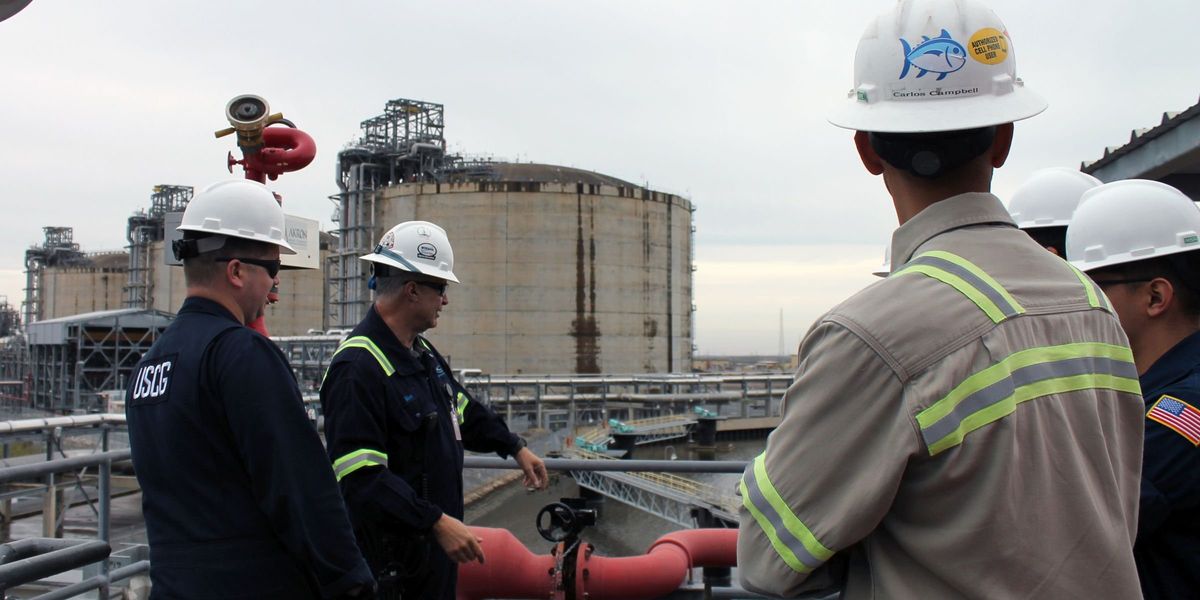
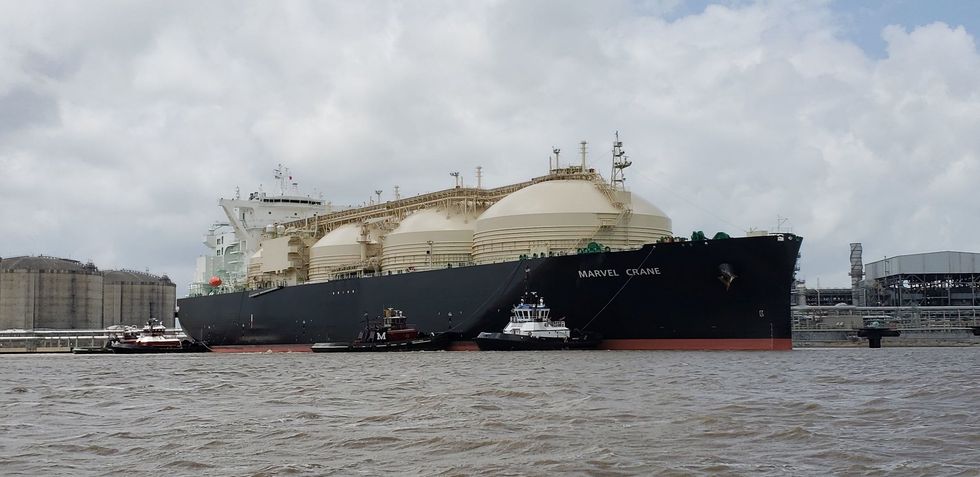
The Marvel Crane, the first liquid natural gas carrier to transport natural gas from the Southwest Louisiana LNG facility, transits a channel in Hackberry, Louisiana, May 28, 2019.
“This is just one facility,” at a time when three more facilities have been proposed in the region and state, Vasudevan said. Venture Global’s operational LNG facility — also known as Calcasieu Pass — “is much smaller than the other facility they’ve proposed.”
In an area that experienced 18 feet of storm surge during Hurricane Laura in 2020 — and just weeks later, struck by Hurricane Delta — Venture Global is planning to build a second export terminal Known as “CP2,” it’s the largest of the roughly two dozen proposed Gulf LNG export terminals, and a key focal point for the region’s local organizing effort.
Residents “don’t really want LNG as much as they want Cameron [Parish] from 1990 back,” Hiatt told EHN of locals’ nostalgia for a community before storms like Rita in 2005 brought up to 15 feet of storm surge, only for Laura to repeat the damage in 2020. Throughout that time, the parish’s population dipped from roughly 10,000 to 5,000. “But the wolf knocking at the door is LNG. Folks in Cameron think that's going to bring back community, bring back the schools, bring back this time before we had all these storms — when Cameron was pretty prosperous.”
“Clearly,” for the oil and gas industry, “the idea is to transform what was once the center of commercial fishing in Louisiana to gas exports,” Cindy Robertson, an environmental activist in southwest Louisiana, told EHN.
Helping fishers’ impacted by LNG is about “actual survival of this unique culture,” Cooke said.
In a measure of organizers’ success, she pointed to a recent permit hearing for Venture Global’s CP2 proposal. Regionally, it’s the only project that’s received an environmental permit, but not its export permit, which remains under federal review. At the meeting, some spoke on the company’s behalf. As an organizer, it was a moment of clarity, Cooke explained. Venture Global officials “had obviously done a lot of coaching and organizing and getting people together in Cameron to speak out on their behalf,” Cooke said. “So, in a way, that was bad. But in another way, it shows that we really had an impact.”
“It also shows that we have a lot to do,” Cooke added.
Environmental organizers like Alyssa Portaro describe a sense of fortitude among activists — she and her husband to the region’s nearby town of Vinton near the Texas-Louisiana border. Since the families’ relocation to their farm, Portaro has worked with Cameron Parish fisher-folk.
“I’ve not witnessed ‘community’ anywhere like there is in Louisiana,” Portaro told EHN. But a New Jersey native, she understands the toll environmental pollution has on low-income communities. “This environment, it’s so at risk — and it’s currently getting sacrificed to big industries.”
“People don’t know what we’d do without oil and gas. It comes at a big price,” she added.
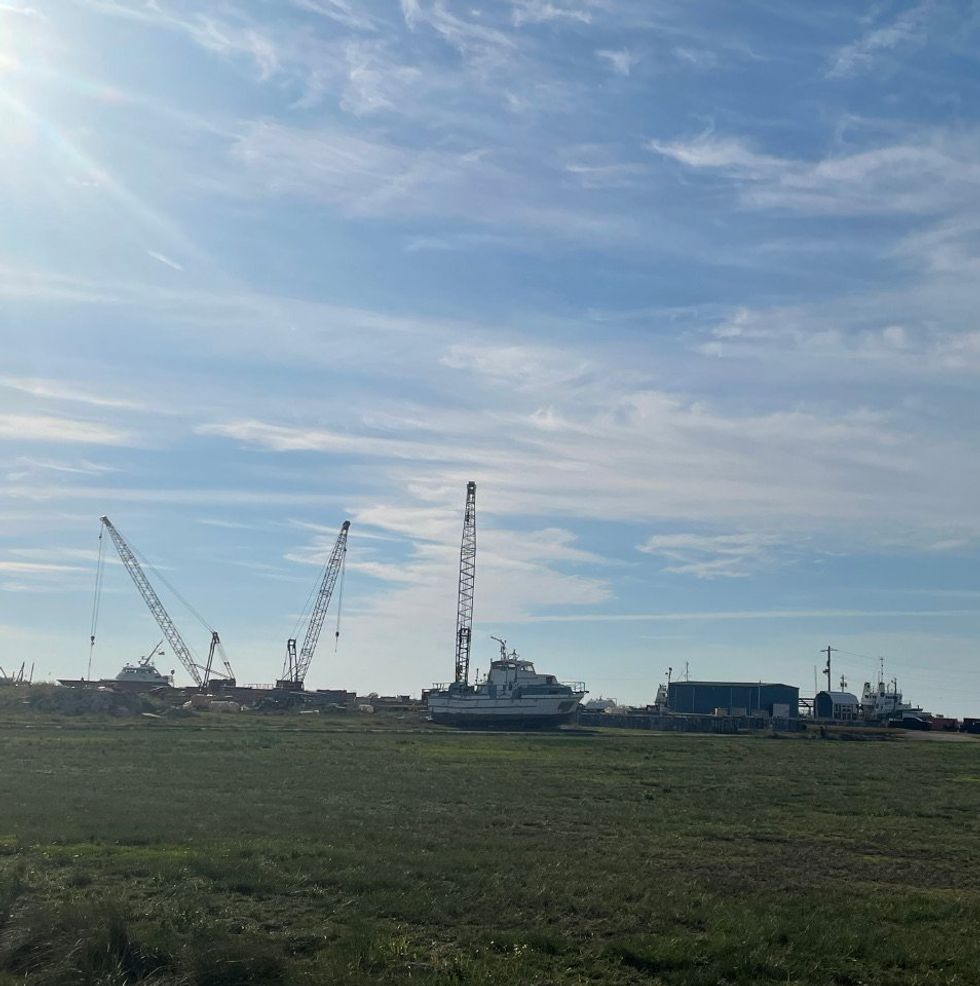
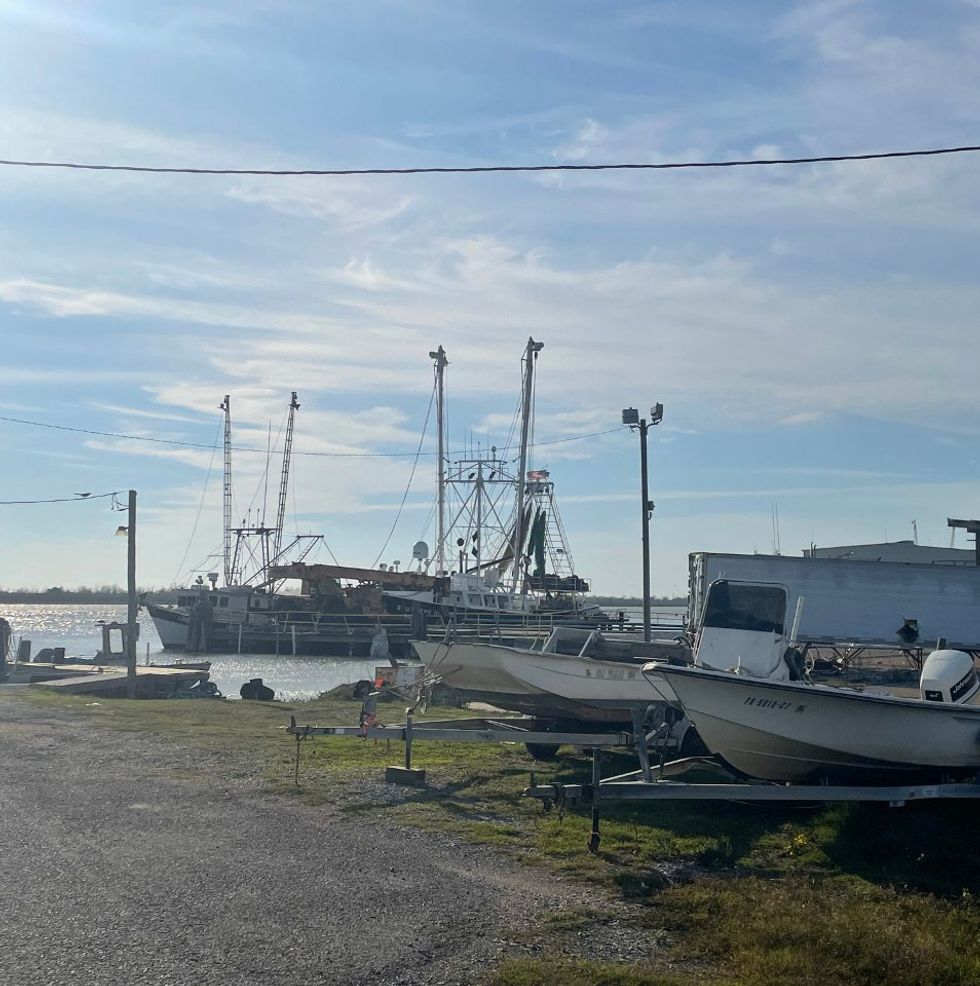
Southwest Louisiana’s Cameron Parish is one of the state’s most rural localities. Marine economies were the area’s economic drivers until natural disasters and LNG facilities began pushing locals out, commercial fishers claim.
Credit: Xander Peters for Environmental Health News
Residents “don’t really want LNG as much as they want Cameron [Parish] from 1990 back,” James Hiatt , a Healthy Gulf organizer, told EHN. "But the wolf knocking at the door is LNG."
Credit: Xander Peters for Environmental Health News
For the most part, Cameron Parish’s life and economy has historically taken place at sea. As new LNG facilities are operational or in planning locally, locals claim the community they once knew is nearly unrecognizable.
Credit: Xander Peters for Environmental Health News
A disappearing parish
The stakes are seemingly higher for a region like southwest Louisiana, which is the epicenter of climate change impacts.
In nearly a century, the state has lost roughly 2,000 square miles of land to coastal erosion. In part driving the state’s erosion crisis is the compounding impacts of Mississippi River infrastructure and oil and gas industry activity, such as dredging canals for shipping purposes, according to a March study published in the journal Nature Sustainability. Louisiana’s Coastal Protection and Restoration Authority said Cameron Parish could lose more land than other coastal parishes over the next 50 years. A recent Climate Central report says the parish will be underwater within that time frame.
On top of erosion and sea level rise impacts, in August, 2023, marshland across southwest Louisiana’s Cameron Parish burned. The fires were among at least 600 across the Bayou State this year. Statewide, roughly 60,000 acres burned — a more than six-fold increase of the state’s average acres burned per year in the past decade alone.
But while the blaze avoided coastal Louisiana communities like Cameron Parish, the fires represented a warning coming from a growing chorus of locals across the region — one that’s echoes by the local commercial fishing population, who claimed to have experienced unusually low yields during the same time, according to a statement from a local environmental group. At the site of the Cameron Parish fires are locations for two proposed LNG expansion projects.
"The idea is to transform what was once the center of commercial fishing in Louisiana to gas exports.” - Cindy Robertson, an environmental activist in southwest Louisiana
It was an unusual occurrence for an area that’s more often itself underwater this time of year due to a storm surge from powerful storms. For LNG expansion’s local opposition, it was a red flag.
As the Louisiana Bucket Brigade has noted prior, the confluence of climate change’s raising of sea levels and the construction of LNG export terminals — some are proposed at the size of nearly 700 football fields — are wiping away the marshland folks like Allaire watched wither. Among their fears is that the future facilities won’t be able to withstand the power of another storm like Laura and its storm surge, which wiped away entire communities in 2020.
Amidst these regional climate impacts, LNG infrastructure has shown potential to exacerbate the accumulation of greenhouse gasses that cause global warming. For the most part, LNG is made up of methane — a greenhouse gas that’s more than 80 times more potent than carbon dioxide in the atmosphere. Among the 22 current LNG facility proposals, the advocacy group Sierra Club described a combined climate pollution output that would roughly equal to that of about 440 coal plants.
The climate impacts prompt some of the LNG industry’s uncertainty going forward. It isn’t clear if Asian countries, key importers of U.S. LNG, will “embrace these energy transition issues,” said David Dismuke, an energy consultant and the former executive director of Louisiana State University’s Center for Energy Studies. Likewise, European nations remain skeptical of embracing LNG as a future staple fuel source.
“They really don't want to have to pull the trigger,” Dismukes added, referring to Europe’s hesitation to commit more resources to exporting LNG from the American market. “They don't want to go down that road.”
While there will be a tapering down of natural gas supply, Miles explained, “we’re going to need natural gas for a long time,” as larger battery storage for renewables is still unavailable.
“I'm not one of these futurists that can tell you where we're going to be, but I just don't see everything being extreme,” Dismukes said. “I don't see what we've already built getting stranded and going away, either.”
For now, LNG seems here to stay. From 2012 to 2022,U.S. natural gas demand — the sum of both domestic consumption and gross exports — rose by a whopping 43%, reported the U.S. Energy Information Administration, or EIA. Meanwhile, in oil and gas hotbeds like Louisiana and Texas, natural gas demand grew by 116%.
Throughout 25 years, Allaire has witnessed southwest Louisiana’s land slowly fade, in part driven by the same industrial spread regionally. Near where the front door of his travel trailer sits underneath the aluminum awning, he points to a chenier ridge located near the end of the property. It’s disappearing, he said.
“See the sand washing over, in here?” Allaire says, as he points towards the stretches of his property. “This pond used to go down for a half mile. This is all that's left of it on this side.”
The National Interagency Fire Center reports 79 large active wildfires in the US, with 31 in Oregon alone.
Smoke from these fires has triggered air quality alerts in Oregon, Idaho, Washington and Alberta, Canada.
Residents are advised to stay indoors, use air purifiers and wear masks if they must go outside.
Why this matters:
Wildfire smoke poses significant health risks, especially for children and those with preexisting health conditions. Understanding and mitigating these risks is crucial for public health and safety.
Kew Gardens lost 400 trees during the 2022 drought, prompting a study on future climate risks.
More than 50% of Kew’s tree species are vulnerable to dying as London’s climate is predicted to resemble Barcelona’s by 2050.
Kew’s succession plan includes replacing at-risk trees with drought-tolerant species from hotter climates.
Key quote:
“By focusing on resilience and adaptability we hope to show it is possible to mitigate the severe impacts of climate change in both urban spaces and gardens such as Kew.”
— Richard Barley, director of gardens at Kew.
Why this matters:
Imagine the iconic Kew Gardens, a sanctuary of global flora, transforming into a somber reminder of our environmental neglect. The potential loss of these trees isn't just about losing greenery; it's about the ripple effect on biodiversity, air quality and the overall health of our planet. Read more: Respect the elderly: Saving cities’ oldest trees.
The Supreme Court may undermine the U.S. Environmental Protection Agency's latest rule on emissions from power plants, following challenges from conservative states and industry groups.
Conservative states and industry groups asked the Supreme Court to halt Biden's rule on power plant emissions.
Critics argue the rule threatens affordable electricity and exceeds EPA’s authority.
Legal experts doubt the Supreme Court will act against the rule like it did with the Obama-era Clean Power Plan.
Key quote:
“This rule poses a significant threat to affordable and reliable electricity for millions of Americans, especially as power demand skyrockets across the nation.”
— Jim Matheson, CEO of NRECA
Why this matters:
A Supreme Court stay would delay or potentially block regulations aimed at reducing greenhouse gas emissions from power plants. This could hinder efforts to combat climate change and maintain cleaner air standards.
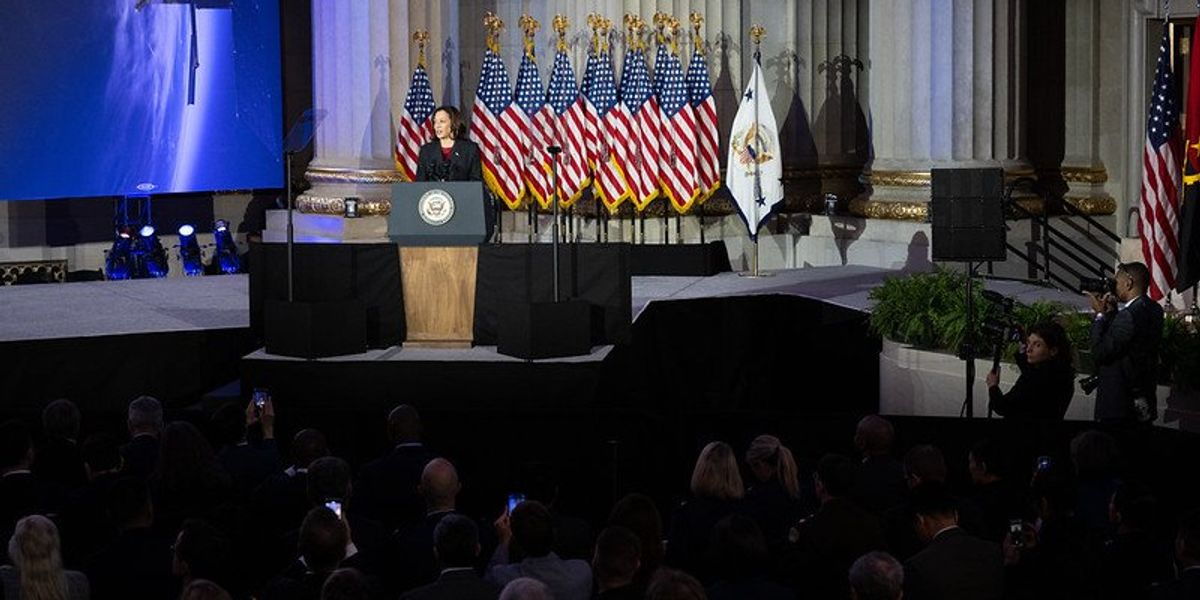
Vice President Kamala Harris aims to amplify environmental justice initiatives if she becomes president, building on the Biden administration's legacy of supporting marginalized communities impacted by pollution.
Millions of Californians live near oil and gas wells that are increasingly in the path of wildfires, raising concerns about explosions, pollution and infrastructure damage.
More than 100,000 oil wells in the western US, mainly in California, are at high risk of wildfires.
Nearly 3 million people live within 3,200 feet of these wells, facing heightened health and safety risks.
Historic and projected data show a significant increase in wildfire threats to oil infrastructure.
Key quote:
“One of the things that surprised me was just the extent of how many oil wells had been in wildfire burn areas in the past, and how much this was impacting people in California — and is likely to in the coming century.”
— David J.X. González, assistant professor of environmental health sciences at UC Berkeley
Why this matters:
Wildfires near oil wells pose serious health risks and environmental hazards. With climate change intensifying wildfires, protective measures and regulations become increasingly urgent.
Power shutoffs or wildfire evacuations can be deadly for disabled people, especially nondrivers who may not have a way to get to a cooling center or evacuation point.