Billionaire-backed efforts reshape federal regulation landscape

A decades-long campaign led by Charles Koch's network culminated in a Supreme Court decision that dismantled a key legal precedent, curbing the regulatory power of federal agencies.

Justin Jouvenal, Jon Swaine, and Ann E. Marimow report for The Washington Post.


In short:

  • The Supreme Court’s 6-3 ruling ended the 40-year-old Chevron deference, limiting agencies' ability to interpret ambiguous regulations.
  • Charles Koch’s network invested millions in legal groups like the New Civil Liberties Alliance to strategically challenge federal regulations.
  • The ruling is expected to weaken regulations on environmental protection, workplace safety and financial oversight.

Key quote:

“Chevron is an example of one way constitutional government was breaking down. What Chevron was saying, it’s not really the courts that interpret the laws, it’s the executive branch.”

— Casey Mattox, vice president of legal strategy at Stand Together

Why this matters:

Without Chevron deference, judges will interpret regulations instead of relying on agency experts, potentially jeopardizing safeguards for public health, safety and the environment. Deregulation could lead to more pollution, weakened worker protections and compromised consumer safety.

Related: Peter Dykstra: Clearing up some myths about the seven—yes, seven—Koch Brothers
Field scientist recording notes in notebook

White hydrogen: The hidden gas that could transform energy

Trillions of tons of hydrogen lie in Earth's crust. Can a Bavarian geologist unlock this clean and cheap energy source?
Symbol of law and justice, law and justice concept, scales of justice.
Credit: vladek/BigStock Photo ID: 46192432

The latest front in the battle over climate lawsuits: bills wiping out liability

Republican lawmakers are advancing legislation that would shield major polluters from legal accountability for climate change harms.
The oil rig Sevan Louisiana off the Curacao coast in the Caribbean.
Credit: Zaschnaus/BigStock Photo ID: 288731746

Trump administration approves ultra-deepwater oil drilling plan

The $5 billion project in the Gulf of Mexico is expected to help produce up to 10 billion barrels of oil by the end of this decade. Critics say it could endanger people and marine life.
Fracking well pad and drilling site

Pennsylvania publishes long-awaited study on radioactivity in landfill runoff

The state concluded there is “no current cause for concern.” Experts worried about the long-term impacts of fracking waste say more research is required.
Clock approaching midnight superimposed over a world map
Credit: chughes/ BigStock Photo ID: 20162111

'Doomsday Clock' advances to 85 seconds till midnight

A science-oriented advocacy group moved its “Doomsday Clock” to 85 seconds to midnight, saying the Earth is closer than ever to destruction.
An aerial view of the streets of Paris lined with green trees

The race for Paris: Why France’s capital has likely gone green for good

French conservatives once opposed greener, low-traffic city plans, but rival programs now suggest a tree-filled capital is inevitable.

From our Newsroom
Multiple Houston-area oil and gas facilities that have violated pollution laws are seeking permit renewals

Multiple Houston-area oil and gas facilities that have violated pollution laws are seeking permit renewals

One facility has emitted cancer-causing chemicals into waterways at levels up to 520% higher than legal limits.

Regulators are underestimating health impacts from air pollution: Study

Regulators are underestimating health impacts from air pollution: Study

"The reality is, we are not exposed to one chemical at a time.”

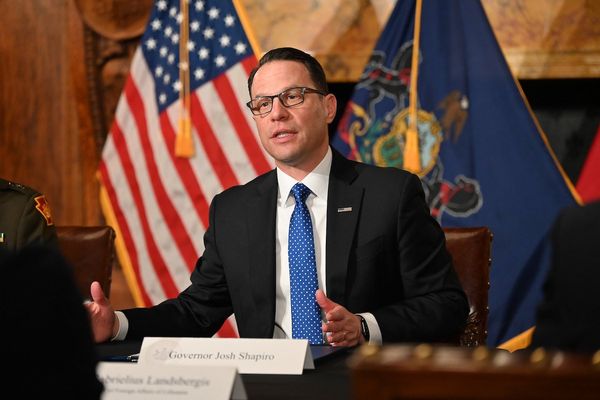
Pennsylvania governor Josh Shapiro speaks with the state flag and American flag behind him.

Two years into his term, has Gov. Shapiro kept his promises to regulate Pennsylvania’s fracking industry?

A new report assesses the administration’s progress and makes new recommendations

silhouette of people holding hands by a lake at sunset

An open letter from EPA staff to the American public

“We cannot stand by and allow this to happen. We need to hold this administration accountable.”

wildfire retardants being sprayed by plane

New evidence links heavy metal pollution with wildfire retardants

“The chemical black box” that blankets wildfire-impacted areas is increasingly under scrutiny.

Stay informed: sign up for The Daily Climate newsletter
Top news on climate impacts, solutions, politics, drivers. Delivered to your inbox week days.