Cannabis farming’s energy use now rivals major industries like cryptocurrency

Indoor cannabis cultivation now accounts for about 1% of U.S. electricity use, emitting more greenhouse gases than bitcoin mining and all other crops combined, researchers say.

Nicolás Rivero reports for The Washington Post.


In short:

  • Most U.S. cannabis is grown indoors under high-powered lights and climate control, creating emissions equivalent to 10 million cars annually.
  • Experts say shifting production outdoors could cut emissions by 75%, but unpredictable weather, potency concerns, and zoning restrictions make that unlikely.
  • Indoor growers are adopting efficiency upgrades like LED lighting and renewable energy credits, though these changes only modestly reduce emissions.

Key quote:

“It’s another looming energy issue. Cannabis right now is the dominant part. But if the proponents of indoor agriculture got their way, it would be overshadowed gradually by all these other crops.”

— Evan Mills, energy researcher

Why this matters:

Indoor cannabis farming has quietly become a major source of carbon emissions in the United States. Unlike other agricultural sectors, it runs almost entirely on artificial light and climate control systems, which guzzle electricity. As cannabis legalization spreads, production is scaling up in sprawling warehouses, putting growing pressure on the grid and fueling greenhouse gas emissions. With limited regulation and no consumer labeling for carbon footprint, most buyers have no idea how energy-intensive their weed is. Meanwhile, local opposition to outdoor farming and the industry's preference for indoor consistency mean emissions are likely to grow. This has broader implications as indoor agriculture expands to other crops, raising concerns about a future where our food — and weed — might be cultivated at the cost of a hotter planet.

Read more: Indoor farming's impact on the environment scrutinized amid tech advances
A prairie farm field with a tractor

Can climate change help farmers on the Prairies?

A changing climate, and prolonged drought in many regions, has had a surprising impact for some farmers: better yields.

Two African women walking away from Lake Victoria with buckets on their heads

Kenyan women defy fishing taboos as climate change threatens Lake Victoria

In a lakeside village in Kenya's Kisumu County, women were forbidden from fishing, until Rhoda Ongoche Akech defied the stigma.

A closeup view of the top of a wind turbine

Can renewables withstand our worsening climate?

Renewables have been touted as the silver bullet to tackling climate change, but can they withstand our warming planet?
A burned landscape with blackened soil

Wildfires make soil poisonous

New research shows that intense wildfires can transform naturally occurring chromium in soil into a carcinogenic form that lingers in air and groundwater for years.

The front steps of the Supreme Court of the US

Leaked memos show Supreme Court ignored climate dangers in Obama regs fight

Conservative justices focused on industry costs when blocking the Clean Power Plan, the first climate rule proposed for the power sector.
China renewable energy, wind and solar energy concept. Chinese flag with wind turbines and solar panels.
Credit: Anton_Medvedev/BigStock Photo ID: 431444246

Escape route from Iran energy shock leads to China, US allies find

Countries are navigating between the desire to speed up the green transition and worries over Beijing’s clean-tech dominance.
Aerial view of Colorado River and Glen Canyon Dam

US Interior Department unveils emergency plans for Colorado River

The Trump administration will pull its emergency levers to head off a major water and power crisis.
From our Newsroom
Multiple Houston-area oil and gas facilities that have violated pollution laws are seeking permit renewals

Multiple Houston-area oil and gas facilities that have violated pollution laws are seeking permit renewals

One facility has emitted cancer-causing chemicals into waterways at levels up to 520% higher than legal limits.

Regulators are underestimating health impacts from air pollution: Study

Regulators are underestimating health impacts from air pollution: Study

"The reality is, we are not exposed to one chemical at a time.”

Pennsylvania governor Josh Shapiro speaks with the state flag and American flag behind him.

Two years into his term, has Gov. Shapiro kept his promises to regulate Pennsylvania’s fracking industry?

A new report assesses the administration’s progress and makes new recommendations

silhouette of people holding hands by a lake at sunset

An open letter from EPA staff to the American public

“We cannot stand by and allow this to happen. We need to hold this administration accountable.”

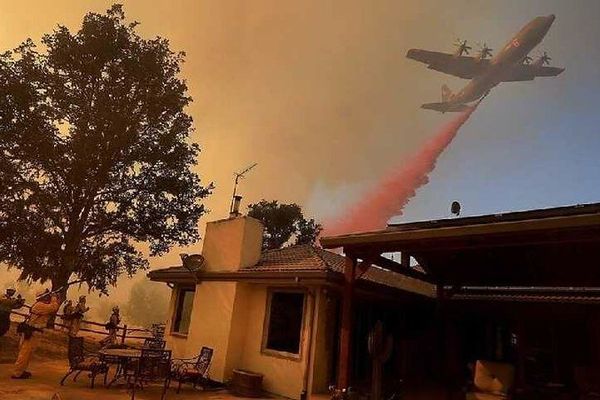
wildfire retardants being sprayed by plane

New evidence links heavy metal pollution with wildfire retardants

“The chemical black box” that blankets wildfire-impacted areas is increasingly under scrutiny.

Stay informed: sign up for The Daily Climate newsletter
Top news on climate impacts, solutions, politics, drivers. Delivered to your inbox week days.