Multiple Houston-area oil and gas facilities that have violated pollution laws are seeking permit renewals
One facility has emitted cancer-causing chemicals into waterways at levels up to 520% higher than legal limits.
HOUSTON — Multiple Houston-area oil and gas facilities that have previously violated the pollution limits in their permits have recently applied for new federal operating permits or renewals.
These facilities include the Chevron Pasadena Refining facility, the LyondellBasell Houston refinery, and the Chevron Phillips Chemical Sweeny Complex in Brazoria County, all of which are seeking renewed Title V permits.
Title V air permits are required for facilities that are considered major sources of air pollution by the U.S. Environmental Protection Agency. In general, a facility is considered a major source when it emits more than 100 tons of most pollutants or more than 10 tons of hazardous air pollutants, which are known to cause cancer or serious health effects, each year.
There are 1,455 Title V facilities in Texas, according to Texas Commission on Environmental Quality (TCEQ) spokesperson Victoria Cann. This represents more than 10% of all Title V facilities in the U.S., according to data from 2020, which puts the national total of Title V facilities at 12,726. There are currently 88 facilities seeking new or renewed Title V permits in Texas, according to TCEQ.
Chevron’s Pasadena refining facility
Chevron is seeking a renewal of their Title V operating permit for the company’s Pasadena refining facility.
The facility violated the Clean Air Act in eight of the past 12 quarters and violated the Clean Water Act in seven of the past 12 quarters, including elevated effluent water discharges of benzene, ethylbenzene, toluene, and xylenes at levels up to 520% as high as the legal limit, according to the EPA’s compliance database. Benzene has been linked to a number of health problems, including an increased cancer risk and cell disruption. Ethylbenzene, toluene, and xylenes have been linked to short-term impacts like headaches, dizziness, and fatigue, and long-term problems like memory, vision, and hearing loss.
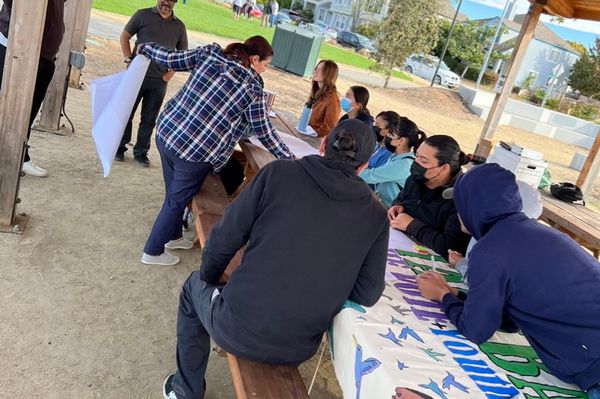
Houston area residents recently gathered to attend a hearing on Chevron’s Pasadena Title V permit renewal. Some attendees shared support for renewing the permit, citing economic and community donations, while others shared concerns about health impacts from the refinery’s operations.
Inyang Uwak, an environmental epidemiologist and research and policy director at the environmental group Air Alliance Houston, said the refinery’s benzene fenceline monitoring levels have been above the EPA action level since April of last year.
While exceeding the action level is not a violation in itself, it does require the refinery to determine a “root cause analysis and take corrective action.” In the past two years, Chevron Pasadena Refinery has exceeded the EPA action level for benzene 18 times.
“I know benzene can be very scary,” Chevron Pasadena Refinery’s environmental manager Steph Seewald said at the hearing, stating that the new data for the first quarter of 2025 should be available soon, and is “trending downward.” Federal data to confirm this is not yet available at the time of publication.
Pasadena Refining’s general manager Tifanie Steele said that since Chevron purchased the refinery six years ago from Petrobras, the facility has made “several improvements” and cited decreases in overall emissions by “investing time and money into improving compliance.”
LyondellBasell’s Houston refinery
LyondellBasell's Title V permit hearing for its Houston-area refinery is scheduled for May 6, 2025, despite an announcement that this facility will soon close.
Violations in the last three years at this facility, according to EPA data, include one quarter violating the Clean Air Act, four quarters violating the Clean Water Act and three quarters violating the Resource Conservation and Recovery Act, which governs the disposal of solid, hazardous waste.
The future of the facility remains unclear, but the company stated it plans to start operations of “circular projects” in 2025. Residents and environmental groups like Air Alliance Houston say they hope this hearing will provide clarity about the company’s future in Houston.
Chevron Phillips Chemical’s manufacturing facilities in Brazoria County
Chevron Phillips Chemical’s second largest manufacturing facility in Brazoria County, which spans across three sites, is also seeking a renewal of their federal operating permit.
According the the EPA, the Chevron Phillips Chemical Sweeny Complex has violated its permits numerous times during the past three years: for one quarter it violated the Clean Air Act, for seven quarters it violated the Clean Water Act, for six quarters it violated the Safe Drinking Water Act, and for five quarters it violated the Resource Conservation and Recovery Act.
The Houston-Galveston-Brazoria area is home to one of the nation’s largest concentrations of petrochemical facilities, accounting for nearly 42% of the nation’s supply. The dense population of petrochemical facilities creates concern about cumulative impacts for communities that live in these regions, which recent studies suggest are often underestimated.
In order to keep community members in the Greater Houston area informed, Air Alliance Houston told Environmental Health News that they maintain a database called AirMail to alert residents of upcoming public meetings regarding permits. The TCEQ has made attempts in the past five years to increase public participation in meetings through avenues like increasing language accessibility, but participation is still lacking.
“Similar to voting, [attending public meetings] is your opportunity to have a voice,” Air Alliance representative Cassandra Cassados Klein told EHN. “We know that civic engagement is a great tool in protecting our air quality.”