When I lived in Washington DC in the early 1980's, I'd occasionally stroll down to the Mall to see the then-new Vietnam War Memorial.
Tourists and grieving families would peruse the V-shaped wall to find names of loved ones, or just ponder America's most tragic war.
Another fixture at the Memorial were Vietnam vets, then mostly in their forties and wearing tattered, genuine combat fatigues, pressing the case that some of their buddies were still being held in tiger cages in Hanoi.
When I returned to work in DC in 2010, I was astonished to see many of the same vets still there, now in their seventies but still convinced that buddies were alive and imprisoned nearly a half century later. Not a whiff of evidence had surfaced in the intervening decades to support their beliefs, but they persist.
It's no different than the uniquely American battle over guns, where this country's consistent, tragic mass shooting events can't sway tens of millions of us that there may be a problem. Or the multiple theories about President Obama as a Kenyan-born, madrasa educated closet Muslim/Nazi/Communist. Or the anti-vaccine movement, birthed on a retracted paper published by a thoroughly discredited researcher.
Moral of the story: Rigid beliefs die hard, or not at all.
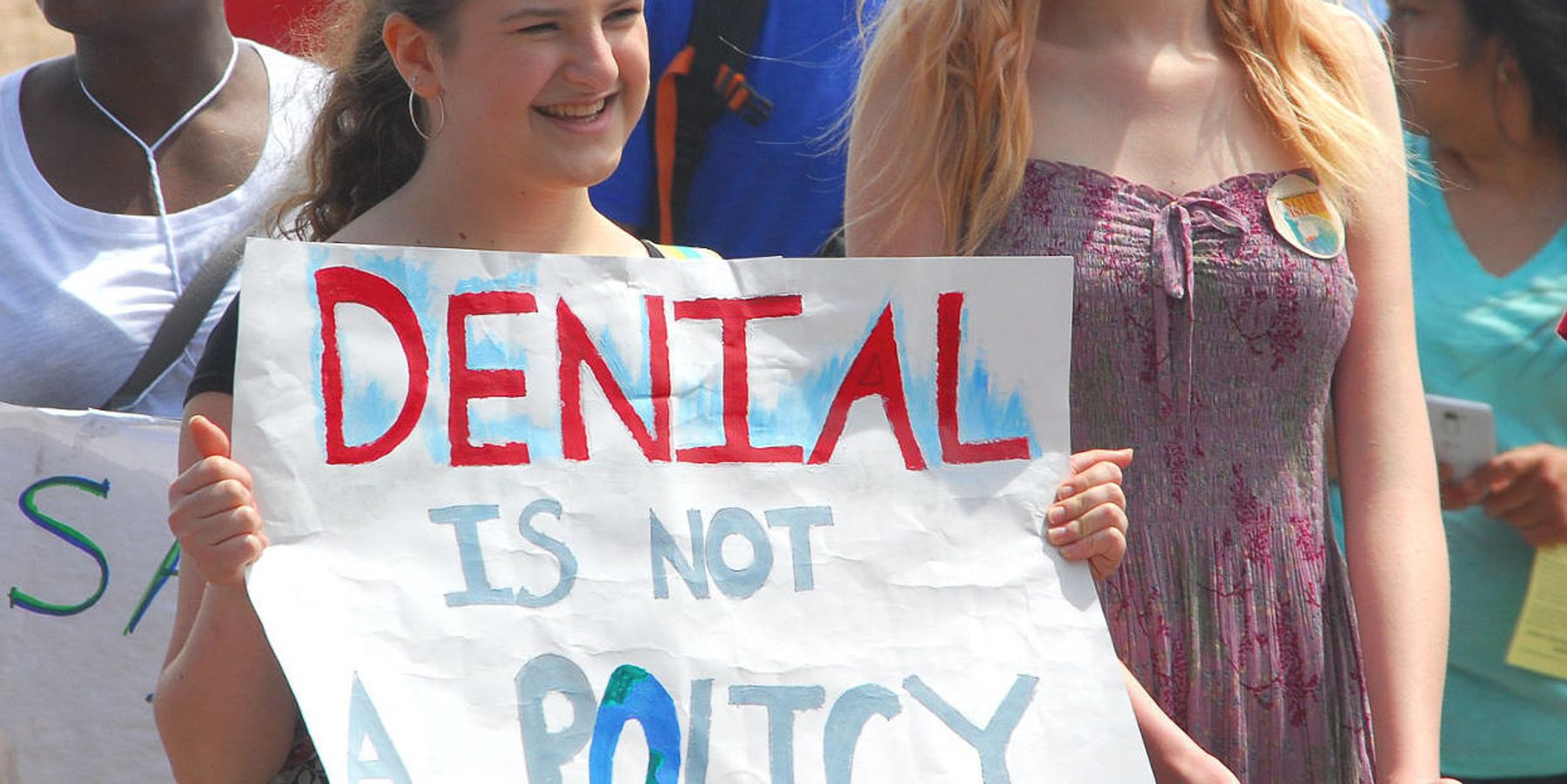
Over those same decades, there has been a persistent and logical belief that climate denial would be crushed by the weight of science, on-the-ground evidence, and simple common sense. While denial may have withered a bit – its most prominent advocates don't get booked on network TV any more, except for Fox News – it's here to stay.
Echoing a persistently wrong theme, the web publication Business Green ran a year-end op-ed in December declaring 2017 to be "The Year That Climate Denial Died."
I don't think so.
Congressional contrarians
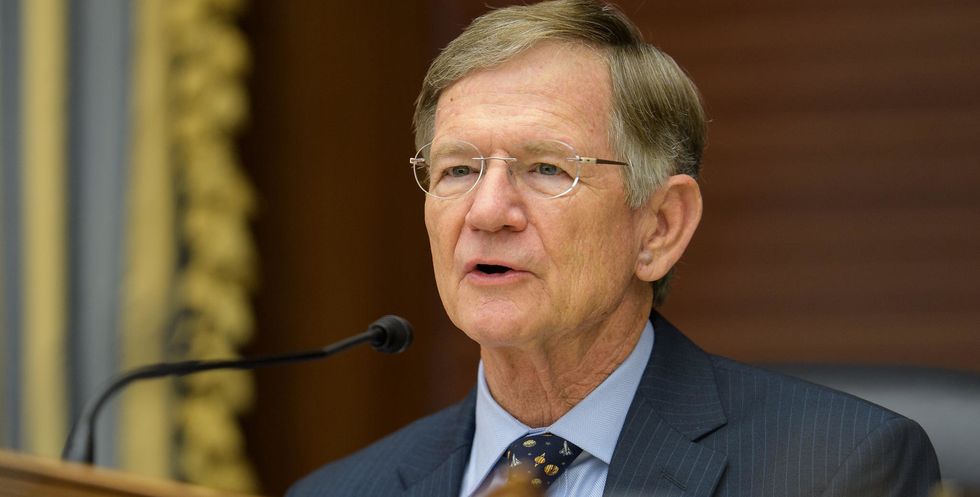
Lamar Smith (R-Texas). Credit: NASA
In the contentious 2018 midterm elections, while the Democrats could make some gains and possibly monkey-wrench Trump's rollbacks by reclaiming majorities in Congress, climate isn't a factor.
General revulsion to Trump's policies and personality is hardening America into a sharply divided land of Trump haters and Trump zealots. But those policies and personality are holding him relatively steady at about 40 percent support among Americans, and nearly 90 percent support among Republicans. Few GOP representatives or Senators seem poised to challenge him.
A few key Congressional deniers are retiring at the end of the year, notably Lamar Smith, who has used his chairmanship of the House Science Committee as a blunt instrument against science; and "Smoky Joe" Barton, a fellow Texan who in 2010 apologized to BP for alleged rough treatment by the Obama Administration after the largest offshore oil spill ever.
But many, many more are staying. Jim Inhofe, a spry 83 years old, hasn't yet said whether he'll run again in 2020. If he does, there's no reason to believe that the king of Senate climate denial won't reprise his 40 percentage point victory in 2014.
John Barrasso's seat is just as safe. The gentleman from the Wyoming coalfields won his second term by a three-to-one margin, and is running for his third in November. Unless the Democrats stun the political world by wresting control of the Senate, Barrasso will likely continue as Chair of the Senate Environment and Public Works Committee.
Inhofe and Barrasso have dozens of ideological soulmates in the House and Senate. John Shimkus, who is given to citing the Book of Genesis as proof that climate change is impossible, won by three to one in 2014 and ran unopposed two years later. He has a longshot opponent this year.
On the non-government side, the Heartland Institute staff — infamous for their billboard linking climate scientists or activists to the Unabomber and Osama bin Laden—now must remove their tinfoil hats while passing through White House metal detectors to advise the Administration.
Former Inhofe aide Marc Morano has seen his media profile shrink, but he still leads a cadre of deniers who accuse climate scientists of only being in it for the money. According to recent IRS filings, Morano's employer pays him a base salary of $188,000.
So the moral of this story is that climate denial may not be growing, but it's a fool's errand to think that it will vanish any time soon. Climate change is showing us its real costs every day and clean energy is finally taking off, but denial lives in the highest levels of American government .
And denial will continue to thwart, or at least slow, progress.