midterm elections

Peter Dykstra: Environmental takeaways from Election Day

What happened and, perhaps more importantly, what didn’t happen?

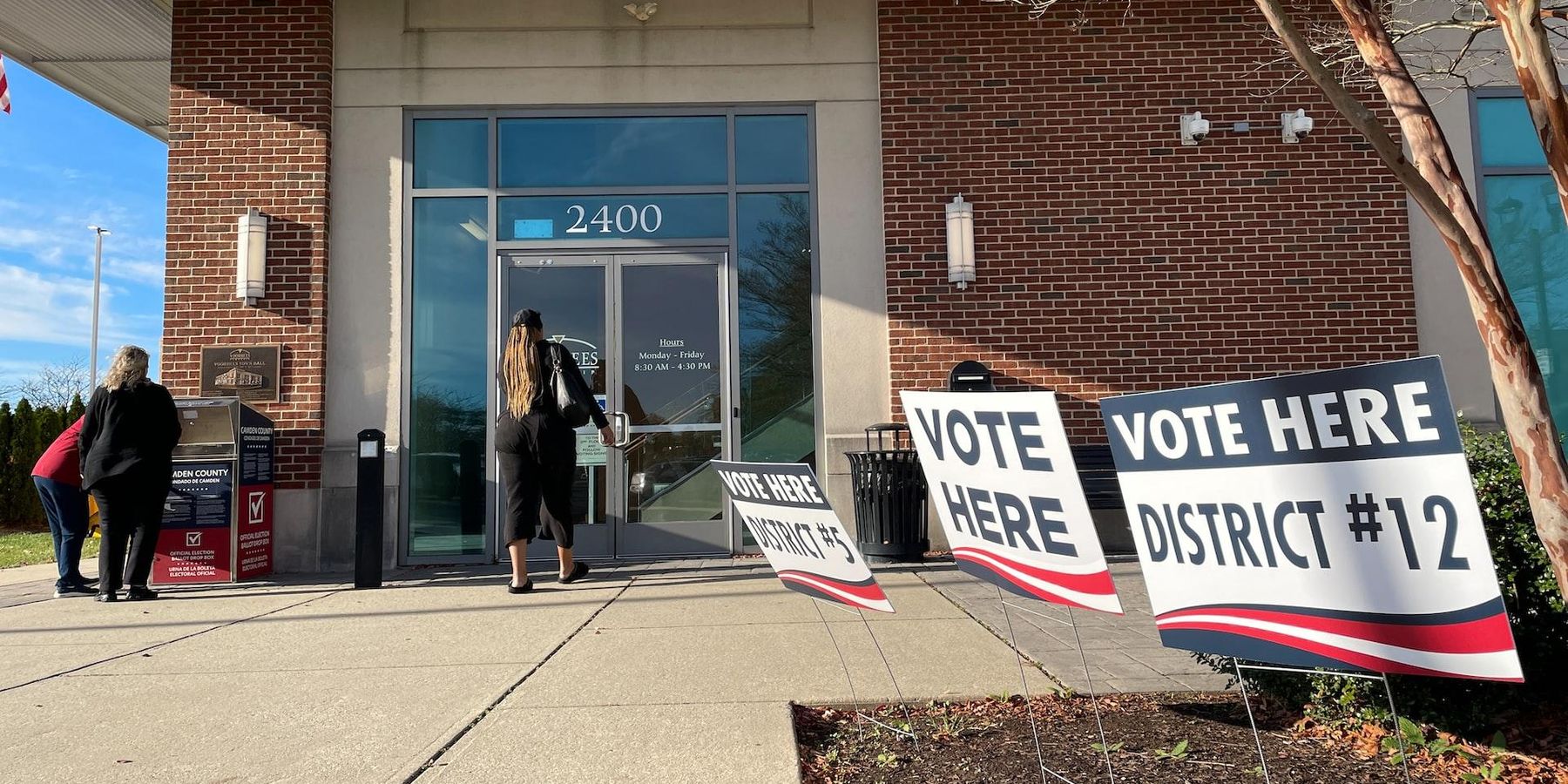
The midterms came and went. And because we have to, you know, count all of the ballots, some things are still unresolved. However, here are some quick environmental takeaways.


There were only two major state initiatives on energy and the environment this year.

First, a $4.2 billion measure in New York state split up this way:

  • $500 million to electrify school buses;
  • $400 million for green building projects;
  • $1.1 billion to restoration and flood risk reduction and rehabilitation and shoreline restoration projects;
  • $650 million toward open space land conservation and recreation;
  • $650 million for water quality improvement and resilient infrastructure.

New York state voters approved this measure on Tuesday.

California voters rejected Proposition 30, which would have funded infrastructure for zero-emissions vehicles and a Wildfire Prevention Initiative by imposing additional income taxes on top-earning Californians.

Green governors 

new york governor hochul

Kathy Hochul (center), governor of New York.

Credit: Metropolitan Transportation Authority/flickr

Re-elected governors who have vowed aggressive action on climate change include:

  • Gavin Newsom (D-Calif.)
  • Kathy Hochul (D-N.Y.)
  • Gretchen Whitmer (D-Mich.)
  • Janet Mills (D-Maine)
  • Michelle Lujan Grisham (D-N.M.)

And then there are the newcomers: Wes Moore (D-Md.) and Maura Healey (D-Mass.)

Climate ignored in key races

The Atlanta Journal Constitution reported that the Warnock-Walker clash (headed for a runoff scheduled for Dec. 6) had cost the two campaigns and their worldwide financial backers a quarter billion in campaigns rooted in negative advertising. But not a word about America’s climate future — not even a hopeful one — entered the media strategy of either man.

Nor did climate draw much water in Florida, where the homes of roughly 10 million residents are in communities projected to be underwater later this century. Republican Ron DeSantis, just re-elected as governor, and re-upped Republican Senator Marco Rubio both had principal residences in doomed Dade County, just down the freeway from equally doomed Mar-A-Lago.

Uber-denier Inhofe retires

senator inhofe climate change

Oklahoma Repulican Senator Jim Inhofe, a long-time climate change denier, retired.

Credit: Gage Skidmore/flickr

Few would dispute retiring Republican Oklahoma Senator Jim Inhofe his unofficial title as Capitol Hill’s Alpha Dog of climate denial. But I’m holding him to his promise of an interview on Nov. 18, 2034, his 100th birthday. We’ll check in with Inhofe to see how his climate “hoax” is working out. Inhofe turns 88 next week and has been a senator for 28 years.

Democrat Pat Leahy also retires in January when the current Senate session ends. He’s been a pro-environment stalwart on acid rain and other issues for 48 years.

Peter Dykstra is our weekend editor and columnist and can be reached at pdykstra@ehn.org or @pdykstra.

His views do not necessarily represent those of Environmental Health News, The Daily Climate, or publisher Environmental Health Sciences.



A wooden path in the forest leading into the distance

‘What can I offer?’ New book helps readers navigate their climate journeys

In “Climate Wayfinding,” Katharine Wilkinson helps readers take — and sustain — climate action.

A view of a lake with dry mountains in the background

Massive Box Elder County data center could increase Utah’s carbon emissions by 50%

Gov. Spencer Cox fiercely defended the project arguing that every state has the responsibility to accommodate data centers for national security reasons.

A shipping dock with a loaded tanker floating by

Maritime nations push forward with global carbon fee on shipping

The world’s maritime nations preserved a plan to adopt the first global carbon fee on shipping, as they agreed to keep working on it in the fall.

Red and orange flames with black smoke in the distance

The Iran war has changed the global energy system forever

The conflict may be the beginning of the end of fossil fuel dominance.
Two people sitting across from each other at a wooden table with a wooden gavel

Event with links to oil industry teaches judges climate skepticism

A symposium hosted by a center funded by the fossil fuel industry educates judges about free-market views of climate science.

A hummingbird lands on a flower

Toxic chemicals and climate change work together to harm fertility across species

In a recent review published in NPJ Emerging Contaminants, researchers examine how toxic chemicals can reduce fertility in both humans and wildlife, and how these effects are worsened by climate change.


In short:

  • Animals - including insects, fish, reptiles, birds, humans, and other mammals - are constantly simultaneously exposed to synthetic chemicals and the impacts of climate change, including rising temperatures.
  • Both of these stressors can harm fertility, and many of the impacts found are similar across species, such as effects on sperm and eggs.
  • The stress caused by these exposures also impacts overall health, harming animals’ ability to adapt to a changing environment and worsening global biodiversity loss.


Key quote:

“To build a sustainable future, we must recognize that chemicals, once released, don’t simply disappear. Instead, they contribute to the larger issue of driving humanity towards the exceedance of planetary boundaries when considered in combination with climate change and other planetary-level impacts.”


Why this matters:

While climate change and toxic endocrine disrupting chemicals (EDCs) are both individually well-established as health threats, few studies have examined the implications of the widespread simultaneous exposure experienced by humans and wildlife. Many EDCs can also impact health across multiple generations, meaning their harm continues long after the original exposure. To better tackle the issue of EDCs, the authors of this study emphasize the need for strong regulations that address chemicals by class, rather than individually.


Related EHN coverage:


More resources:


Brander, S. et al. (2026). Impacts of environmental stressors on fertility and fecundity across taxa, with implications for planetary health. NPJ Emerging Contaminants.

Solar panels juxtaposed against transmission lines and wind turbines
Credit: kckate16/ BigStock Photo ID: 478351339

Hope is contagious and science is king: 10 big lessons on ending the fossil fuel era

At world-first Santa Marta climate meeting, delegates say it was ‘euphoric’ to finally be focusing on concrete solutions.

From our Newsroom
Multiple Houston-area oil and gas facilities that have violated pollution laws are seeking permit renewals

Multiple Houston-area oil and gas facilities that have violated pollution laws are seeking permit renewals

One facility has emitted cancer-causing chemicals into waterways at levels up to 520% higher than legal limits.

Regulators are underestimating health impacts from air pollution: Study

Regulators are underestimating health impacts from air pollution: Study

"The reality is, we are not exposed to one chemical at a time.”

Pennsylvania governor Josh Shapiro speaks with the state flag and American flag behind him.

Two years into his term, has Gov. Shapiro kept his promises to regulate Pennsylvania’s fracking industry?

A new report assesses the administration’s progress and makes new recommendations

silhouette of people holding hands by a lake at sunset

An open letter from EPA staff to the American public

“We cannot stand by and allow this to happen. We need to hold this administration accountable.”

wildfire retardants being sprayed by plane

New evidence links heavy metal pollution with wildfire retardants

“The chemical black box” that blankets wildfire-impacted areas is increasingly under scrutiny.

Stay informed: sign up for The Daily Climate newsletter
Top news on climate impacts, solutions, politics, drivers. Delivered to your inbox week days.