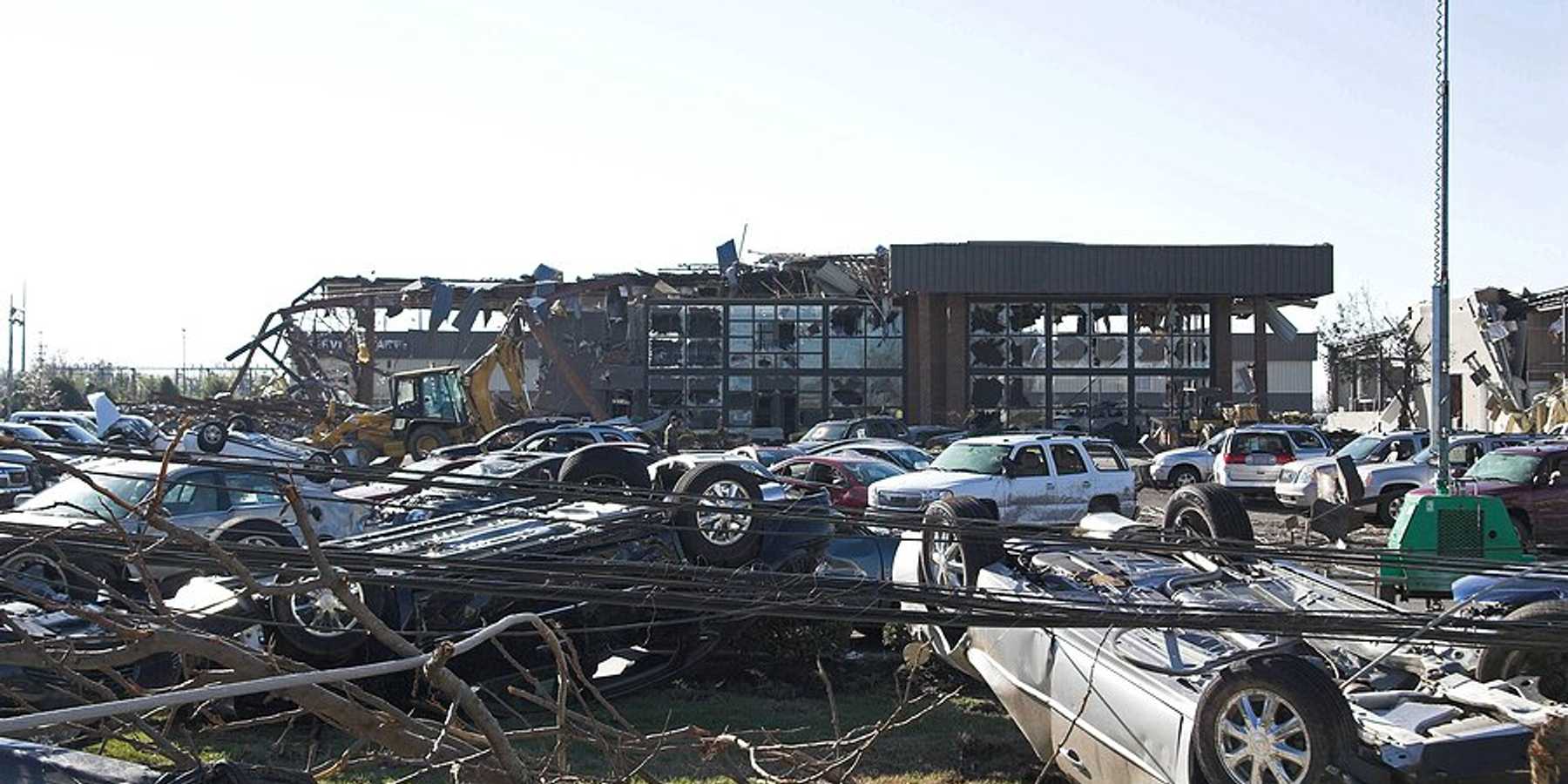
A damaged business with overturned cars.

Climate-fueled disasters threaten the survival of local small businesses

As hurricanes, wildfires, and floods intensify, many U.S. small businesses are closing for good because insurance, loans, and relief arrive too late.

Tik Root reports for Grist.


In short:

  • Hurricane Helene cut Asheville’s 2024 fall tourism season short, slashing annual sales by 20%–40% and leaving popular spots like New Origin Brewery waiting nearly a year for a federal buyout.
  • Nationally, 40% of small firms never reopen after a natural disaster and another 25 % shut within a year, while just 14% manage to tap federal aid through the Federal Emergency Management Agency or the Small Business Administration.
  • Experts urge owners to review insurance, safeguard inventory, and build cash buffers, and they call for faster tools such as parametric coverage and a federal “small-business resilience czar.”

Key quote:

"Support makes a meaningful difference. For a lot of businesses it is the difference between closing down and surviving, but it doesn’t reach all the businesses that could benefit."

— Shehryar Nabi, senior research associate, Aspen Institute Financial Security Program

Why this matters:

From Main Street diners to neighborhood hardware stores, small businesses knit communities together with jobs, tax revenue, and the informal safety nets that big chains seldom provide. When a hurricane or wildfire knocks one out, the economic pain doesn’t stop at the storefront: Employees lose paychecks, local governments forfeit sales taxes, and residents have fewer places to gather, shop, and weather the next shock. Because smaller firms rarely have deep cash reserves or backup locations, even a short interruption can snowball into permanent closure, eroding community cohesion and widening wealth gaps. As climate-driven disasters grow more frequent, the attrition of small businesses compounds the human cost of extreme weather, turning physical damage into long-term social and economic wounds.

Related: Trump’s climate funding freeze leaves rural businesses in limbo
A large truck driving through a flooded street

Are Canadians more afraid of floods — or flood maps?

Canada’s outdated flood maps put people at risk. In Montreal, a battle over updating them highlights a nationwide worry over home values and insurance costs
A herd of cows in a green field looking at the camera

In Denmark, sick cows and a lot of questions

Farmers blame a food additive required by the Danish government to cut methane emissions, but the source is unclear.
A deforested area with green forest behind it

Major Brazilian grain traders quit Amazon conservation pact

Several of Brazil’s largest grain traders are withdrawing from a nearly two-decade-old agreement that restricts soy purchases linked to Amazon deforestation.

A refinery at night in front of a water source

What Trump’s Venezuela strategy means for Black communities

Environmental justice advocates warn that refining Venezuelan oil will concentrate more pollution and cancer risk in majority-Black communities along the Texas and Louisiana Gulf Coast.

An illustration of a turtle with plastic in its mouth, surrounded by plastic bottles

Microplastics are undermining the ocean’s ability to absorb carbon

Research reveals microplastics may impair the ocean’s ability to absorb carbon dioxide, weakening a natural buffer against climate change.
A view of solar panels and wind turbines with mountains in the background

A year of clean energy milestones

Even as the Trump administration rolled back support for renewable energy in the U.S., wind, solar, and electric vehicles made huge strides globally in 2025.

A Greenland glacier receding from a brown and gray valley
Credit: Visit Greenland/Unsplash

Scientists just got some ancient clues about future sea-level rise — and it’s bad news

Rock samples collected from the Greenland ice sheet’s Prudhoe Dome show it completely melted in the past 10,000 years — and could vanish again amid climate change.
From our Newsroom
Multiple Houston-area oil and gas facilities that have violated pollution laws are seeking permit renewals

Multiple Houston-area oil and gas facilities that have violated pollution laws are seeking permit renewals

One facility has emitted cancer-causing chemicals into waterways at levels up to 520% higher than legal limits.

Regulators are underestimating health impacts from air pollution: Study

Regulators are underestimating health impacts from air pollution: Study

"The reality is, we are not exposed to one chemical at a time.”

Pennsylvania governor Josh Shapiro speaks with the state flag and American flag behind him.

Two years into his term, has Gov. Shapiro kept his promises to regulate Pennsylvania’s fracking industry?

A new report assesses the administration’s progress and makes new recommendations

silhouette of people holding hands by a lake at sunset

An open letter from EPA staff to the American public

“We cannot stand by and allow this to happen. We need to hold this administration accountable.”

wildfire retardants being sprayed by plane

New evidence links heavy metal pollution with wildfire retardants

“The chemical black box” that blankets wildfire-impacted areas is increasingly under scrutiny.

Stay informed: sign up for The Daily Climate newsletter
Top news on climate impacts, solutions, politics, drivers. Delivered to your inbox week days.