In early March, the Washington state legislature passed a community solar incentives bill meant to help meet renewable energy goals and increase low-income communities' access to solar technology.
The bill, HB 2248, enjoyed widespread stakeholder support; environmental justice groups, renewable energy coalitions, and utility companies were all on board.
The day after the bill passed, Washington Governor Jay Inslee shut down public schools in response to the escalating COVID-19 pandemic. Over the next few weeks, as businesses were shuttered, and a stay-at-home order was issued and then extended, it became increasingly clear that the pandemic would not be easily contained and that the loss to human life and economic stability would be far-reaching.
In early April, the governor vetoed HB 2248, citing the state's economic fallout.
"Funding in the state budget really needed to go toward the most essential state services," the bill's main sponsor, Representative Beth Doglio (D-Olympia), told EHN. "Unfortunately, the governor did not consider…the community solar bill to be something that we should be investing in right now."
The fate of the Washington state solar bill is a microcosm of what economists and industry groups say is a profound and nationwide disruption to renewable energy development and progress toward greenhouse gas emissions reductions goals. In stark contrast to the "silver lining" stories of short-term emissions reductions related to stay-at-home orders, experts say that job losses and declining investments are hampering U.S. strides toward a clean energy future.
Even so, they say the disruption is an opportunity to invest more conscientiously in renewable infrastructure.
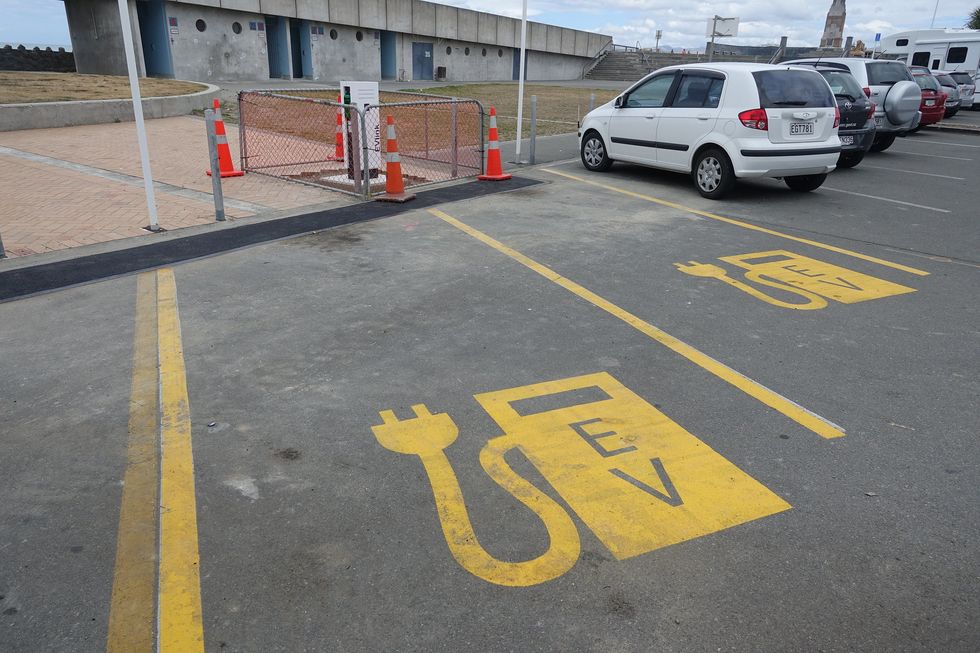
Electric car charging area. By the end of 2020, global electric vehicles sales are expected to contract to 43 percent of 2019 levels. (Credit: Christchurch City Libraries/flickr)
Investment declines
A team of researchers, led by Yale economist Kenneth Gillingham, attempted to quantify the impact of the COVID-19 related disturbances to renewable energy investments on long-term greenhouse gas emissions.
"We were seeing these declines in air pollution and improvements in air quality when the lockdowns occurred. And a lot of articles about this…'silver lining', if you will," Gillingham told EHN. "But I was also recognizing that the pretty substantial innovation we've been seeing in clean energy over the past few years is being slowed."
Assuming delayed investments parallel those of the last significant recession between 2007-2009, Gillingham's team estimated that the result of a COVID-19 related recession would be an additional 2,500 million metric tons of carbon dioxide released between 2020 and 2035.
This far outpaces the shutdown-related emissions reductions and is the equivalent of burning 5.79 billion barrels of oil.
The team's report predicted that smaller, less established renewable energy businesses may be forced to close, and others, such as automotive companies, would slow or suspend development and production of clean energy technology as the market declines. Public electric car charging station construction could also be slowed.
By the end of 2020, global electric vehicles sales are expected to contract to 43 percent of 2019 levels. Further, as Americans face reduced or eliminated incomes, they are less likely to invest in rooftop solar or make energy efficiency modifications to their homes.
"Anytime that there's a vast amount of uncertainty…you're much more likely to see investments decline," said Gillingham. "It's hard to focus on new products and new technologies for five years from now, when you're just hoping to make it to tomorrow."
Job loss
Clean energy workers are already feeling the slump.
In a June 15 analysis, the BW Research Partnership, a company that tracks business trends, reported that 620,590 U.S. renewable energy employees have lost their jobs since the pandemic began.
This loss represents 18 percent of the industry.
The report emphasizes that many companies were able to avoid layoffs due to the Paycheck Protection Program (PPP), a federal program that grants forgivable loans to small companies to help them retain employees during COVID-19 related shutdowns.
However, the report cautioned that another round of layoffs may occur when the PPP expires. On June 30, hours before the PPP was set to end, Congress extended it to August 8.
A&R Solar, a small business but one of the Pacific Northwest's largest solar installers, has thus far been able to weather the storm, but not without injury.
"Early on, we did know that we were going to be forced to lay off, permanently, a handful of people. Some had just gotten hired on to the sales team and we just knew that it was not going to be a growth year in sales," CFO Dave Kozin told EHN. "Thankfully, everyone was at least eligible for unemployment."
Washington state was one of the hardest hit for clean energy job losses since the pandemic began, with 21,242 people losing work, according to the BW Research Partnership report. Other hard hit states include California and Georgia with 109,712 and 28,932 job losses, respectively.
Kozin said that the PPP was instrumental in floating the company during Washington state's shutdown. Once the company was able to get back to work, they had a backlog of projects to work though even while sales had slowed.
"We feel somewhat confident that we'll be able to keep all of our employees busy through the end of the year," he said. "Once we're back into January, February, if we're still looking at lockdowns and a lot of economic uncertainty, it could be a really tough first quarter for us in 2021."
Efficiency sector hit hardest
The Solar Energy Industries Association (SEIA), a U.S. trade group that lobbies for solar to meet 20 percent of U.S. energy needs by 2030, reported that the job losses caused by the pandemic have undone five years' worth of industry gains, with 38 percent fewer workers employed than forecast before COVID-19.
Likewise, new solar installation is 37 percent below projection for 2020, a number that represents a loss of infrastructure that could power 288,000 homes and an economic investment of $3.2 billion, according to SEIA.
Sean O'Leary, communications director at the NW Energy Coalition, an organization of 100 independent entities working toward renewable energy development in the Pacific Northwest, agreed that small solar companies had taken hits across Washington and also emphasized the losses in the energy efficiency sector.
"Most energy efficiency jobs happen in local communities with local businesses: heating, ventilating and air conditioning contractors, lighting contractors, places like that," O'Leary told EHN.
O'Leary said that energy efficiency contractors have become the "cutting edge" of clean energy because building and system improvements lead to dramatic reductions in overall energy requirements.
"Everybody's familiar with solar and wind. You can see the panels and you can see the turbines. But energy efficiency, actually, both in terms of the volume of clean energy that it provides, and also in terms of employment is by far the largest sector," said O'Leary. "And it also, for the same reasons as solar, is taking a pretty severe blow right now."
The BW Research Partnership report names the energy efficiency industry as having had the heaviest losses: roughly 431,800 jobs across the United States, representing seven out of 10 clean energy jobs lost.
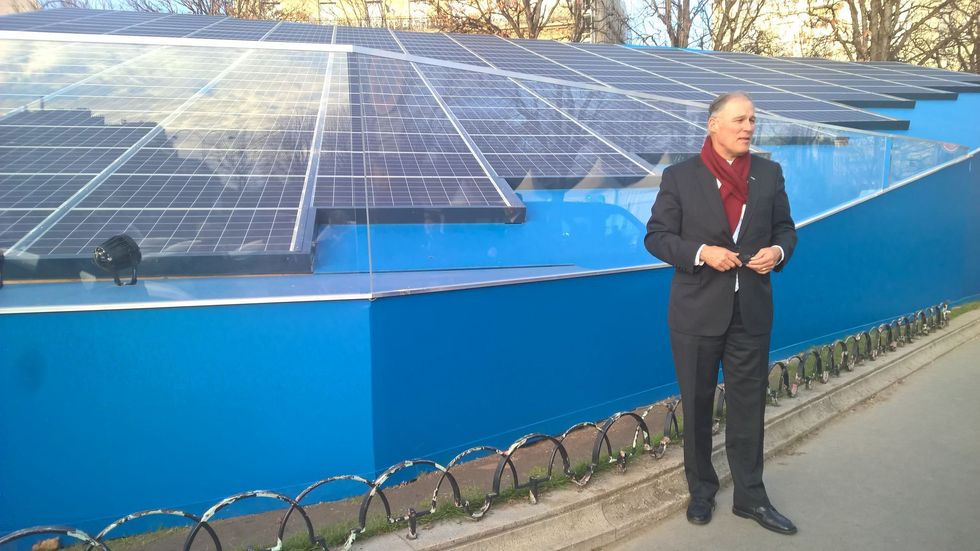
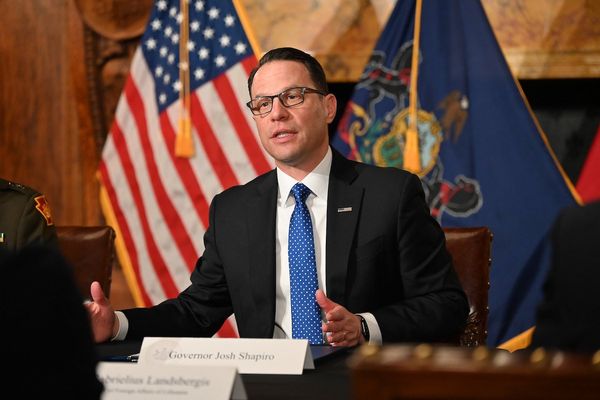
Washington state Gov. Jay Inslee and at a solar installation in Paris in 2015. (Credit: Governor Jay & First Lady Trudi Inslee)
“Policy action could change the whole story”
Despite the bleak picture painted in his study and corroborated by other reports, Gillingham said that policy intervention "could make a pretty massive difference."
"When you're hitting a situation like this one, where policymakers recognize that something needs to be done, that many millions of people are jobless, and they're willing to consider stimulus packages, there's a lot of room for the stimulus packages to be oriented towards long-term clean energy investments," said Gillingham.
"If there's substantial investment in clean energy, besides obviously creating jobs at a time when you need them, you could also see benefits in the long run to the environment. Policy action could change the whole story," Gillingham added
On July 1, the U.S. House of Representatives passed the Moving Forward Act, a bill intended to reestablish economic stability during the pandemic by investing in infrastructure and creating jobs. It has some provisions that support renewable energy development. Groups such as SEIA as well as Greenpeace and the Sunrise Movement, praised the effort as a step in the right direction, but the latter groups said much more investment was needed to secure a clean energy future.
In a press release, U.S. Senate Majority Leader Mitch McConnell opposed the bill, calling it "the cousin of the Green New Deal" and stating that "this nonsense is not going anywhere in the Senate."
As Washington state stares down a nearly $9 billion dollar COVID-19 related budget deficit through 2023, Representative Doglio says that, unless something changes, HB 2248, the community solar bill, is unlikely to be realized anytime soon.
"Revenue in this state is going to be a very hard thing to come by and [HB 2248] probably won't rise up to a priority bill for a number of years," said Doglio. "The only thing I could see is if the federal government has some sort of a stimulus package that gives money to the states to create renewable energy projects."
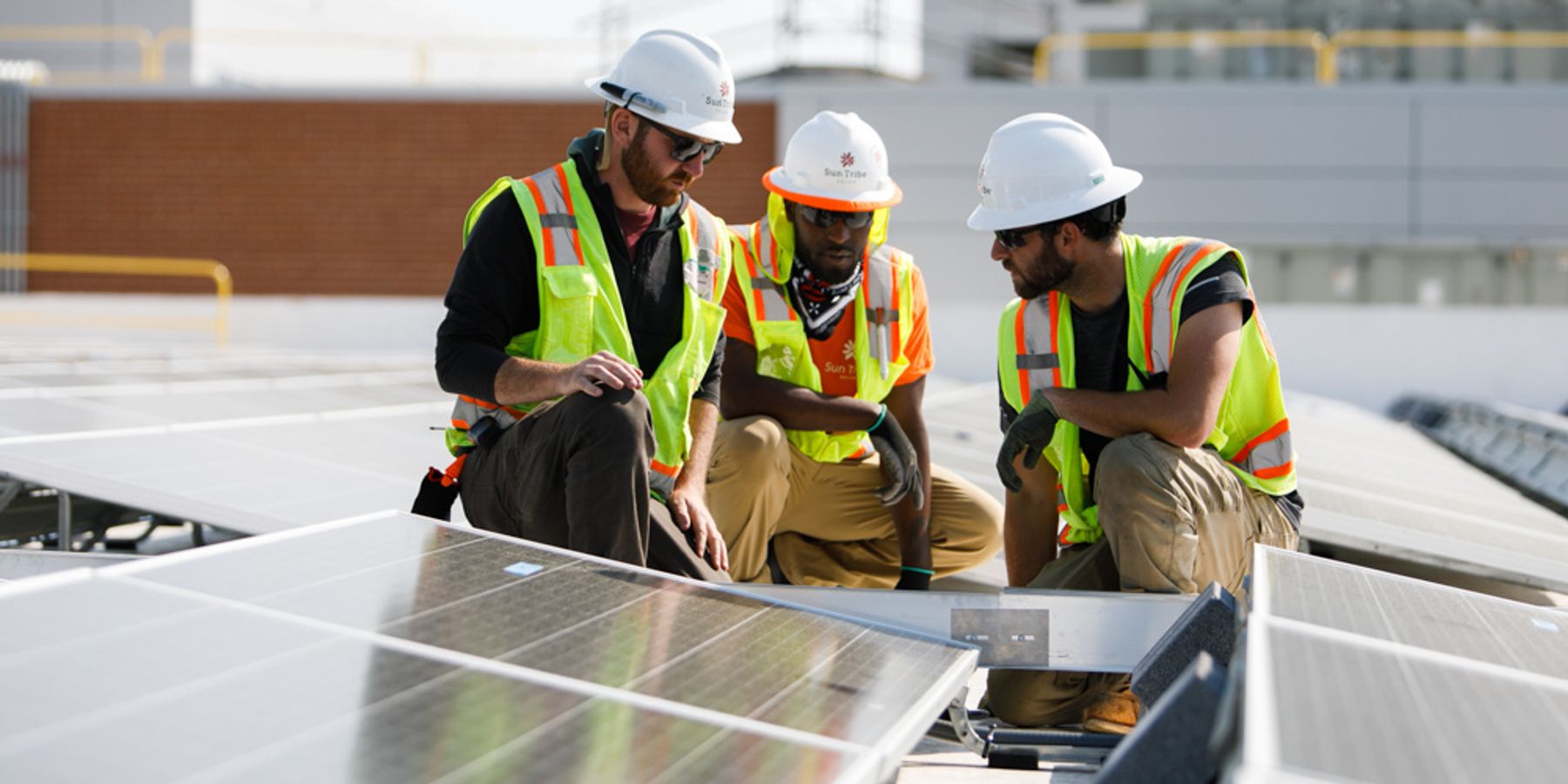
Banner photo: Sun Tribe Solar technicians installing solar panels. (Credit: Sun Tribe Solar)