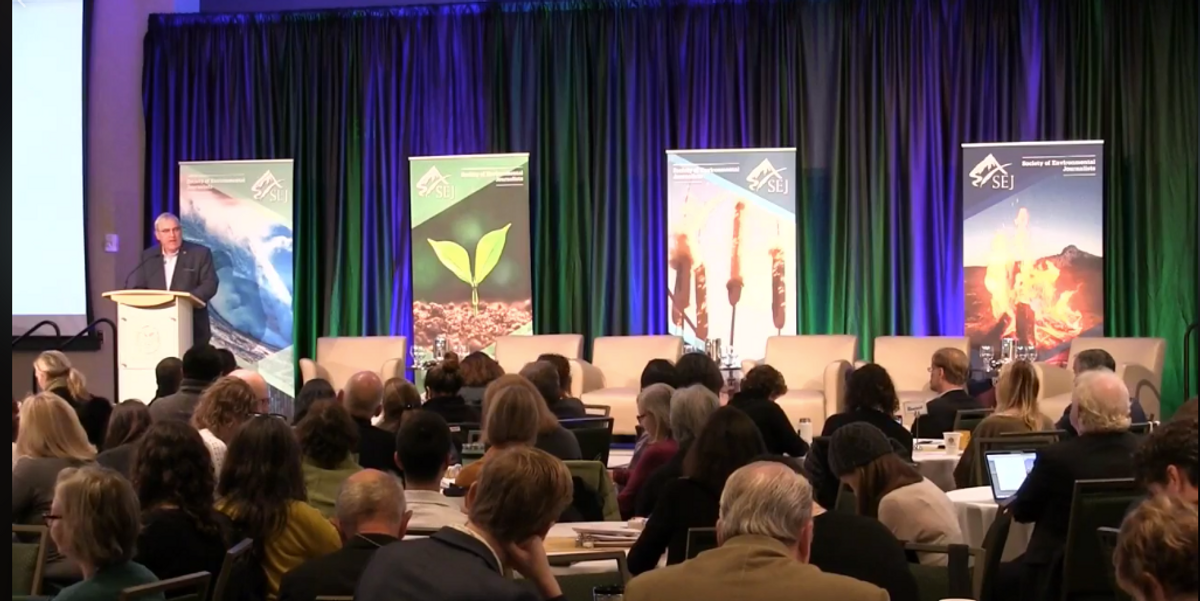
I've made it to most of the Society of Environmental Journalists' 29 annual conferences, but not this one.
SEJ is the Jimmy Carter of non-profits – overlooked in real-time, but looking better and smarter with each passing year. This year's conference wraps up Sunday in Fort Collins, Colo (follow the action on social media via #SEJ2019)
SEJ's first national conference took place in 1991. It's now older than many of its members. At least one or two of its current Board members were fetuses back then. Most of its charter members are in their sixties, seventies, or beyond. Or gone. The membership used to be weighted toward full-time environment writers for daily newspapers. Now, the core is freelance journalists (though I've been trying to push the frequently more accurate term "subsistence journalists").
New blood working the beat
The beat has been re-energized in such legacy media giants as the Washington Post and New York Times. But SEJ's strength also lies in a proliferation of new sites doing dynamic investigative work and vivid storytelling.
Here are but a few:
The Intercept

Bankrolled six years ago by EBay entrepreneur Pierre Omidyar, this website has rattled cages across the political landscape. Sharon Lerner is their prolific investigative reporter on the environment.
Southerly Magazine
A collection of long-reads on environmental issues in the American South. The year-old startup is the work of Lyndsey Gilpin, who seeks to fill in the gaps in a region vastly underserved in environmental reporting and storytelling.
The Revelator
Two years ago, the Arizona-based advocacy group Center for Biological Diversity launched a news site, The Revelator. Its well-told stories on species, habitats, and politics rapidly became a must-read.
Heated

A few months ago, Emily Atkin took her unique blend of insight and smart-ass from a very established place, The New Republic, to her new four-times-weekly newsletter, Heated.
Inside Climate News
When a startup site wins a Pulitzer, as Inside Climate News did six years ago, it suddenly no longer looks like a startup. But publisher David Sassoon's masterful adherence to an ambitious business plan can stand as a model for all others. It turns 12 years old this month.
Undark
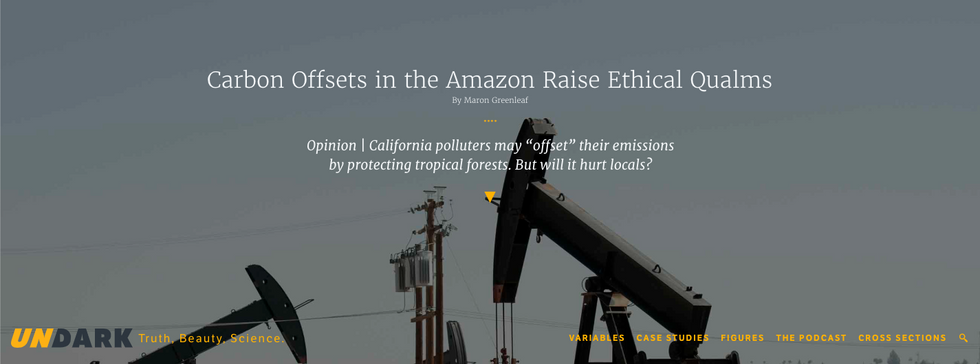
Another Pulitzer winner, MIT's Deborah Blum, puts out a stream of big-think pieces at Undark. Its tagline: Truth, beauty, science.
And the list goes on...
There are too many other quality sites to mention, but here are four more that shouldn't be ignored: The solution-oriented theme of Ensia; the urban-ish tone of Citylab; the food-oriented scoops of FERN; and the saltwater stories of Hakai.
One recent casualty in the perilous world of nonprofit publishing is Pacific Standard, whose deep dives into environmental stories will be missed. It main funder pulled the plug in August.
Climate news goes mainstream

With climate change finally breaking through as a frontline issue for virtually all news outlets, and a zillion other plagues – ocean plastics, glyphosate, water quality, Trump's regulatory purge – making waves, our beat is poised to rise in prominence for the worst of all reasons: Out home planet is literally a hot mess.
We also press forward with an uncomfortable form of vindication: The planet is indeed warming up, and despite some strong efforts, getting dirtier. Species are indeed disappearing. So are habitats, from Arctic ice to tropical forests. Just like SEJ members and others have been reporting for decades.
The beat continues to face traditional foes: Indifference or timidity on the part of some bosses; the shaky financial footing for all journalism; well-heeled, slick, and often unprincipled interests who like to portray our news as Fake News.
But the beat goes on, and it's more crucial than ever.