Peter Dykstra: Environmental journalism pioneers
A nod to some folks who've bettered the craft and the planet.
Rachel Carson
Spanning the Allegheny River in downtown Pittsburgh are three taxicab-yellow suspension bridges. They were built in the 1920's and named in honor of three distinguished Pittsburghers: Baseball hero Roberto Clemente; the artist Andy Warhol; and the incomparable writer Rachel Carson. Her works on the ocean led to the groundbreaking Silent Spring. But I dare you to name another environmental pioneer that's had a bridge named in her honor.
Dan Fagin
His 2013 book Toms River was a gumshoe classic, tracing the lethal pollution in a Jersey Shore town to its many sources. Fagin told a tale that didn't just finger the usual suspects – a multinational's factory on the west edge of town and a Sopranos-like dumping racket to the north – he kept digging until the gum on his shoes was more than 400 years old. European dyemakers and genuinely mad scientists left a trail to the present day. Fagin won a Pulitzer for his concoction of chemistry and history.
Phil Shabecoff
His New York Times career included a memorable dozen years on the environment beat. But his post-Times career saw his 1991 creation of Greenwire, an electronically delivered daily environmental news summary. He also wrote A Fierce Green Fire, a history of the American environmental movement.
Bill Kovarik
He has been an Associated Press bureau chief, a Radford University professor, and a researcher for EHN and Daily Climate. His environmental history timeline is a priceless research tool. Example: In 1285 A.D., Marco Polo reported finding "a black rock that burns."
Robert Bullard
It's been more than 30 years since Bullard published his seminal Dumping in Dixie, the book that defined environmental racism. Bullard, who is now at Texas Southern University, continues to earn the title "Father of the Environmental Justice Movement."
Murray Feshbach (d. 2019)
Feshbach was a demographer who specialized in uncovering and untangling the murky details of life in the Soviet Union. His Ecocide in the U.S.S.R., co-authored with Alfred Friendly, Jr., was one of the first works to tear the curtain away from decades of horrid chemical and radioactive poisoning.
Naomi Oreskes
She wrote what so many were thinking when she and Erik Conway published Merchants of Doubt in 2010. So many public health and environmental controversies have been sandbagged by industry-backed pseudoscience – whether climate change is real, or whether tobacco smoke is really linked to lung cancer – that doubt itself has blossomed into its own industry. But what "industry" benefits from anti-COVID vaxxers? Is doubt now manufacturing itself?
Beth Parke
Parke comes to this list by a different path. Journalists share a few unfortunate traits: We're terrible business people who are immune to proper organizing or fundraising. As the only executive director the Society of Environmental Journalists had for its first quarter century-plus, she led the nearly un-leadable SEJ to relative stability.
David Sassoon
Sassoon, a former Rockefeller Foundation consultant, knew that the bleached bones of failed nonprofit blogs litter the cyberscape. But Sassoon methodically built his Solve Climate News blog into Inside Climate News, a journalism juggernaut that became the first web startup to win a Pulitzer in 2013.
Len Ackland
Ackland is a former Chicago Tribune reporter and editor of the prestigious Bulletin of the Atomic Scientists. Ackland established a fellowship program to train mid-career journalists in environmental reporting.
There are many more like these pioneers, battling low funding, editorial indifference, direct political pressure, and more.
With "traditional" news organizations on the ropes in so many ways, they represent the past, present, and future of our craft.
Peter Dykstra is our weekend editor and columnist and can be reached at pdykstra@ehn.org or @pdykstra.
His views do not necessarily represent those of Environmental Health News, The Daily Climate, or publisher, Environmental Health Sciences.
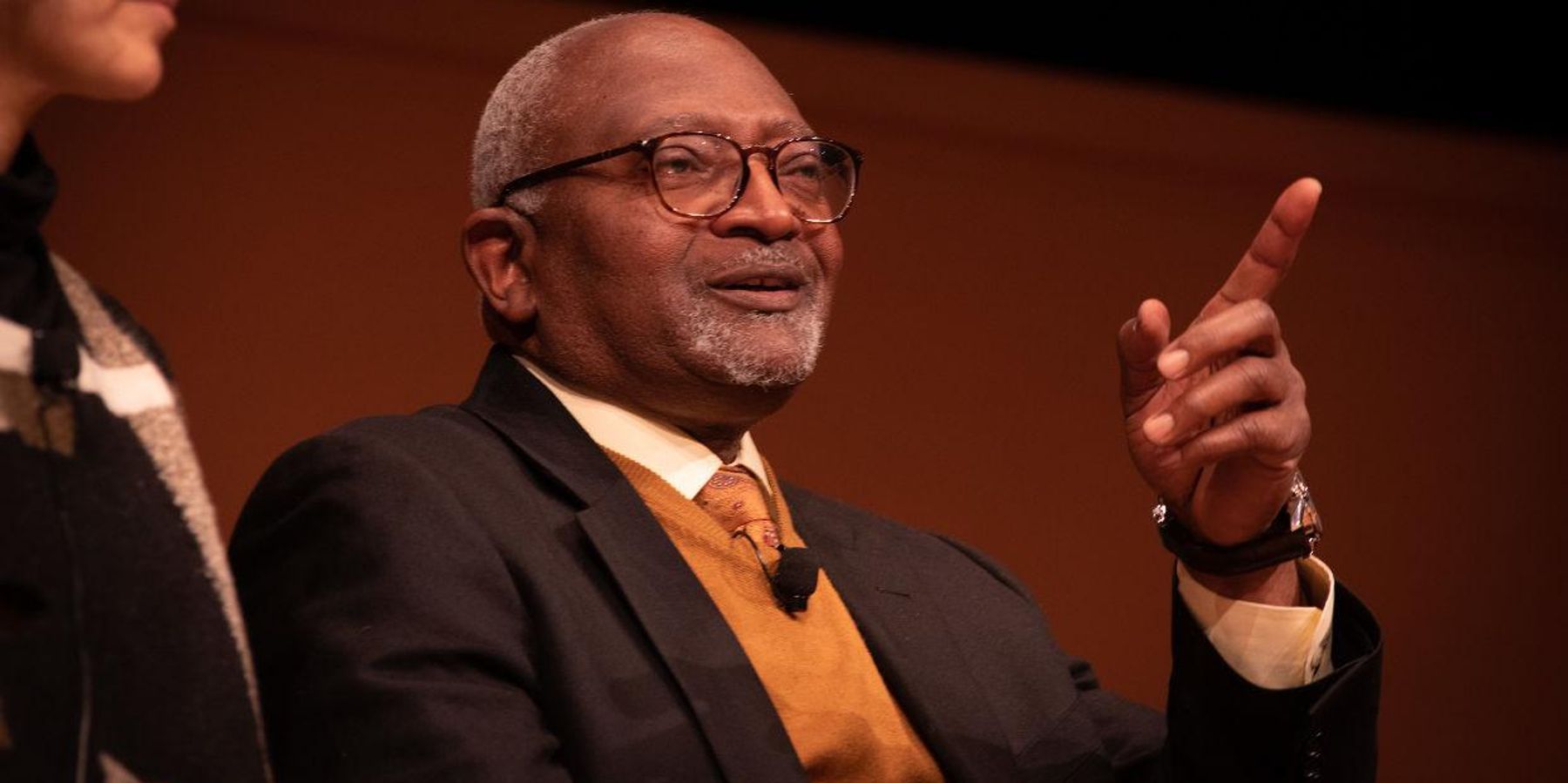
Banner photo credit: Dr. Robert Bullard, Known as the "Father of Environmental Justice," at the Michigan Environmental Justice Summit in 2017. (Credit: University of Michigan School for Environment and Sustainability/flickr)