Fellowship for U.S. climate scientists paused amid federal budget review

A group of early-career researchers in a National Oceanic and Atmospheric Administration (NOAA) climate science fellowship were furloughed this week after the Trump administration withheld program funding and canceled this year’s awards.

Rebecca Dzombak reports for The New York Times.


In short:

  • The Climate and Global Change Postdoctoral Fellowship, funded by NOAA since 1991, has been halted due to budget uncertainty, with ten current fellows placed on unpaid leave.
  • This year’s incoming class of fellows never received offers, as the program’s funding was suspended following the Trump administration’s proposed elimination of NOAA’s climate research budget.
  • Scientists say the pause disrupts critical research on oceans, extreme weather, sea level rise, and air pollution, and weakens the United States’ long-standing role in leading climate science.

Key quote:

“This program is small, but it’s a lot of bang for your buck.”

— Jessica Tierney, paleoclimate scientist at the University of Arizona and former Climate and Global Change postdoctoral fellow

Why this matters:

Scientific research doesn’t run on goodwill — it needs steady funding, long timelines, and skilled people. Pausing a program like NOAA’s Climate and Global Change Fellowship slows discovery in areas vital to understanding how climate change is reshaping the world. These fellows were studying how carbon is stored in the Southern Ocean, what happens to coral reefs in warming seas, and how climate extremes affect ecosystems and people. Cutting off that work now sends ripple effects through the broader scientific community and across international collaborations. And it signals to rising scientists that U.S. support for climate research is no longer reliable, risking a brain drain at a time when informed, data-driven policy is urgently needed.

Read more:

white pollution from smokestack billows over skyline during sunset.

Trump repeals U.S. government’s power to regulate climate

Nearly 17 years after the Environmental Protection Agency declared that carbon dioxide and other greenhouse gases threaten the public’s health and welfare, the agency on Thursday rescinded the landmark legal opinion underpinning a wave of federal policies aimed at climate change.

red and white building near body of water during daytime

The energy boom is coming for Great Lakes water

Delve into the relationship between Great Lakes water and energy, and its implications for the region's future.
Mountains in the sun with a small amount of snow

Snowpack has not improved in Nevada or the West

Snowpacks continue to look grim across Nevada and most of the western United States, as high temperatures and dry weather hamper snow accumulation.

a person riding a bike down the middle of a road surrounded by tropical forest

Banks decline to finance LNG project in Papua New Guinea

Twenty-nine global banks reject financing a Papua New Guinea LNG project led by TotalEnergies, citing climate, environmental and human rights concerns.
A small girl holding a model of an airplane

Researchers find a way to make airplanes fly on landfill gas

Specially designed efficient catalysts are at the heart of a reactor that makes sustainable aviation fuels from methane-rich gases created when waste decomposes.

A large plume of smoke billowing behind a building

Growing evidence points to link between autism and wildfire smoke

Two new studies have identified an alarming connection between exposure to wildfire smoke during pregnancy and autism in young children.
Industrial complex with polluting smoke rising from stacks.

As the Trump EPA prepares to revoke key legal finding on climate change, what happens next?

By revoking its 17-year-old scientific finding that greenhouse gases endanger public health and welfare, the U.S. Environmental Protection Agency will demolish the legal underpinning of its authority to act on climate change under the Clean Air Act.

From our Newsroom
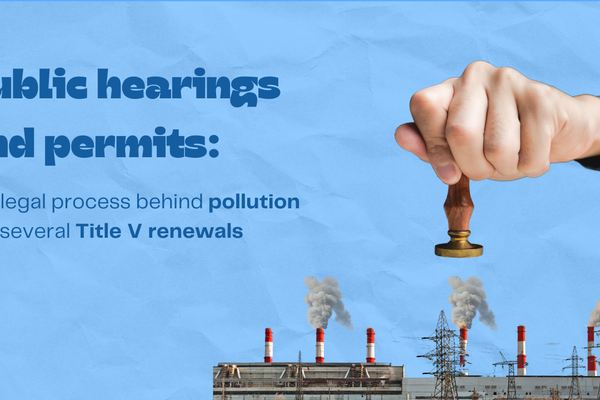
Multiple Houston-area oil and gas facilities that have violated pollution laws are seeking permit renewals

Multiple Houston-area oil and gas facilities that have violated pollution laws are seeking permit renewals

One facility has emitted cancer-causing chemicals into waterways at levels up to 520% higher than legal limits.

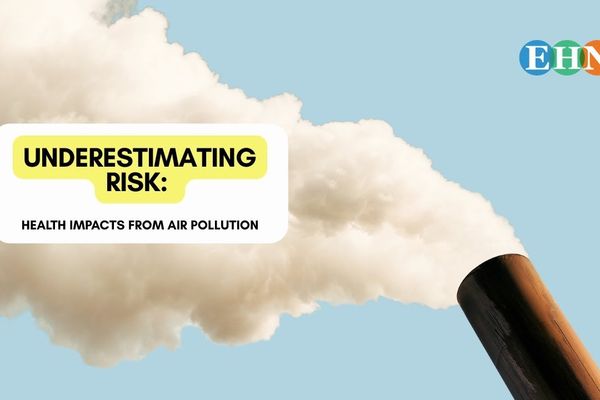
Regulators are underestimating health impacts from air pollution: Study

Regulators are underestimating health impacts from air pollution: Study

"The reality is, we are not exposed to one chemical at a time.”

Pennsylvania governor Josh Shapiro speaks with the state flag and American flag behind him.

Two years into his term, has Gov. Shapiro kept his promises to regulate Pennsylvania’s fracking industry?

A new report assesses the administration’s progress and makes new recommendations

silhouette of people holding hands by a lake at sunset

An open letter from EPA staff to the American public

“We cannot stand by and allow this to happen. We need to hold this administration accountable.”

wildfire retardants being sprayed by plane

New evidence links heavy metal pollution with wildfire retardants

“The chemical black box” that blankets wildfire-impacted areas is increasingly under scrutiny.

Stay informed: sign up for The Daily Climate newsletter
Top news on climate impacts, solutions, politics, drivers. Delivered to your inbox week days.