Public health in Pennsylvania ignored during fracking rush: Report
A new report outlines the alleged missteps in protecting Pennsylvanians from the health impacts of fracking.
In a rush to reap the economic benefits of fracking, the Pennsylvania Department of Health (DOH), the state General Assembly and three governors ignored or gave underwhelming responses to public health concerns, according to a new white paper from the nonprofit Environmental Health Project.
“[I]t is clear that, to date, many members of the General Assembly, the Governor’s Office, and the DOH have failed to make a good faith effort to understand and address the health risks and resulting health impacts of shale gas development,” the paper, entitled "Pennsylvania's Shale Gas Boom: How Policy Decisions Failed to Protect Public Health and What We Can Do to Correct It," states.
Environmental Health Project, a health organization focused on how shale gas drilling and its byproducts impact communities, collected health data from Pennsylvania residents living near shale wells, which now number more than 13,000 in permits, to make up for what it describes as inaction by the state.
“Since we have been doing this for 10 years, it seemed like time to reflect on the comprehensive narrative on how we got to where we are today,” said EHP Executive Director Alison L. Steele.
Research has linked increased risk of infant mortality, low birth rates, depression, and hospitalizations for skin and urinary issues to live near fracking wells. The findings come a year after Environmental Health News’ “Fractured” investigation, which found that Western Pennsylvania families near fracking are exposed to harmful chemicals, and regulations fail to protect communities' mental, physical, and social health.
The authors of the new report call for more funding to government agencies, for drillers to make public the list of chemicals they use, and a better way for residents to file environmental health complaints.
Original shale drilling law
The report criticizes Democratic Gov. Ed Rendell, whose term, from 2003 to 2011, saw the staging of the first fracking wells. However, it traces much of the systematic neglect to Act 13, passed in 2012 under Republican Gov. Tom Corbett.
The law established some fundamentals for shale drilling in Pennsylvania. It enabled the state to preempt some local environmental laws and zoning authority in order to establish uniform statewide standards for shale gas well development.
Act 13 also created the “impact fee,” an annual per-well fee paid by the operator. Pennsylvania is the only state to tax drill operators in this way; the 33 other oil producing states tax profits. While the fees generated about $150 million to $200 million a year, the report states that, “It has been estimated that a severance tax, either instead of or in addition to an impact fee, would have provided the state with billions of dollars in revenue over the first decade of the shale boom.”
Related: The body burden of living near fracking
This money could have gone toward mitigating the impacts of the fracking industry on infrastructure like highways and bridges, future capping of abandoned wells, or efforts to track the health effects of fracking. Environmental Health Project researchers could find no evidence that any impact fee revenue was put toward evaluating residents’ complaints or concerns about fracking.
The state kicked around the idea of creating a registry to log health complaints that may be related to contamination of ground water and other complications of fracking. Act 13 included $2 million for one, but that feature was cleaved off the bill before it passed.
Democratic Gov. Tom Wolf, who took office in 2015, proposed $100,000 for one and the General Assembly agreed to fund it in 2016. By then, “the DOH had been getting phone calls from residents with health complaints for several years, but there was no established structure, systematic protocol, or sustainability plan for the collection of reliable information,” the new report states, adding “it is possible that this move is still too little, too late to have a significant impact on the state of health research in frontline communities.”
Department of Health
The report gives Wolf credit for reinstating a ban on fracking on state-owned lands, which had been removed by Corbett, and for bringing health consequences of shale gas development back into conversation, but concludes that none of his actions have “limited residents’ exposure to toxic substances in their air and water, which continued to increase.”
The DOH also “failed in its own right to protect public health,” the report states, noting media investigations alleging that staffers were instructed not to return calls from residents reporting health problems linked to franking and “were given a list of words related to gas operations and told not to engage in conversations with residents who called about any of the words on the list.”
When reviewing calls about water and emissions near drilling operations on the ground, the DOH often collaborated with the federal Agency for Toxic Substances and Disease Registry, but their investigations yielded little follow up.
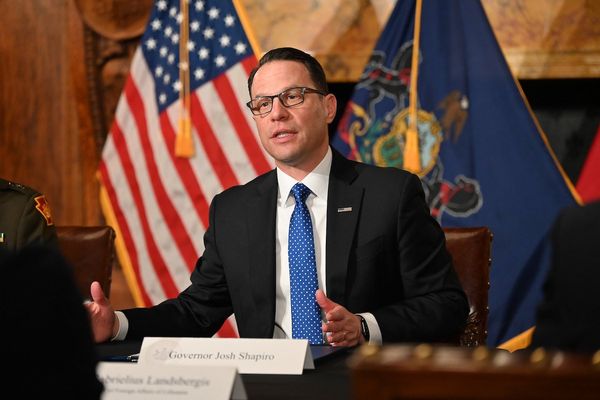
DOH’s stated position, in a correspondence with state Attorney General Josh Shapiro included in the report, was that “the science in this area is developing, and it is fair to say that it has not been proven that fracking harms public health.”
Steele said this approach contrasts starkly with the DOH’s responses to Covid-19 and to the opioid epidemic—which encompasses data collection, prescription drug monitoring and guidance and education for healthcare providers.
“We know that they are capable of delivering a public health response,” she said. “In this case, they were not given a mandate.”
Environmental Health Project is not the first to point out DOH inaction. Attorney General Shapiro, in a comprehensive report on the state’s response to fracking issued in 2020, stated that it was “remarkable that a newly created organization like [Environmental Health Project] swiftly gathered data and provided guidance to Pennsylvanians on how they could protect themselves from the effects of industry operations, while a long-established government entity, DOH, did not.”
DOH did not immediately return emails seeking comment.
Noting that neighboring New York and Maryland instituted moratoriums on shale drilling in light of new evidence of their public health costs, the Environmental Health Project concludes that, “The public health failures Pennsylvania’s governors have demonstrated with respect to shale gas development were not inevitable; they were choices. The only constraints were political.”
Editor's note: This article was updated to more accurately reflect EHP's positions, and to correct earlier errors in PA oil and gas laws.
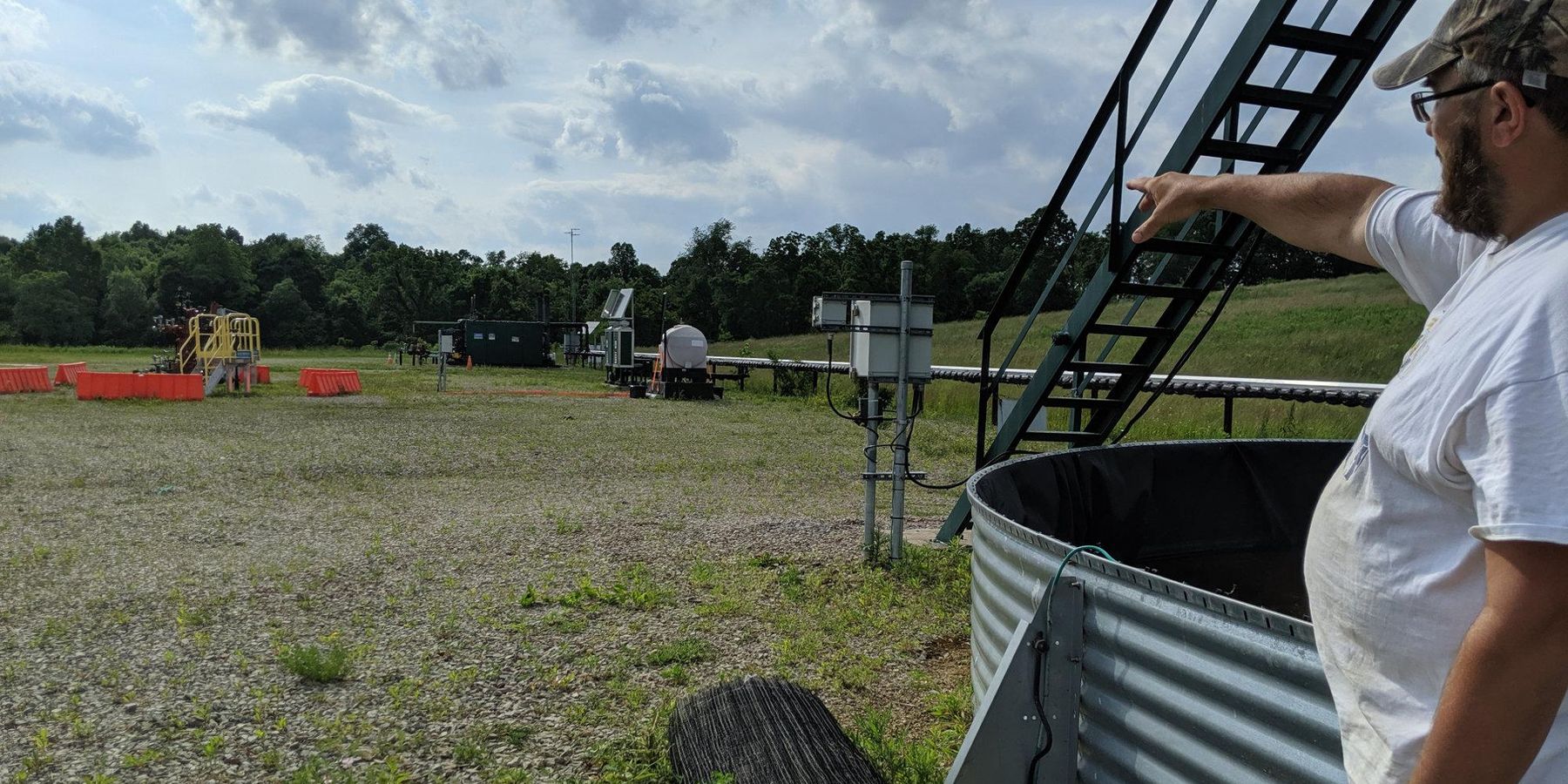
Banner photo: Bryan Latkanich of Washington County, Pa., points to drilling equipment near his home in 2019. (Credit: Kristina Marusic)