For most college students, Saturdays are for relaxing or spending time with friends, but Damar Garcia is often busy preparing campaign materials for community residents about the importance of ensuring that young people of color have greater access to nature in cities.
Garcia, an environmental activist and college student at Whittier College in Los Angeles County, works to ensure that young people of color in cities have greater access to nature and believes access to the outdoors can not only reduce health disparities among young people in cities, but it can be life-changing for them.
And evidence is mounting that Garcia and fellow advocates are on to something: This summer, the Center for American Progress and the Hispanic Access Foundation released a report which finds that lower income, communities of color experience "nature deprivation" at three times the rate as White Americans. According to the report, more than 76 percent of low income communities of color live in nature-deprived areas, with Black communities experiencing the highest levels of nature deprivation. And, last year, a study of ten U.S. cities by researchers at the University of British Columbia concluded that Latinos and African Americans in these cities have less access to green space in comparison to more affluent, White communities.
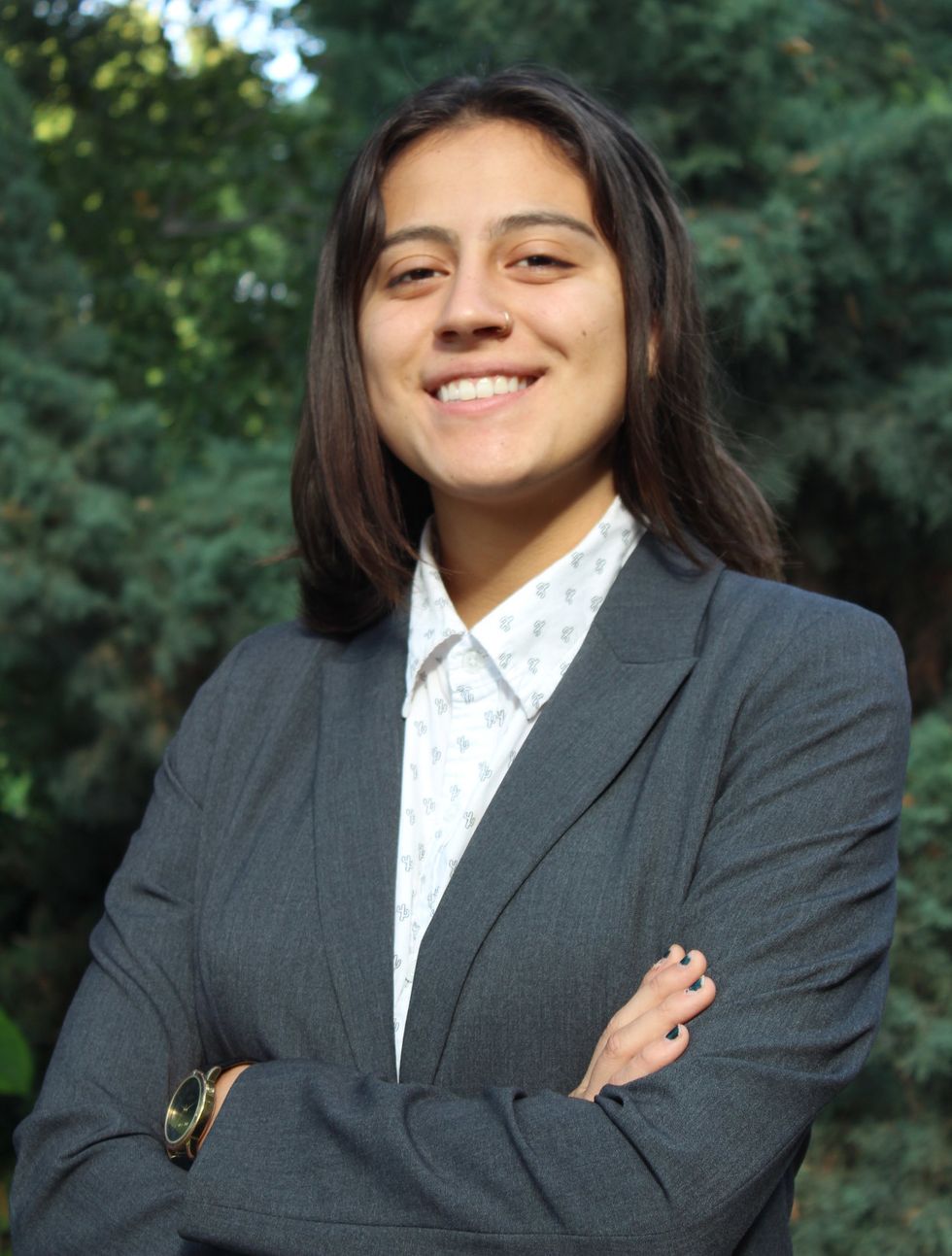 Damar Garcia
These disparities are concerning since nature brings considerable health benefits to residents. Studies consistently find that access to green space promotes the psychological well-being and general health of city dwellers, including young people, ranging from improved cognitive functioning, reduced symptoms of attention deficit hyperactivity disorder, reduced obesity, and lower rates of mental illness. In addition, lower income, people of color who live in polluted areas without access to nature are more susceptible to developing illnesses such as asthma, a risk factor for COVID-19.
While exposure to nature in cities can bring mental and physical benefits for urban youth, their access to green space has been diminishing over the last few decades, resulting in health disparities among youth living in U.S. cities.
Damar Garcia is a youth organizer who has campaigned on important issues ranging from immigration reform, mental health, climate justice, environmental racism, and food security, in both Los Angeles and in her hometown of Denver, Colorado.
As a youth leader with the Sunrise Movement and for Groundwork Denver, Garcia is working to educate young people, the public and decision-makers about the importance of ensuring that young people of color have greater exposure to nature and to the outdoors, with the hope to inspire them to become advocates for the natural environment.
In an interview for Environmental Health News, she shares her insights about the health disparities among young people due to lack of access to nature, what motivates her to collaborate with Groundwork Denver, some of the positive outcomes for young people of color who have had greater access to nature, and the resources as well as policy changes needed to sustain and expand the work that she and others coordinate at Groundwork Denver.
Credit: Groundwork Denver
In your opinion, in what ways does inequitable access to green space in cities lead to health disparities among young people?
There are a lot of mental health disparities among young people. Especially now, when young people are spending up to eight hours in front of Zoom each day. Many of them don't have access to a park nearby where they can walk and de-stress. It's really difficult for them, especially for youth who do not have access to transportation. In Denver, I think about how close the mountains are and how a lot of the youth I work with have never been to the mountains because they don't have transportation. They don't have knowledge about the resources that are out there to get outdoors. That inaccessibility creates health disparities for many young people.
Can you tell me about the activities led by Groundwork Denver, in specific their youth program?
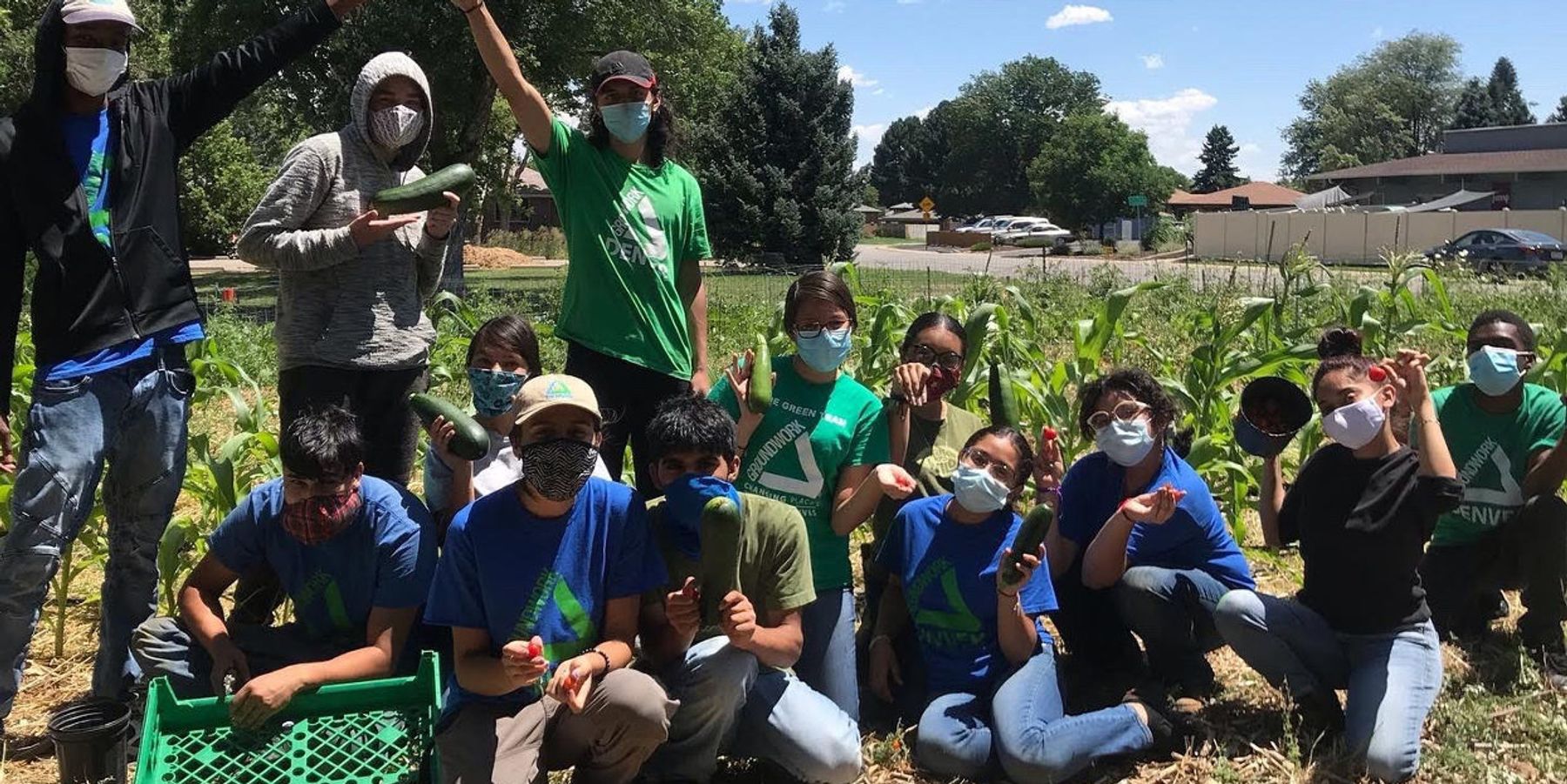
I work with the youth program at Groundwork Denver. Most of these youth are in high school, with some in middle school. They are 13 years and older. Every summer we employ about 100 youth from around the Denver area. We have six to seven teams and they are geographical. My team is the Southwest Denver team. We didn't get to do it this year because of COVID-19, but in previous years we would take the youth outdoors. We would take them camping, hiking, and we would do activities like white water rafting. We address the barriers that young people face to getting outdoors, whether that is money or transportation.
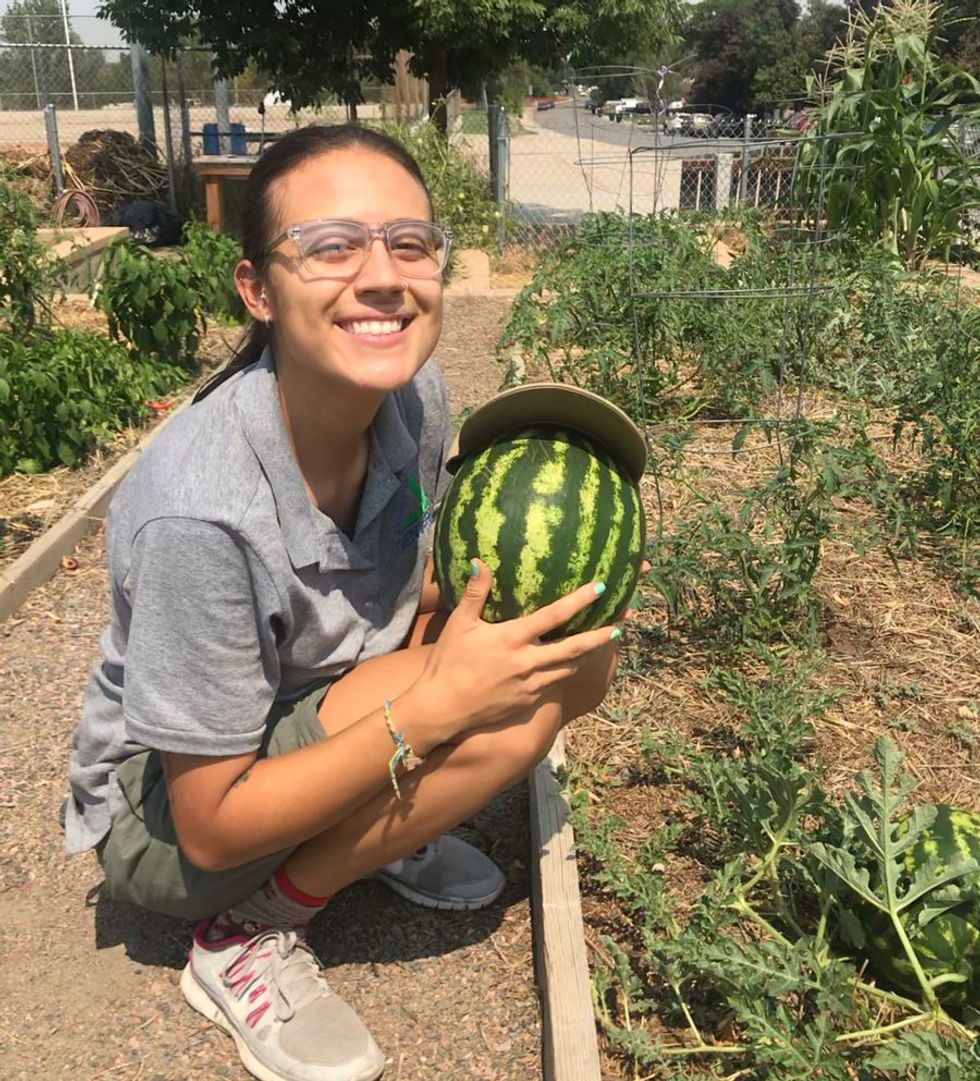
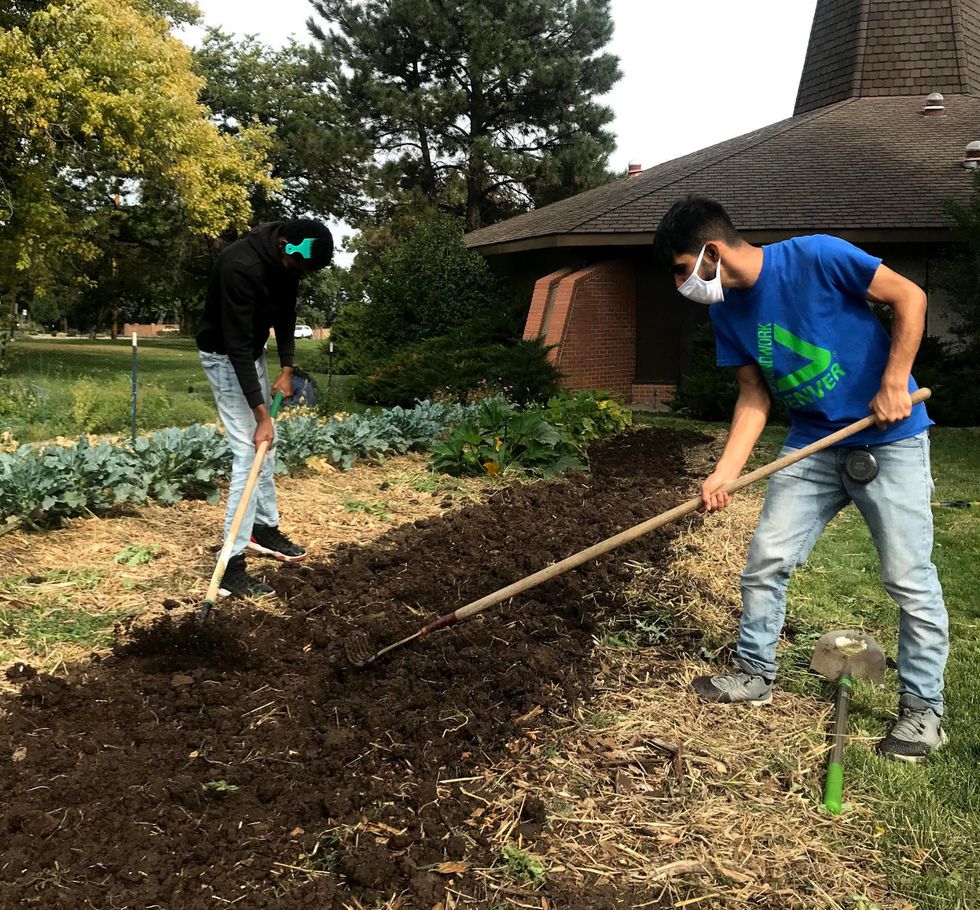
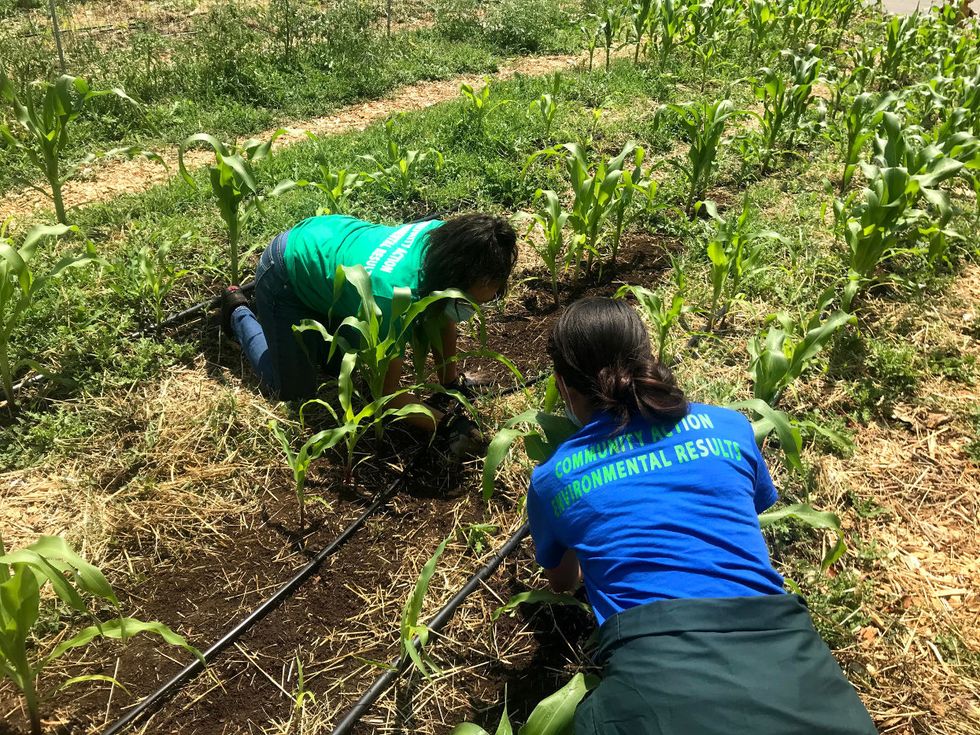
We focus on urban farming, especially because a lot of youth don't have anywhere to grow their own food. We focus on getting local community spaces so that the youth can walk to their gardens. We have one big farm and we have smaller gardens around the city. We wanted to create green spaces that youth have access to.
Credit: Groundwork Denver
What motivated you to get involved in Groundwork’s activities to make green space accessible for young people of color?
I work with the Sheridan team, where most of our youth are lower income people of color. A lot of the youth are immigrants, with many of them being ESL (English as a Second Language) students. They speak Arabic, Spanish, Portuguese, and other languages. We have youth from so many different backgrounds. All of the youth come out of Sheridan High School which is the high school I graduated from. I found out about Groundwork Denver when I was working at a fast food place and I met some people from the blue team, which is the team that works on water issues. They would tell me, "We went hiking last weekend and we got paid." Just to hear that people from my community were getting paid to go up to the mountains—that was astronomical for me.
We work during the summer and every single time that we open up for hiring, we have more people than we can take in. It's such a cool opportunity for young people, because we are not only providing them with greater accessibility to nature, but also to education, resources, mentoring, and unconventional education, like herbal medicine classes. For some youth, it is life-changing.
What are some of the positive outcomes for youth engaged in the activities at Groundwork Denver?
It is so rewarding working with youth, because you can see their growth over the years. For many of them, when they came in they were super shy and they could not talk in front of the group. Now, they are close to perfecting their public speaking skills. Also, a lot of them have developed an interest and a passion for green careers. I have one youth, age 16, and she really loves photography. She's been with Groundwork for about 4 years and she decided that she wanted to do nature photography. Before, she wanted to do portrait photography, but she decided that she loves to take pictures of nature. On all of our trips, she is taking pictures of nature. She's able to combine two of her passions.
I have one youth who had never grown food in his life. When we started our urban gardens, we had to till the soil and plant seedlings. For him it was life changing. He is very curious and now he has been asking me to help him find a job as a farmer. We've been able to find him opportunities to work in the field of agriculture.
Credit: Groundwork Denver
In your opinion, what are some of the resources that environmental justice organizations need to sustain and expand their work to bring green space to young people?
Funding is important. Definitely funding. We always have such huge populations of youth that want to be involved in our activities but we only have so much funding to hire youth. One of the issues that we run into is that we get grants to do certain activities and we can't use that funding for other activities.
When we have partnerships with community organizations, we need for organizations to have respect for the youth, to really value the youth. In meetings, don't talk over me. Don't act like I'm not here. Treat me the same way that you would treat an adult. There needs to be a paradigm shift in the overall perception of young people today.
In terms of policy changes, I think there could be a policy in place to make it mandatory to include environmental programs in public education. Environmental education should be a part of curriculum in schools. We live in Colorado, so field trips to the outdoors should be accessible for every public school. Every school should have community gardens. Or, maybe having environmental experts come to visit schools. That would be great. I would have loved that in my high school.
Any last words for decision-makers?
A lot of the time older people tend to think that they know what is best for younger people. I think that before decisions are made we need to practice what we preach when we say that we stand for justice and equity. In any decision-making process, youth need to be involved from the get-go. Our opinions need to be heard. We need to be at the table every step of the way.
This interview has been lightly edited for brevity.
This article was supported by a diversity grant from the National Association of Science Writers.
Banner photo credit: Groundwork Denver