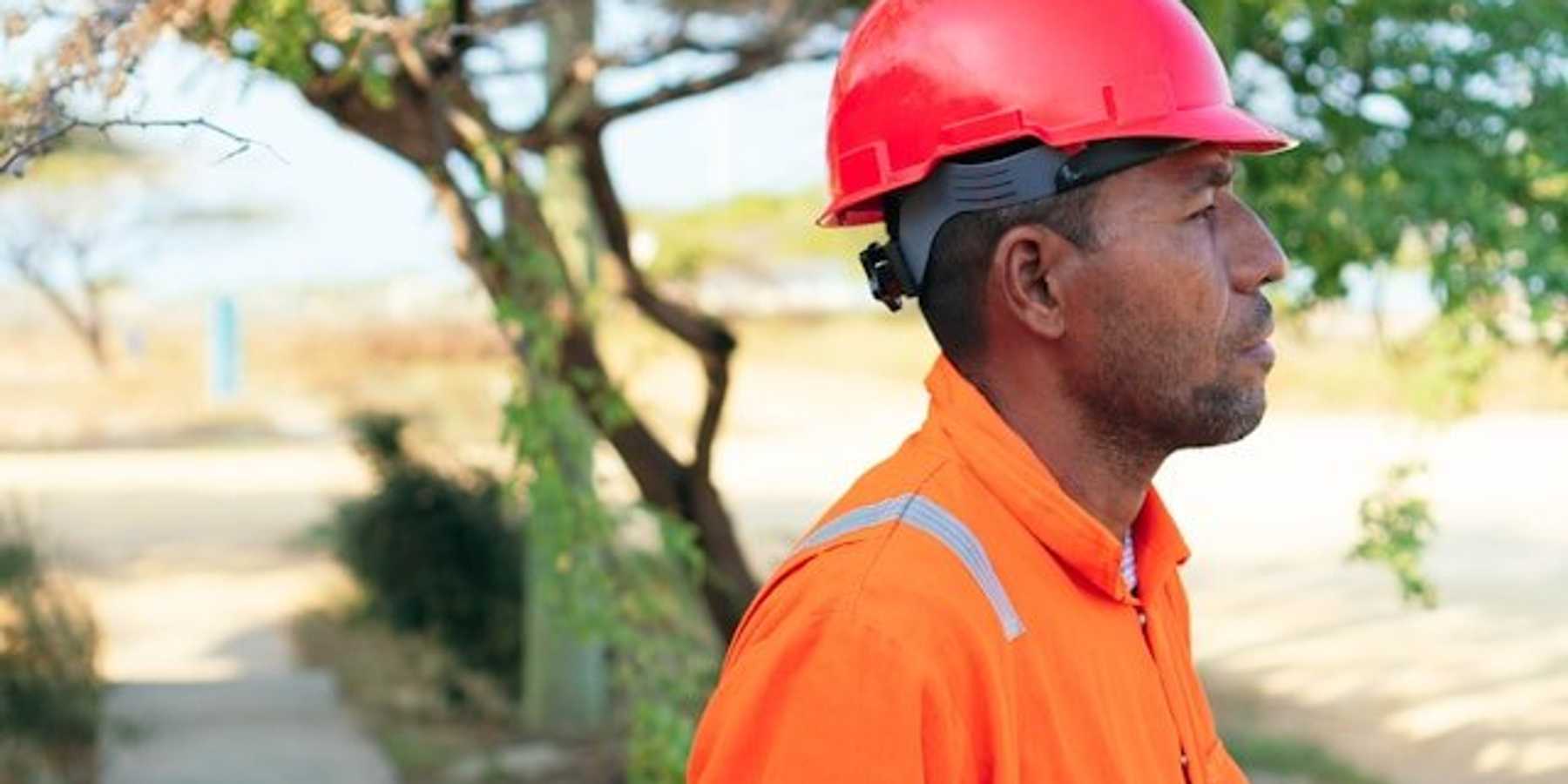
A man wearing an orange safety jumpsuit and hardhat on a sunny day.

Heat drives push for workplace safety rules as summer temps soar

A growing number of cities, states, and federal agencies are working to protect outdoor workers as extreme heat becomes a more frequent and dangerous fixture of American summers.

Goodluck Ajeh reports for The Christian Science Monitor.


In short:

  • Federal officials have proposed a new Occupational Safety and Health Administration (OSHA) rule that would require employers to provide water, shade, and regular breaks when temperatures hit 80°F or higher; the rule would apply to over 36 million U.S. workers.
  • Massachusetts, like most states, currently lacks enforceable heat-safety standards; city officials in Boston are drafting local ordinances and calling for stronger state-level protections.
  • Some businesses are adapting independently, rotating staff, limiting outdoor activity, and testing wearable tech to monitor body temperature and manage heat exposure in real time.

Key quote:

“Ultimately, we want to protect every single individual from their body temperature exceeding dangerous temperatures.”

— Madeleine Scammell, environmental health professor, Boston University School of Public Health

Why this matters:

Extreme heat is now one of the leading weather-related killers in the United States, and climate change is driving more frequent and intense heat waves across the country. Outdoor workers — including those in construction, agriculture, delivery, and hospitality — are especially vulnerable, often laboring in direct sun or hot environments without adequate breaks or hydration. Many lack legal protections, especially in states that defer to federal guidelines that haven’t kept pace with rising temperatures. The lack of uniform standards leaves millions at risk of heat stroke, dehydration, and other serious health issues.

Related: OSHA heat rule advances despite Trump-era deregulation push
A large truck driving through a flooded street

Are Canadians more afraid of floods — or flood maps?

Canada’s outdated flood maps put people at risk. In Montreal, a battle over updating them highlights a nationwide worry over home values and insurance costs
A herd of cows in a green field looking at the camera

In Denmark, sick cows and a lot of questions

Farmers blame a food additive required by the Danish government to cut methane emissions, but the source is unclear.
A deforested area with green forest behind it

Major Brazilian grain traders quit Amazon conservation pact

Several of Brazil’s largest grain traders are withdrawing from a nearly two-decade-old agreement that restricts soy purchases linked to Amazon deforestation.

A refinery at night in front of a water source

What Trump’s Venezuela strategy means for Black communities

Environmental justice advocates warn that refining Venezuelan oil will concentrate more pollution and cancer risk in majority-Black communities along the Texas and Louisiana Gulf Coast.

An illustration of a turtle with plastic in its mouth, surrounded by plastic bottles

Microplastics are undermining the ocean’s ability to absorb carbon

Research reveals microplastics may impair the ocean’s ability to absorb carbon dioxide, weakening a natural buffer against climate change.
A view of solar panels and wind turbines with mountains in the background

A year of clean energy milestones

Even as the Trump administration rolled back support for renewable energy in the U.S., wind, solar, and electric vehicles made huge strides globally in 2025.

A Greenland glacier receding from a brown and gray valley
Credit: Visit Greenland/Unsplash

Scientists just got some ancient clues about future sea-level rise — and it’s bad news

Rock samples collected from the Greenland ice sheet’s Prudhoe Dome show it completely melted in the past 10,000 years — and could vanish again amid climate change.
From our Newsroom
Multiple Houston-area oil and gas facilities that have violated pollution laws are seeking permit renewals

Multiple Houston-area oil and gas facilities that have violated pollution laws are seeking permit renewals

One facility has emitted cancer-causing chemicals into waterways at levels up to 520% higher than legal limits.

Regulators are underestimating health impacts from air pollution: Study

Regulators are underestimating health impacts from air pollution: Study

"The reality is, we are not exposed to one chemical at a time.”

Pennsylvania governor Josh Shapiro speaks with the state flag and American flag behind him.

Two years into his term, has Gov. Shapiro kept his promises to regulate Pennsylvania’s fracking industry?

A new report assesses the administration’s progress and makes new recommendations

silhouette of people holding hands by a lake at sunset

An open letter from EPA staff to the American public

“We cannot stand by and allow this to happen. We need to hold this administration accountable.”

wildfire retardants being sprayed by plane

New evidence links heavy metal pollution with wildfire retardants

“The chemical black box” that blankets wildfire-impacted areas is increasingly under scrutiny.

Stay informed: sign up for The Daily Climate newsletter
Top news on climate impacts, solutions, politics, drivers. Delivered to your inbox week days.