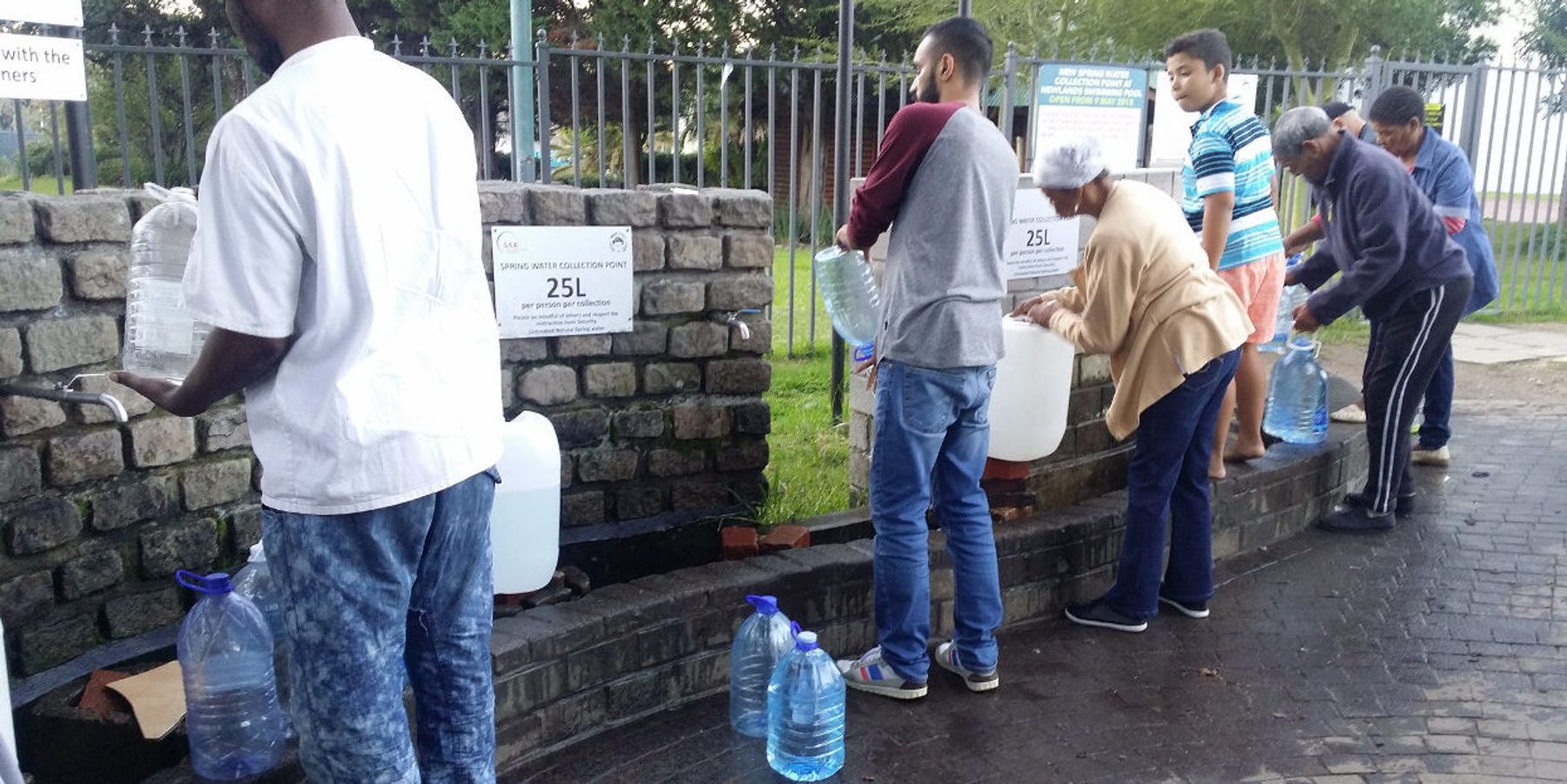
In March, residents of Cape Town, South Africa stood in line for hours to buy drinking water at supermarkets or pump it from springs amid severe water shortages.
Cape Town isn't alone: One in four big cities worldwide already has overstretched its water resources, and global warming may increase the likelihood of prolonged dry spells in some regions.
Facing a future of increasingly erratic rains, water-stressed cities are looking for solutions. One alluring possibility? The capture and reuse of storm water. But the water infrastructure of most cities was built with a single problem in mind: flood prevention. In Los Angeles, for instance, the U.S. Army Corps of Engineers developed a massive network of concrete channels to divert storm water to the ocean after a massive flood in 1938 killed more than 100 people.
Urban water jockeys now are changing their views of storm water. Some see it as an untapped resource. As dry regions and even some wetter ones deplete their surface and groundwater supplies, researchers are investigating ways to replenish underground drinking water aquifers with urban runoff.
In cities especially, using the subsurface as a giant rain barrel makes sense, because it saves space. It also may be the only alternative in cities with Mediterranean climates where rainfall only comes during a few months of the year.
But there's a problem: The water that runs from a city's roadways and rooftops is dirty. Urban storm water can contain trace amounts of harmful contaminants from pesticides, asphalt, vehicle exhaust, road salts, grease and oil, consumer products and human and animal waste.
"We want to reuse storm water in a way that's not going to introduce drinking water contamination," Richard Luthy, an environmental engineer at Stanford University, told EHN.
Tom Ballestero, director of the University of New Hampshire Stormwater Center agrees. "We have to go into this with eyes wide open. Prevention is so much less expensive than the cure," he told EHN.
Luthy, Ballestero and others now are making headway on solutions to scrub pollutants from urban storm water before putting it into underground reservoirs.How to replenish an aquifer

Credit: Dave Hensley/flickr
Those underground reservoirs are called aquifers. They fill naturally with rain or snow that seeps into porous ground--a process called aquifer recharge. When people drain an aquifer faster than nature can replenish it, it dries up.
Water utilities have practiced managed aquifer recharge--intentionally sending water underground to refill aquifers that are running low--for decades. Managed aquifer recharge can be done with injection wells or infiltration ponds that help direct water underground.
In California, for instance, large basins in Los Angeles infiltrate hillside runoff into aquifers.
But hillside runoff is different than urban runoff. For starters, hillside runoff a lot cleaner and carries fewer of the pollutants that urban storm water can pick up. Small-scale green infrastructure arrangements such as rain gardens, permeable pavement and vegetated swales now are common in many cities. Still, "we don't have a lot of experience capturing and percolating large quantities of urban runoff into the ground," Luthy said.
But three promising new technologies could help make it a reality.
"Mineral" sands
Permeability is key when it comes to infiltrating an aquifer. Water moves much more freely through porous, sandy soil than clay, for instance. But while sand might physically capture or filter out bigger particles that could clog up a drinking water aquifer or well, it won't chemically purify or treat the water.
Researchers at University of California, Berkeley now are experimenting with engineered mineral-coated sands that could break down some chemicals. They've coated sand with a thin layer of manganese, one of the most common elements in Earth's crust.
The idea is to make the sand particles much more reactive, U.C. Berkeley environmental engineer David Sedlak told EHN. A manganese coating alters the surface of the particles so that they can bind to and break down organic chemicals found in herbicides and consumer products.
Sedlak and graduate student Joseph Charbonnet recently showed in an experiment using simulated storm water that the mineral sand could remove low concentrations of the endocrine-disrupting chemical bisphenol A (BPA) from the storm water. The research was conducted as part of the National Science Foundation-funded engineering research center for Re-Inventing the Nation's Urban Water Infrastructure (ReNUWIt) program.
Over time, the sand became less effective as it lost its charge. Sedlak and Charbonnet knew that having to dig up and frequently replace the spent sand would limit the real-world utility of this new technology. "We needed a way to regenerate the sand in place," said Sedlak. They found that they could get the sands to recharge by adding a tiny amount of chlorine—25 parts per million—a concentration similar to what's used to treat most drinking water.
The next step is a small-scale field project in Los Angeles using actual storm water. "We want to see how well it performs over time under several different storm water conditions," said Sedlak.
Biochar
Credit: Simon Dooley/flickr
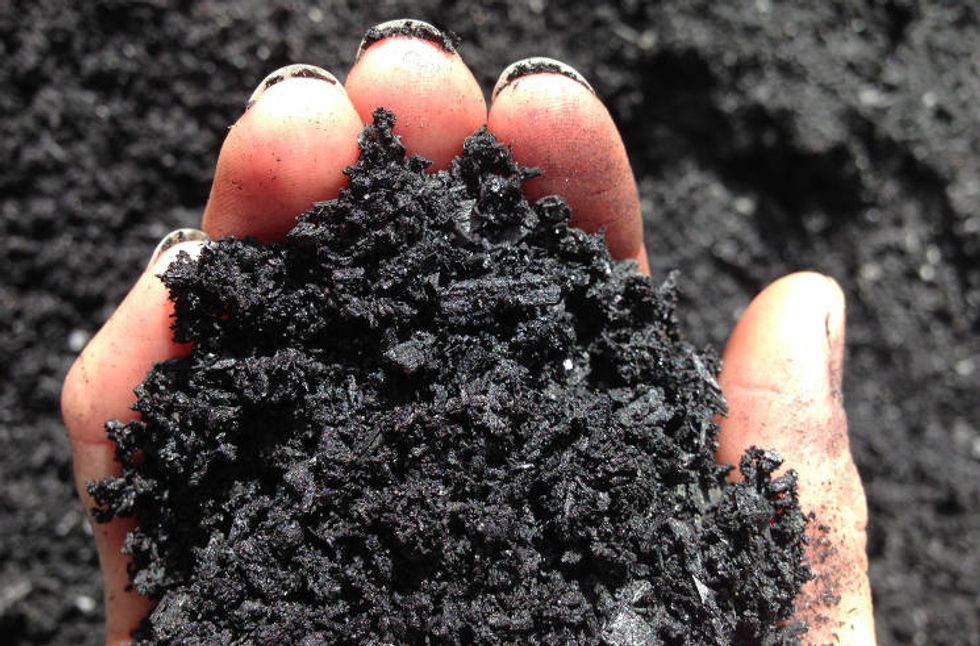
Luthy and others are experimenting with biochar to scrub out some types of storm water pollutants. He's teamed up with Sedlak to create a system that combines biochar and manganese-coated sands to see whether the combination can further enhance the removal organic pollutants related to automotive use and insecticides and herbicides from urban storm water. Biochar is plant or wood material that's roasted at high temperatures until it turns into charcoal.
There's been a lot of buzz in recent decades about potential uses of carbon-rich biochar to simultaneously boost soil fertility and store planet-warming carbon dioxide in the ground. But it turns out biochar may also be good at absorbing heavy metals and other trace organic pollutants from urban runoff.
"Think of it as a big carbon drinking water filter for storm water," Christopher Higgins, an environmental chemist at Colorado School of Mines in Golden, Colorado told EHN.
Higgins now is experimenting with biochar to remove a particularly tricky family of drinking water pollutants, called perfluoroalkyl substances (PFASs) from urban runoff. These man-made chemicals are found in stain repellants, paper coatings and firefighting foams.
Plant biofilters

Preliminary tests of a plant biofilter pilot project in Kfar Sava, Israel, using local plants and soils, found that the rain garden was able to effectively treat heavy metals and nutrients in urban runoff and meet Israeli guidelines for aquifer recharge. (Credit: Ana Deletic)
In some water-stressed regions, scientists and engineers are working to optimize the use of plants to remove nutrients, such as nitrogen and phosphorus from storm water. High levels of these nutrients in ground and surface water can lead to algal blooms and harm drinking water sources.
Ana Deletic is a water-engineering expert at the University of New South Wales in Australia. She has helped to engineer massive rain gardens in Australia, Israel and China--some up to an acre in size--to help filter these common pollutants out of urban wastewater.
"These are simple-looking systems, but they are not. They are living machines that must be tailored for local conditions," Deletic told EHN.
Many urban environments have a history of contamination with toxic metals including lead and cadmium. Deletic says that zinc from rusting metal roofs has become a public health concern in some cities in Australia and New Zealand. Plants may be able to help remove heavy metals, too. "Plants need small amounts of metals to grow, so over time they will suck up some of these contaminants," says Deletic.
Finding the right plants and right soils to remove pollution can be challenging. "In general, what we've found is that plants with long, fine root systems tend to work best for nitrogen and phosphorus removal," she said.
No one-size-fits-all
There's no one type of urban storm water, so what works might differ from city to city or even between locations in the same city. "You'll find different chemicals in storm water runoff depending on the type of land use," said Higgins.
For instance, runoff near a major highway may get more petroleum-associated pollutants and metals while storm water from near a city park may contain more pesticides and fertilizers.
The goal, said Ballestero, is to create a "menu of technologies," that can be implemented together--or separately--under different scenarios to match the needs of a particular environment.
These solutions are part of a more holistic approach to managing water in the urban environment. "Storm water is just one part of that," he said.