India’s mega plan to connect its rivers raises big questions

India's ambitious project to link its rivers may provide solutions to water shortages but could also cause significant environmental and social disruptions.

Sushmita Pathak reports for Hakai Magazine.


In short:

  • India plans to launch a $168 billion project to connect its rivers, aiming to address water shortages and improve irrigation.
  • Experts warn that the project could displace half a million people, submerge vast tracts of land, and disrupt natural monsoon patterns.
  • Critics argue that the government has not adequately considered alternative, less disruptive water management strategies.

Key quote:

[The] “initial assumption, is that river basins are independent systems and output from one … can be used to feed the other. [But] changes in one can lead to changes in another.”

— Tejasvi Chauhan, water engineer and biosphere modeler, Max Planck Institute for Biogeochemistry.

Why this matters:

This project could reshape India’s water management but might exacerbate environmental issues and displace communities, highlighting the need for sustainable solutions in tackling water crises. Read more: The planet is losing free-flowing rivers. This is a problem.


A dried up lakebed with a shack at one end

Scientists link fossil fuel producers to the West’s worsening water shortages

A new study blames 122 companies for contributing to severe drought in the Western United States.

A view of the setting sun with ocean water in the foreground

Opinion: Believe what you are seeing and feeling — the climate is changing

Nearly all climate scientists believe that climate warming has occurred as the result of human activities, but do you see it and feel it, plainly? Do you believe it?

An aerial view of a wastewater plant

Researchers may have solved wastewater's climate problem

Scientists expected their artificial floating wetland to help only after cleaning the water. Instead, greenhouse gas emissions dropped months earlier, and nobody is sure exactly why.
An illustration of a geothermal power plant

A clean energy source is buried under the desert, but it takes water to use it

Geothermal companies face tough tradeoffs over water as they aim to power the data center buildout in Western states.

Two towers at a coal power plant

How Trump’s repeal of the greenhouse gas rule could increase emissions from Georgia

Advocates in Georgia warn a Trump administration rollback on climate standards for power plants will increase greenhouse gas emissions. 
From our Newsroom
Multiple Houston-area oil and gas facilities that have violated pollution laws are seeking permit renewals

Multiple Houston-area oil and gas facilities that have violated pollution laws are seeking permit renewals

One facility has emitted cancer-causing chemicals into waterways at levels up to 520% higher than legal limits.

Regulators are underestimating health impacts from air pollution: Study

Regulators are underestimating health impacts from air pollution: Study

"The reality is, we are not exposed to one chemical at a time.”

Pennsylvania governor Josh Shapiro speaks with the state flag and American flag behind him.

Two years into his term, has Gov. Shapiro kept his promises to regulate Pennsylvania’s fracking industry?

A new report assesses the administration’s progress and makes new recommendations

silhouette of people holding hands by a lake at sunset

An open letter from EPA staff to the American public

“We cannot stand by and allow this to happen. We need to hold this administration accountable.”

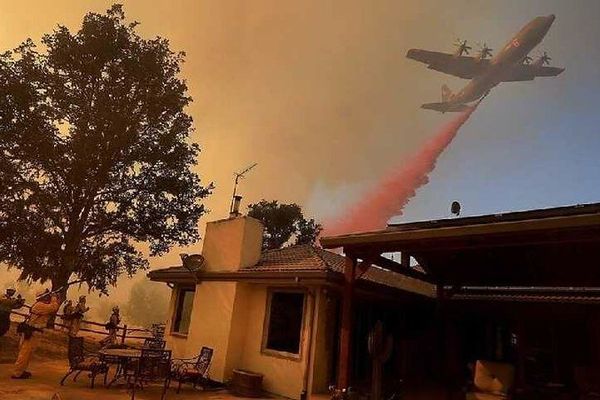
wildfire retardants being sprayed by plane

New evidence links heavy metal pollution with wildfire retardants

“The chemical black box” that blankets wildfire-impacted areas is increasingly under scrutiny.

Stay informed: sign up for The Daily Climate newsletter
Top news on climate impacts, solutions, politics, drivers. Delivered to your inbox week days.