Most marine protected areas fail to offer true protection

A new study reveals that the majority of the world's largest marine protected areas (MPAs) fail to implement effective conservation measures, allowing destructive activities to persist.

Bing Lin reports for Inside Climate News.


In short:

  • Only one-third of the world's largest MPAs have high or full protection, covering just 2.6% of the global ocean.
  • Many MPAs are "paper parks," existing in name only without any real conservation measures in place.
  • Some MPAs permit activities like mining and industrial fishing, undermining their conservation goals.

Key quote:

“There are 18,000 MPAs, but a hundred of them make up 90 percent of the area. These are the big needle movers.”

— Beth Pike, director of the Marine Protection Atlas

Why this matters:

Effective marine protection is vital to meeting international conservation targets and preserving marine biodiversity. The failure to implement meaningful protections jeopardizes global efforts to mitigate the impacts of climate change and human exploitation on our oceans. Read more: Can marine protected areas reduce marine disease?


Exterior of NCAR, National Center For Atmospheric Research
Photo credit: jenlo8/ BigStock Photo ID: 333253774

NCAR, major climate research center, targeted for closure in Trump dispute with Colorado

The president’s political feud and his budget chief’s drive to end climate research have put the National Center for Atmospheric Research at risk.
Donald Trump speaking at lectern
Credit: Copyright: actionsports/BigStock Photo ID: 125165264

Trump gutted climate rules in 2025. He could make it permanent in 2026.

The president’s swift destruction of regulations in his first year could help him make lasting changes, with the Supreme Court’s help.
people gathered outside buildings holding Climate Justice Now signage.

Here's the global playbook being used to crack down on climate protest

A new study finds that repression of environmental protest is rising worldwide and Indigenous land defenders face the greatest risk.
Greenpeace ship in port.

Greenpeace’s fight with pipeline giant exposes a legal loophole

A court filing by a group with deep ties to the pipeline company Energy Transfer raises questions about the growing use of amicus briefs in litigation.
Arm and hand holding wheat against a wheat field backdrop
Photo credit: Photo by Paz Arando on Unsplash

Food becoming more calorific but less nutritious due to rising carbon dioxide

Researchers noticed ‘dramatic’ changes in nutrients in crops, including drop in zinc and rise in lead.

'Santa Claus' sitting in lawn chair adjacent to a camper van on snowless lawn
Photo by Vito Natale on Unsplash

Can Santa Claus survive in a melting world?

As climate change warms the planet, snowy winters are becoming less certain in Europe. Those looking for classic Christmas traditions are learning to adapt.
Sandbags piled at entrance to Canal Street Subway station NYC as a result of of Hurricane Sandy
Photo credit: kobby_dagan/BigStock Photo ID: 52608883

How to protect New York’s subway in an era of extreme rainfall

As the planet warms, subway systems around the world have struggled to cope with floods far beyond what they were originally designed to handle.
From our Newsroom
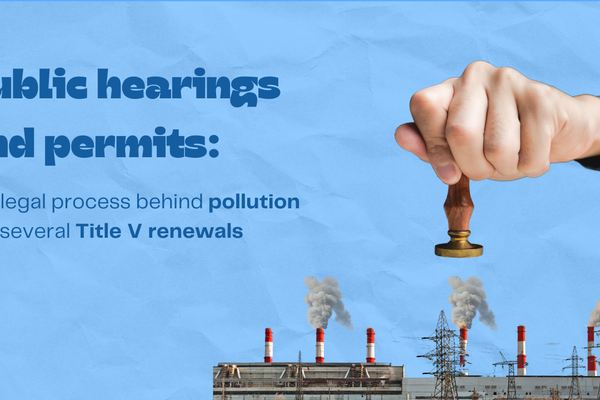
Multiple Houston-area oil and gas facilities that have violated pollution laws are seeking permit renewals

Multiple Houston-area oil and gas facilities that have violated pollution laws are seeking permit renewals

One facility has emitted cancer-causing chemicals into waterways at levels up to 520% higher than legal limits.

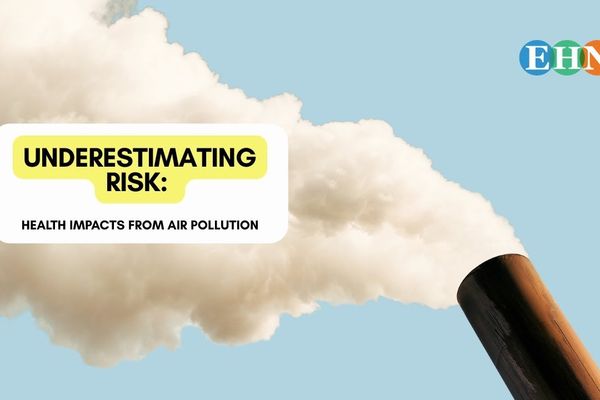
Regulators are underestimating health impacts from air pollution: Study

Regulators are underestimating health impacts from air pollution: Study

"The reality is, we are not exposed to one chemical at a time.”

Pennsylvania governor Josh Shapiro speaks with the state flag and American flag behind him.

Two years into his term, has Gov. Shapiro kept his promises to regulate Pennsylvania’s fracking industry?

A new report assesses the administration’s progress and makes new recommendations

silhouette of people holding hands by a lake at sunset

An open letter from EPA staff to the American public

“We cannot stand by and allow this to happen. We need to hold this administration accountable.”

wildfire retardants being sprayed by plane

New evidence links heavy metal pollution with wildfire retardants

“The chemical black box” that blankets wildfire-impacted areas is increasingly under scrutiny.

Stay informed: sign up for The Daily Climate newsletter
Top news on climate impacts, solutions, politics, drivers. Delivered to your inbox week days.