Plastics: a health and environmental emergency

Nate Hagens, Leo Trasande, Linda Birnbaum and Christina Dixon take on the plastic pollution crisis: We cannot recycle our way out of this problem.

We toss aside 5.7 million toothpaste tubes, 570,000 cell phones, and 2.3 million pairs of sneakers every hour around the globe. And that's just the tip of the iceberg. Plastics production is unsustainable, unhealthy and growing exponentially. Podcaster Nate Hagens brings experts Dr. Leo Trasande, Linda Birnbaum and Christina Dixon together to discuss the impact to our health and environment.

Watch: The Great Simplification video

In short:

  • Recycling is "at best, an energy intensive delay" of plastics disposal in the environment.
  • Plastics contain thousands of largely untested but likely toxic chemicals
  • Those that we know about are associated with nearly all major health problems, from autism and ADHD to infertility and diabetes.
Key quote:
"Climate change – or much of it – may be reversible. I'm not positive we can reverse the contamination of our world ... with the tremendous amounts of plastic that will essentially never go away."
— Linda Birnbaum, Nicholas School of the Environment, Duke University
Why this matters:
An argument could be made that plastic is the primary enabler of environmental challenges related to climate, water, oceans, soils and biodiversity – that the escalation in destruction in recent decades was only possible because of this flexible and firm, cheap and abundant, lightweight, and easily discardable material. If you're looking to better understand the scale of the crisis and discern real solutions from false ones, give this a listen.

Two men looking at a glass of wine and writing something on a clipboard

Burgundy's Beaune wine auction hit as climate change halves harvest

A key event combining luxury and charity, the Hospices de Beaune wine auction is this year constrained by the meager harvest after the summer heatwaves.

A group of college students sitting at desks looking toward the front of the classroom

How a class on climate change leaves students feeling ‘energized’

A Vassar College course teaches students about the technologies, policies, and strategies behind the clean energy transition, and how to advance them.

The Google logo on the side of a building

Decatur residents, green advocates call on Google to break Broadwing gas deal

Decatur residents urge Google to end its Broadwing gas deal over carbon capture, water safety and pollution concerns.
A maintenance worker walking past a row of solar panels

India's clean energy goal aims to power 1 billion homes by 2035

India has approved nearly $20 billion in power grid upgrades to ease bottlenecks that prevent some solar and wind energy from reaching consumers.

Beans on toast on a white plate
Credit: Nik/Unsplash+

Nanoplastics and climate change have a common enemy: Fiber

Scientists already back plant-heavy diets to cut food emissions. Now there’s evidence the same foods help the body resist plastic pollution.
A smokestack with smoke billowing from the top

A clean air advocate will represent part of America’s oil capital in Congress

A Texas district known for its petrochemical facilities is getting a representative with a background in environmental health.
Climate change is accelerating health threats worldwide

Climate change is accelerating health threats worldwide

The Lancet Countdown - established in 2016 to annually assess the effects of climate change on health - released a ten year report and accompanying editorial.


In short:

  • For the first time, the report quantifies heat-related deaths attributable to climate change, estimated at about 370,000 a year. The past 11 years have been the hottest ever recorded.
  • The report examined 54 indicators of climate change-driven health impacts and found that many health threats had increased or accelerated over the past decade.
  • Populations least responsible for climate change are experiencing the highest impacts.


Key quote:

“Over the past 10 years, a strong evidence-based case has been made that responding to climate change could be the greatest health opportunity of the 21st century.”


Why this matters:

The report points out how fossil fuel interests are blocking progress on climate change. It tracks not only heat-related deaths, as mentioned above, but also other climate related effects on health caused by floods, landslides, droughts, viruses, and more. It also tracks improvements, for example, estimating that the transition to clean energy prevented 400,000 deaths in 2023 just through improved indoor air quality. Health professionals are trusted sources of information and can speak for policy change and action for a healthier future.


Related EHN coverage:


More resources: The Lancet Countdown on health and climate change


Source:

Romanello, Marina et al. (2026), The 2026 report of the Lancet Countdown on health and climate change: a decade of escalating health harms and a decisive moment for all. The Lancet.

Related editorial, Climate change and health: 10 years on, what next? The Lancet.

From our Newsroom
Multiple Houston-area oil and gas facilities that have violated pollution laws are seeking permit renewals

Multiple Houston-area oil and gas facilities that have violated pollution laws are seeking permit renewals

One facility has emitted cancer-causing chemicals into waterways at levels up to 520% higher than legal limits.

Regulators are underestimating health impacts from air pollution: Study

Regulators are underestimating health impacts from air pollution: Study

"The reality is, we are not exposed to one chemical at a time.”

Pennsylvania governor Josh Shapiro speaks with the state flag and American flag behind him.

Two years into his term, has Gov. Shapiro kept his promises to regulate Pennsylvania’s fracking industry?

A new report assesses the administration’s progress and makes new recommendations

silhouette of people holding hands by a lake at sunset

An open letter from EPA staff to the American public

“We cannot stand by and allow this to happen. We need to hold this administration accountable.”

wildfire retardants being sprayed by plane

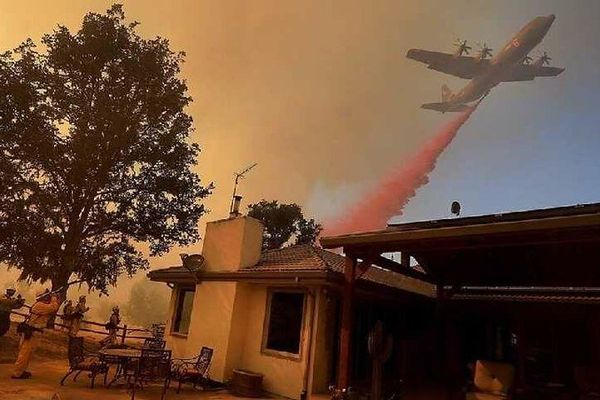
New evidence links heavy metal pollution with wildfire retardants

“The chemical black box” that blankets wildfire-impacted areas is increasingly under scrutiny.

Stay informed: sign up for The Daily Climate newsletter
Top news on climate impacts, solutions, politics, drivers. Delivered to your inbox week days.