Scientists leave U.S. over Trump-era policies and find new footing in France

American researchers, citing political pressure and funding threats under the Trump administration, are relocating to France under a new academic refuge program, "Safe Place for Science," launched by Aix-Marseille University.

Victor Goury-Laffont reports for POLITICO.


In short:

  • Aix-Marseille University welcomed eight U.S.-based academics as the first cohort in its “Safe Place for Science” program, offering positions to researchers who fear retribution or cuts at home.
  • Nearly 300 researchers from institutions like Stanford and Yale applied to the program, which provides equal French academic salaries and aims to double its capacity if matched by government funding.
  • Participants cited concerns over academic freedom, research support, and political interference under President Trump, making comparisons to historical periods of scientific exile.

Key quote:

“The entire system of research and the entire education in the United States is really under attack.”

— Brian Sandberg, professor of history at Northern Illinois University

Why this matters:

Political interference in science can ripple far beyond university walls. When researchers pull back or flee, public health, climate modeling, and technological innovation lose ground. In recent years, American scientists have reported growing fear of retaliation, tighter control over research funding, and hostility toward fields like climate science and public health. These pressures can discourage young talent and leave critical questions unanswered — about rising sea levels, toxic exposures, and even the spread of disease. In addition to the Aix-Marseille University program, both France and the European Union have launched plans to recruit U.S. research talent. As Europe positions itself as a haven for displaced academics, the U.S. risks ceding leadership in global science.

Related: Europe steps up funding to attract U.S. scientists facing cuts under Trump

Red and white tanker with "LNG" printed on the side.

Stung by Iran war, countries are turning against U.S. fossil fuels

As economies in Asia and Europe reel from the energy disruption, leaders make plans to permanently replace imported oil and gas with homegrown energy.
United States Environmental Protection Agency (EPA) sign at the headquarters building in Washington, DC.
Credit: marcnorman/BigStock Photo ID: 21123533

EPA sets ‘no surprises’ science policy, reassigns researchers

Staff expressed frustration with how the transfers are being handled and perceive them as yet another measure to traumatize the workforce.
Coal mining operation featuring yellow rock trucks and excavators as well as one orange excavator in the center.

As Trump boosts coal, opponents warn of higher costs and more pollution

The Trump administration is using emergency powers and subsidies to keep U.S. coal plants running. Market analysts believe no coal plant closures are likely during President Donald Trump's term.
A large crane digging earth

Federal delay of silica dust rule leaves coal miners at risk of black lung

Federal regulators have indefinitely postponed a rule designed to limit coal miners’ exposure to harmful silica dust, citing ongoing litigation.

Wind turbines in a row against a blue sky

There’s hope for the offshore wind industry — yes, really

Trump’s court losses give the wind industry a chance to get back on stable footing.

Offshore wind turbines with a sailboat in the foreground

California’s ambitious floating offshore wind plan faces engineering hurdles and local opposition

California plans to transform Humboldt Bay into a hub for floating offshore wind power to help reach its 100% clean energy goal by 2045.

Blue-jean clad worker in heavy coat and gloves welding pipeline

Is the Keystone XL pipeline back?

A company has proposed to build a crude oil pipeline crossing the Canadian border near where the long-contested project would have entered the United States.
From our Newsroom
Multiple Houston-area oil and gas facilities that have violated pollution laws are seeking permit renewals

Multiple Houston-area oil and gas facilities that have violated pollution laws are seeking permit renewals

One facility has emitted cancer-causing chemicals into waterways at levels up to 520% higher than legal limits.

Regulators are underestimating health impacts from air pollution: Study

Regulators are underestimating health impacts from air pollution: Study

"The reality is, we are not exposed to one chemical at a time.”

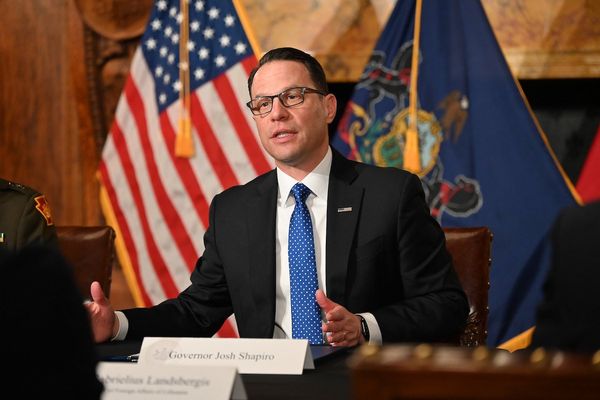
Pennsylvania governor Josh Shapiro speaks with the state flag and American flag behind him.

Two years into his term, has Gov. Shapiro kept his promises to regulate Pennsylvania’s fracking industry?

A new report assesses the administration’s progress and makes new recommendations

silhouette of people holding hands by a lake at sunset

An open letter from EPA staff to the American public

“We cannot stand by and allow this to happen. We need to hold this administration accountable.”

wildfire retardants being sprayed by plane

New evidence links heavy metal pollution with wildfire retardants

“The chemical black box” that blankets wildfire-impacted areas is increasingly under scrutiny.

Stay informed: sign up for The Daily Climate newsletter
Top news on climate impacts, solutions, politics, drivers. Delivered to your inbox week days.