History will record that Abraham Browning first christened New Jersey "The Garden State" in 1876.
But if such hokey nicknames had been distributed at any point in the last 40 years, my ancestral home might be The Superfund State. With roughly 150 toxic waste sites and only 35 deemed adequately cleaned up, Jersey is outpacing larger, more populous states like California and New York.
Superfund, the law intended to clean up heavily polluted waste sites, became law in 1980 following the uproar over Love Canal, a blue-collar neighborhood in Niagara Falls, New York. Make that a blue-collar neighborhood and elementary school built over a soon-to-be-infamous toxic waste dump. In an act of apparent civic-minded generosity, the Hooker Chemical Company had sold the site to the Niagara Falls school board for one dollar, provided the board waive any future claims against Hooker. Neighbors like the soon-to-be hellraiser Lois Gibbs made the link between the dump and high disease rates there, and in 1978 and 1979, much of the Love Canal neighborhood was evacuated. The elementary school closed.
Not to be left out, New Jersey offered its own explosive contribution just in time for the 10th anniversary of the first Earth Day. On April 21, 1980, the two-acre site of the Chemical Control Corporation, containing tens of thousands of toxic waste-filled barrels, blew up. Untold amounts of airborne or waterborne poisons entered the metro New York environment.
Discoveries of other tainted sites around the country led to the passage of the Comprehensive Environmental Response, Compensation and Liability Act on December 11, 1980. When CERCLA proved to be an un-sexy federal acronym, the nickname "Superfund" caught on.
Lies and lawyers
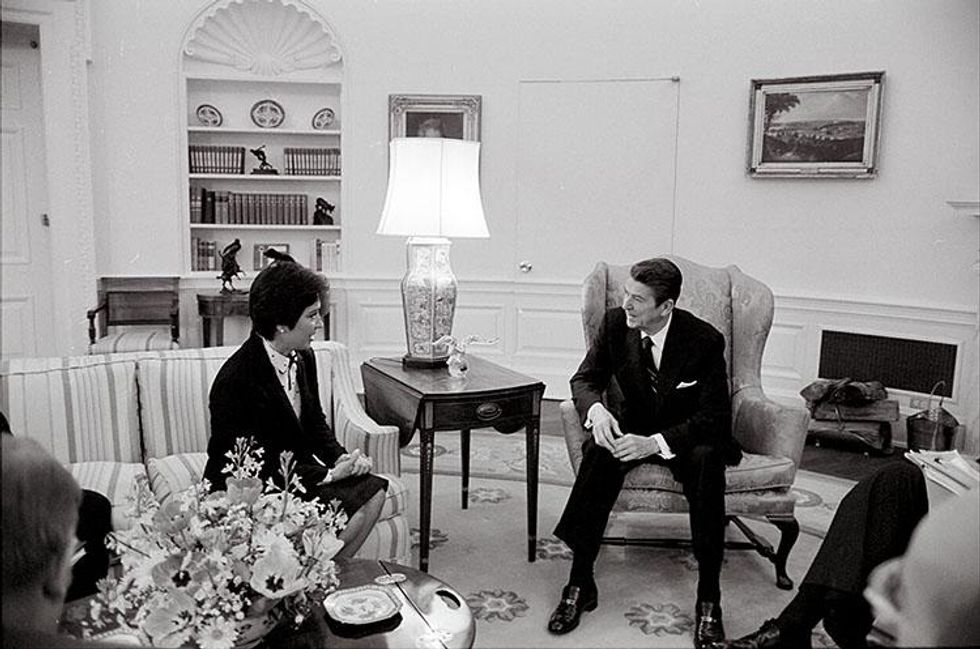
Ronald Reagan meets with Anne Gorsuch. (Credit: Wikimedia Commons)
The public next got a bellyful of toxic waste and Superfund news in 1982, when the town of Times Beach, Missouri, hired a waste hauler named Russell Bliss to spray oil on its dirt roads to keep the massive clouds of dust down. Bliss took the opportunity to get rid of another load of waste, mixing in a dioxin-contaminated liquid with the oil. Soon, horses dropped dead and people fell sick. Times Beach was evacuated.
Superfund next hit the headlines in 1983. Environmental Protection Agency Administrator Anne Gorsuch, a Reagan appointee and mother of current Supreme Court Justice Neil Gorsuch, was forced to resign in a scandal that sent her aide, Rita Lavelle, to a six-month prison term. Lavelle ran the Superfund program and was convicted of lying to Congress about her previous employer's pollution.
The Superfund law operated on the "polluter pays" principle. Polluters—even defunct ones like Hooker—would be hunted down and held to pay for past sins. A separate fund would cover cleanup at sites where "responsible parties" can't be determined.
Nice plan, but it failed to factor in another sometimes-toxic phenomenon: Lawyers.
In no time flat, Superfund cases ran into the toxic quicksand of protracted courthouse battles delaying many cases, and many cleanups, for years.
By Bill Clinton's first State of the Union speech in 1993, a Democratic President was moved to speak ill of a blockbuster environmental law. "I'd like to use that Superfund to clean up pollution for a change and not just pay lawyers."
Also in 1993, one of my favorite Superfund stories hit the headlines: Residents of Triumph, Idaho, a lead-mining community turned wealthy second-homeowner haven, battled to keep Superfund out. One of the community's leaders was the late Adam West, better known as TV's Batman. The imagery doesn't get much clearer than Batman versus the EPA. The case dragged on until 2018, when a conservation group settled with Idaho's state environment agency.
In 1995, Congress let a special tax that fed the cleanup fund expire. Superfund has toiled on as a pauper program ever since.
Life after Superfund
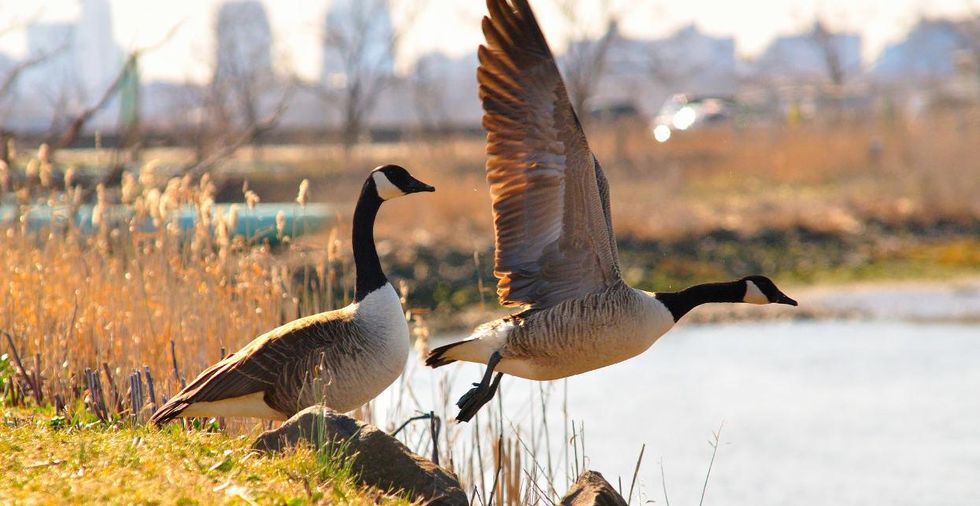
A pair of Canadian geese in the Meadowlands. (Credit: Steven Reynolds/flickr)
President Biden inherits more than 1,500 Superfund sites. Most of them with unfinished business. The Government Accountability Office recently reported that 945 Superfund sites remain vulnerable to the impacts of climate change through increased intense storms and sea level rise. Inside Climate News, the Texas Observer, and NBC News recently teamed up on a five-part series on Superfund's current woes that is worth checking out.
But back to Jersey, and a hopeful note: One exceedingly imperfect example of how Superfund might work exists in the Hackensack Meadowlands, a few miles from my boyhood home. The Meadowlands, a huge, once pristine salt marsh virtually in the shadows of Manhattan's skyscrapers, spent more than a century as the lucky recipient of a veritable industrial bowel movement, courtesy of New York City and dozens of Jersey cities and towns. Cleanup of three Superfund sites on Meadowlands tributaries has helped immensely.
Parts of the Meadowlands are still filthy. Some always will be. Others are paved over, like MetLife Stadium, home of pro football's Giants and Jets. But other parts have recovered their status as a vital stopover for migratory waterfowl, and a permanent home for resident birds and their human birdwatching entourage.
So there can be life after Superfund, foibles, failures and all.
Peter Dykstra is our weekend editor and columnist and can be reached at pdykstra@ehn.org or @pdykstra.
His views do not necessarily represent those of Environmental Health News, The Daily Climate, or publisher, Environmental Health Sciences.
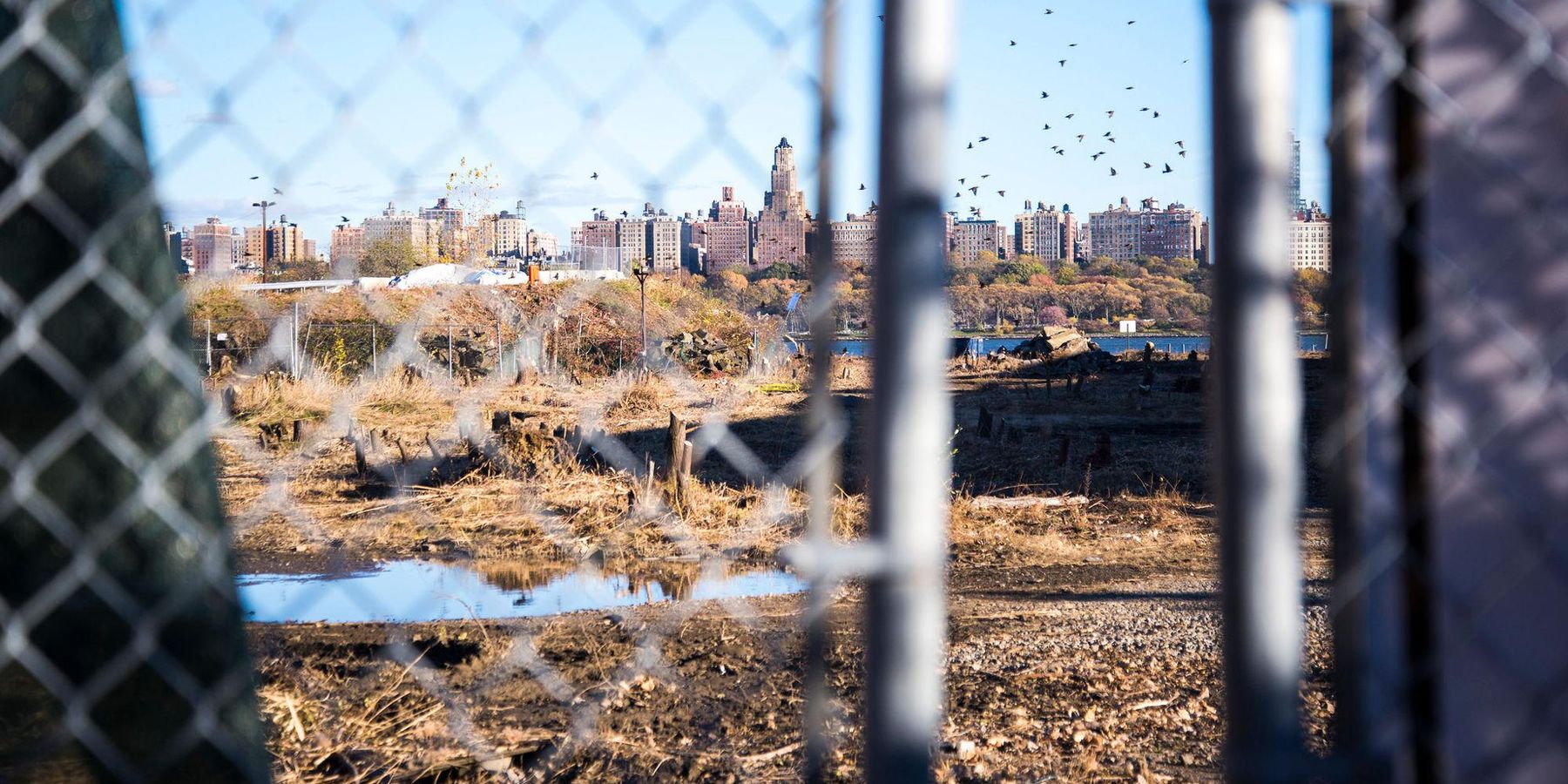
Banner photo: Quanta Resources Superfund Site in Edgewater, NJ. (Credit: Anthony Albright/flickr)