Supreme Court limits federal agencies' regulatory authority by overturning Chevron decision

The Supreme Court has overturned a 40-year-old precedent that allowed federal agencies broad regulatory powers, including on a range of environmental issues.

Melissa Quinn reports for CBS News.

In short:

  • The Supreme Court's conservative majority ruled to overturn the 1984 Chevron v. Natural Resources Defense Council decision.
  • The ruling limits federal agencies' power to interpret laws without explicit congressional authorization.
  • Chief Justice John Roberts wrote for the court that the decision would not apply retroactively to prior cases.
  • However, in their dissent, Justices Kagan, Sonia Sotomayor and Ketanji Brown Jackson warned of the consequences of increased judicial control over regulatory matters, and potential new challenges to longstanding agency interpretations.

Key quote:

"What actions can be taken to address climate change or other environmental challenges? What will the nation's health-care system look like in the coming decades? Or the financial or transportation systems? What rules are going to constrain the development of A.I.? In every sphere of current or future federal regulation, expect courts from now on to play a commanding role."

- Supreme Court Justice Elena Kagan

Why this matters:

This decision could significantly impact the ability of federal agencies to regulate critical areas such as the environment, health care and workplace safety. The shift in judicial power may lead to more legal challenges and uncertainty in regulatory processes. Here's a look at some other consequential rulings the Supreme Court has made in the past year on environmental issues.


EPA web site page on causes of climate change
Photo Credit: EPA Website/ https://www.epa.gov/climatechange-science/causes-climate-change

The EPA erases mention of human-caused climate change from its website

Some pages have been tweaked to emphasize ‘natural forces’; others have been deleted entirely.
An illustration of a burning sun falling below the horizon

Bill McKibben: A low point of human inaction on climate change

The second Trump Administration’s assault on the environment has been as damaging as expected, but other developments this year give at least some hope for the future.
visualization of big data digital data streams in a data center
Photo Credit: vladimircaribb/BigStock Photo ID: 262677853

NextEra teams with Google, Exxon in massive AI build-out

The largest U.S. renewable energy developer announced deals with companies that could bolster gas at data center hubs across the country.
Aerial view of Marcellus Shale fracking well in Pennsylvania
Copyright: shutterrudder/BigStock Photo ID: 53059774

Pennsylvania will study a plan to keep new natural gas pads farther from homes, schools and hospitals

Advocates say more distance is needed to protect public health. Industry groups and Republican legislators say the rule change would effectively ban natural gas development.
Drilling geothermal well for a residential geothermal heat pump. Workers on Drilling Rig.
Photo Credit: RGtimeline/BigStock Photo ID: 208821436

Not all drilling in Texas is about oil

The state has become a hub of innovation for creating electricity using geothermal power. Just don’t call it renewable.
A parking lot with a solar panel serving as a canopy for a car

Democrats revive clean-energy bills as Spanberger prepares to take office

With full Democratic control in Richmond and a new governor on the way, lawmakers are reviving previously vetoed clean-energy bills, including proposals to require solar canopies on large parking lots and expand offshore-wind workforce training.

EPA chief, Lee Zeldin speaking into mic
Credit: Gage Skidmore/ https://www.flickr.com/photos/gageskidmore/ https://creativecommons.org/licenses/by-sa/2.0/

‘Complete roller coaster’: EPA probationary staff returns to work

Employees said uncertainty still looms as restructuring of the agency by the Trump administration takes hold.
From our Newsroom
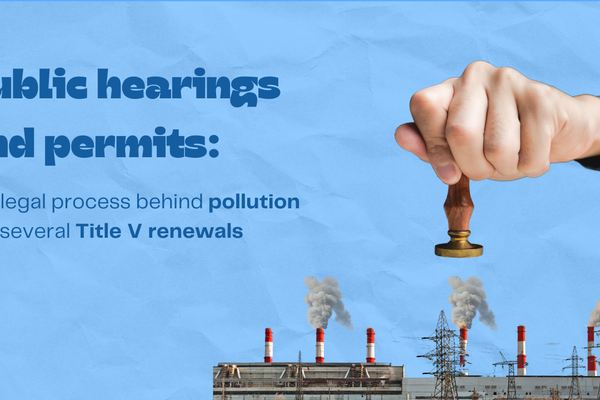
Multiple Houston-area oil and gas facilities that have violated pollution laws are seeking permit renewals

Multiple Houston-area oil and gas facilities that have violated pollution laws are seeking permit renewals

One facility has emitted cancer-causing chemicals into waterways at levels up to 520% higher than legal limits.

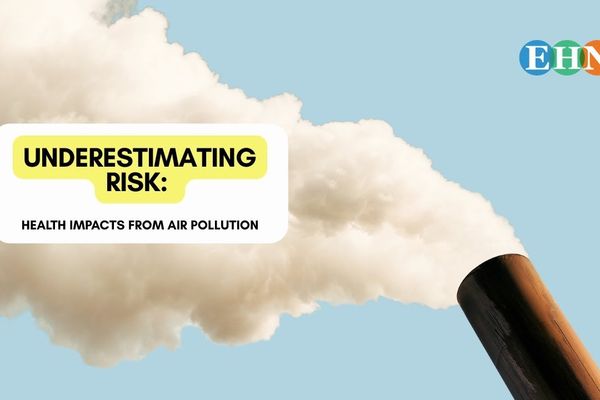
Regulators are underestimating health impacts from air pollution: Study

Regulators are underestimating health impacts from air pollution: Study

"The reality is, we are not exposed to one chemical at a time.”

Pennsylvania governor Josh Shapiro speaks with the state flag and American flag behind him.

Two years into his term, has Gov. Shapiro kept his promises to regulate Pennsylvania’s fracking industry?

A new report assesses the administration’s progress and makes new recommendations

silhouette of people holding hands by a lake at sunset

An open letter from EPA staff to the American public

“We cannot stand by and allow this to happen. We need to hold this administration accountable.”

wildfire retardants being sprayed by plane

New evidence links heavy metal pollution with wildfire retardants

“The chemical black box” that blankets wildfire-impacted areas is increasingly under scrutiny.

Stay informed: sign up for The Daily Climate newsletter
Top news on climate impacts, solutions, politics, drivers. Delivered to your inbox week days.