Supreme Court railway case could redefine environmental impact reviews

A Supreme Court case over a proposed Utah railway may alter how federal agencies assess environmental impacts, potentially affecting projects nationwide.

Wyatt Myskow reports for Inside Climate News.


In short:

  • The proposed 88-mile Uinta Basin Railway would boost oil production in northeastern Utah, sparking concerns about air quality and oil spill risks.
  • Opponents argue the project's environmental review ignored downstream effects, leading to a lawsuit that reached the Supreme Court.
  • The case could redefine the scope of the National Environmental Policy Act (NEPA), determining how thoroughly agencies evaluate environmental consequences.

Key quote:

“The primary beneficiaries of the railway would be a handful of CEOs of oil companies who have already manipulated Utah lawmakers into giving them public subsidies, whose objective is to exhaust this unique oil resource as fast as they can, to make as much money as fast as they can. The cost, literally and figuratively, would be borne by everyone else and future generations.”

— Dr. Brian Moench, president of Utah Physicians for a Healthy Environment.

Why this matters:

If the Supreme Court limits NEPA’s scope, it could weaken environmental protections and reduce public input on projects. This decision may accelerate fossil fuel infrastructure while increasing risks to air and water quality nationwide.

Oil worker in orange uniform and helmet on of background the pump jack and sunset sky.
Credit: bashta/BigStock Photo ID: 24119156

Fossil fuel companies finally accept the climate crisis – just not their role in it

The era of corporate climate denial is over but in courts around the world the big names have shifted strategy.

Unassembled yellow and white wind turbines and towers

Trump’s $1B offshore wind payout to TotalEnergies sparks legal concerns

Offshore wind and legal experts question whether Interior has the authority to reimburse the oil giant for canceled leases, especially if it taps taxpayer dollars.

Japanese fighter jets perform maneuvers in flight formation for military drills.
Credit: Kagenmi/BigStock Photo ID: 312022999

A turning point in the Iran war

The president is discovering the high stakes of an escalation that damages energy facilities.
Computer generated 3D illustration with oil pumps, solar panels and wind turbines.
Credit: MIRO3D/BigStock Photo ID: 147195269

Opinion: The Iran War is revealing the messy middle of our renewable energy transition

When the world map of literal power changes, the political hierarchy shifts, too.

Smokestacks emitting pollution in Harbin, Heilongjiang, China

As it boosts renewables, China still can't break its coal addiction

Despite being a renewables superpower, China continues to permit and build new coal-fired power plants at a rapid pace. Analysts say the nation’s new five-year plan will ensure further coal plant expansion and jeopardize China’s ability to deliver on its climate promises.
A power plant's smokestacks billowing smoke into the air

Surging energy demand helps fuel Trump’s love affair with coal

Keeping coal plants online has become the U.S. grid’s unofficial insurance policy, even as their emissions exacerbate extreme weather.
A dry environment with a dam and a small amount of water in view

Iran was already running out of water. Then came the ‘war on infrastructure’

Military strikes, drought, and a legacy of overpumping are driving Iran’s fragile food and water system to the brink.
From our Newsroom
Multiple Houston-area oil and gas facilities that have violated pollution laws are seeking permit renewals

Multiple Houston-area oil and gas facilities that have violated pollution laws are seeking permit renewals

One facility has emitted cancer-causing chemicals into waterways at levels up to 520% higher than legal limits.

Regulators are underestimating health impacts from air pollution: Study

Regulators are underestimating health impacts from air pollution: Study

"The reality is, we are not exposed to one chemical at a time.”

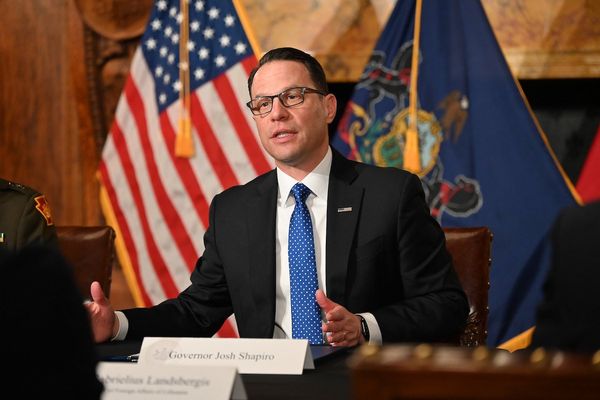
Pennsylvania governor Josh Shapiro speaks with the state flag and American flag behind him.

Two years into his term, has Gov. Shapiro kept his promises to regulate Pennsylvania’s fracking industry?

A new report assesses the administration’s progress and makes new recommendations

silhouette of people holding hands by a lake at sunset

An open letter from EPA staff to the American public

“We cannot stand by and allow this to happen. We need to hold this administration accountable.”

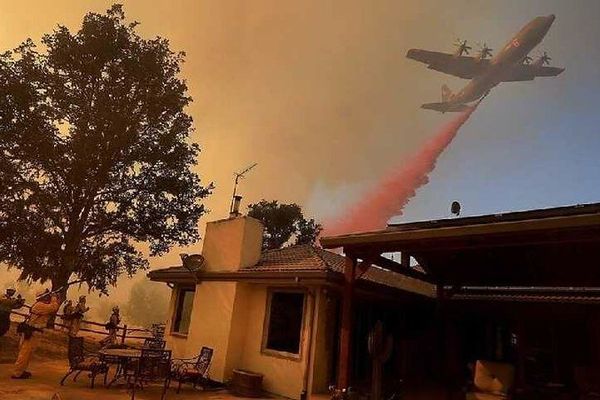
wildfire retardants being sprayed by plane

New evidence links heavy metal pollution with wildfire retardants

“The chemical black box” that blankets wildfire-impacted areas is increasingly under scrutiny.

Stay informed: sign up for The Daily Climate newsletter
Top news on climate impacts, solutions, politics, drivers. Delivered to your inbox week days.