U.S. backs plan to explore deep-sea mining near American Samoa amid legal and environmental concerns

A California company’s bid to mine the seafloor near American Samoa gained momentum after the U.S. Interior Department agreed to review its proposal following a Trump administration order to fast-track seabed mining.

Max Bearak reports for The New York Times.


In short:

  • The Interior Department will assess a request by Impossible Metals to mine nearly 30,000 square miles of seabed in U.S. territorial waters off American Samoa.
  • The move follows President Trump’s April executive order pushing federal agencies to expedite seabed mining permits, even in contested international waters.
  • Environmental and legal pushback continues, as critics say unilateral U.S. action violates international norms and risks deep-sea ecosystems that are poorly understood.

Key quote:

“As soon as the executive order came out, that very much directed the different groups to accelerate and prioritize deep-sea mining.”

— Oliver Gunasekara, CEO of Impossible Metals

Why this matters:

Deep-sea mining offers access to minerals like cobalt, nickel, and manganese — critical for electric vehicles, renewable energy, and defense technologies — but at potentially high environmental costs. These ecosystems, found thousands of feet below the ocean’s surface, remain largely unexplored and may host ancient life forms uniquely adapted to extreme pressure and darkness. Disrupting the seabed to extract mineral nodules could irreversibly damage fragile habitats and threaten species not yet studied by science. Moreover, sediment plumes and noise pollution from mining operations may ripple through the marine food chain.

While most countries await international consensus through the United Nations-backed International Seabed Authority, the U.S. — which never ratified the Law of the Sea treaty — is pushing ahead unilaterally. American Samoa, with limited political representation and a history of environmental vulnerability, stands at the intersection of global power, corporate ambition, and Indigenous rights.

Related: Mining firm defies global regulator in bid to extract metals from Pacific seabed

EPA web site page on causes of climate change
Photo Credit: EPA Website/ https://www.epa.gov/climatechange-science/causes-climate-change

The EPA erases mention of human-caused climate change from its website

Some pages have been tweaked to emphasize ‘natural forces’; others have been deleted entirely.
An illustration of a burning sun falling below the horizon

Bill McKibben: A low point of human inaction on climate change

The second Trump Administration’s assault on the environment has been as damaging as expected, but other developments this year give at least some hope for the future.
visualization of big data digital data streams in a data center
Photo Credit: vladimircaribb/BigStock Photo ID: 262677853

NextEra teams with Google, Exxon in massive AI build-out

The largest U.S. renewable energy developer announced deals with companies that could bolster gas at data center hubs across the country.
Aerial view of Marcellus Shale fracking well in Pennsylvania
Copyright: shutterrudder/BigStock Photo ID: 53059774

Pennsylvania will study a plan to keep new natural gas pads farther from homes, schools and hospitals

Advocates say more distance is needed to protect public health. Industry groups and Republican legislators say the rule change would effectively ban natural gas development.
Drilling geothermal well for a residential geothermal heat pump. Workers on Drilling Rig.
Photo Credit: RGtimeline/BigStock Photo ID: 208821436

Not all drilling in Texas is about oil

The state has become a hub of innovation for creating electricity using geothermal power. Just don’t call it renewable.
A parking lot with a solar panel serving as a canopy for a car

Democrats revive clean-energy bills as Spanberger prepares to take office

With full Democratic control in Richmond and a new governor on the way, lawmakers are reviving previously vetoed clean-energy bills, including proposals to require solar canopies on large parking lots and expand offshore-wind workforce training.

EPA chief, Lee Zeldin speaking into mic
Credit: Gage Skidmore/ https://www.flickr.com/photos/gageskidmore/ https://creativecommons.org/licenses/by-sa/2.0/

‘Complete roller coaster’: EPA probationary staff returns to work

Employees said uncertainty still looms as restructuring of the agency by the Trump administration takes hold.
From our Newsroom
Multiple Houston-area oil and gas facilities that have violated pollution laws are seeking permit renewals

Multiple Houston-area oil and gas facilities that have violated pollution laws are seeking permit renewals

One facility has emitted cancer-causing chemicals into waterways at levels up to 520% higher than legal limits.

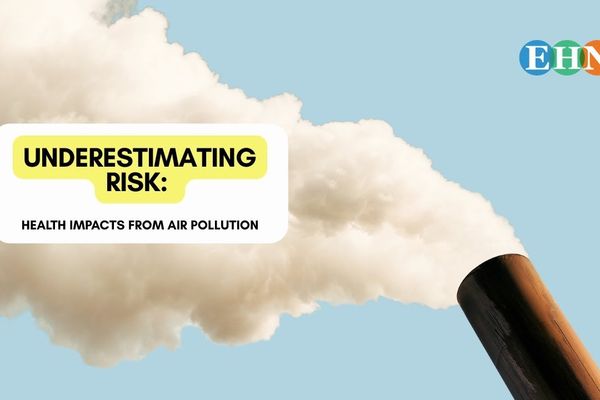
Regulators are underestimating health impacts from air pollution: Study

Regulators are underestimating health impacts from air pollution: Study

"The reality is, we are not exposed to one chemical at a time.”

Pennsylvania governor Josh Shapiro speaks with the state flag and American flag behind him.

Two years into his term, has Gov. Shapiro kept his promises to regulate Pennsylvania’s fracking industry?

A new report assesses the administration’s progress and makes new recommendations

silhouette of people holding hands by a lake at sunset

An open letter from EPA staff to the American public

“We cannot stand by and allow this to happen. We need to hold this administration accountable.”

wildfire retardants being sprayed by plane

New evidence links heavy metal pollution with wildfire retardants

“The chemical black box” that blankets wildfire-impacted areas is increasingly under scrutiny.

Stay informed: sign up for The Daily Climate newsletter
Top news on climate impacts, solutions, politics, drivers. Delivered to your inbox week days.