Weekend Reader, Sunday Feb. 25
What's this? The leading Congressional Benghazi warrior sets his sights on Scott Pruitt?
Funny things happen to some Congressmen when they consider life after Congress.
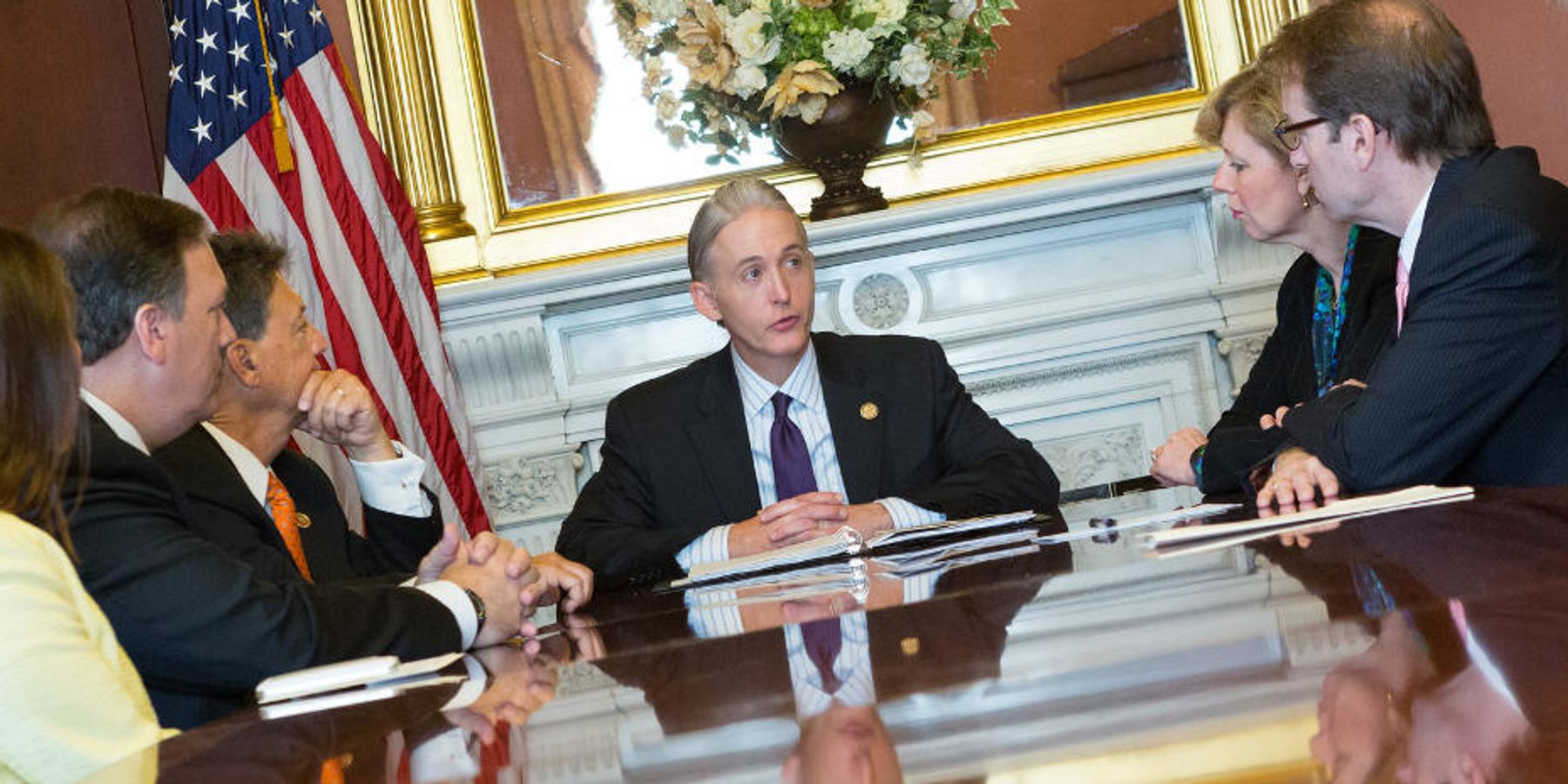
Trey Gowdy, the angular South Carolinian who rose to fame with his relentless pursuit of the Benghazi investigation, announced he won't run again in 2018. Gowdy came to Congress in the 2010 election by swamping incumbent Bob Inglis in the primary.
In a year when "primaried" became a verb, a moderate like Inglis—who even spoke up about climate change—had no chance.
A former prosecutor who won the nickname "Bulldog," Gowdy took the lead in pressing the Benghazi investigation—credited (or blamed) with helping defeat Hillary Clinton. His strong conservative credentials seemed perfect for Trumpism.
But last week by Trumpian standards, Congressman Gowdy Benghazi'd up the wrong tree. As chair of the House Oversight Committee, he sent a letter Tuesday to EPA, demanding details on Administrator Scott Pruitt's extensive first class travel, and on the size of his entourage.
Pruitt is said to have pulled field investigators off of protecting the environment and into a head-of-state sized personal security detail. Democrats on a second panel, the House Energy and Commerce Committee, have made a similar request.
Then there's the Cone of Silence. Pruitt reportedly spent $25,000 to install a private phone booth for conversations.
This week, another facet of Pruitt's leadership turned up. In an interview with the Christian Broadcasting Network, Pruitt offered a spiritual angle to his drill-baby-drill policies:
"The biblical world view with respect to these issues is that we have a responsibility to manage and cultivate, harvest the natural resources that we've been blessed with to truly bless our fellow mankind."
Top Weekend News
Must-read: The New Orleans Times-Picayune and the New York Times are publishing a joint series on Louisiana's disappearing coast. The town of Jean Lafitte waits to be swamped by rising seas and sinking land; and invasive insects compound the unfolding disaster along the vanishing coast.
An EPA report says people of color suffer more from air pollution in 46 states than do white people.
The AP's Seth Borenstein looks at satellite monitoring of the high seas -- and fisheries' huge footprint on ocean ecosystems.
From The Onion: Climate scientists hang it up, advise us to just enjoy the next 20 years. (You know this is satire, right?)
Opinions and Editorials
Former Interior Dept. official David Hayes argues that expanding drilling on public lands is the opposite of "America First."
Pennsylvania's York Dispatch editorializes on Trump's environmental budget cuts, and their impact on Chesapeake Bay.
Chicago Tribune columnist Steve Chapman offers a harsh assessment of Scott Pruitt: First-class travel is the least of his problems.
On Living on Earth, Peter Dykstra and Helen Palmer discuss fatbergs -- the gross, sometimes-enormous globs of fat and grease that clog urban sewer systems.
This Week In Trump
After his forced resignation, Trump climate adviser George David Banks called the Paris Accord "a good Republican agreement."
Sometimes, ya just gotta state the obvious: Are Trump's attacks on science meant to sway public opinion? From The Hill.
A just-released EPA study, conducted in the pre-Trump era, found that people of color cope with air pollution more than white people in 46 states.
The Conservative Political Action Conference hosted a climate change panel discussion. They found good news: Increased CO2 will make blue crabs enormous!!
At EPA, enforcement fines in Trump's first year in office total less than half of any recent President.
A Little Bit of Hope from a Garden
Amidst the misery of Syria's three-way Civil War, a garden in a northern Iraq refugee camp provides a ray of hope—and fresh food. NPR's Julia Travers with a great story.
And Some News for EHN/Daily Climate
We welcome Kristina Marusic as our new reporter. Based in Pittsburgh, Kristina will cover environmental health and justice issues in the region.