Peter Dykstra: Important environmental passings in 2021

A look back at losses over the last year.

As we turn the page on 2021, let's look back at people we lost last year who left their mark on the planet (for better or worse).


E. Bruce Harrison

In 1962, he was a Mad Men-era PR executive for the Chemical Manufacturers Association, where he led a relentless attack against the book Silent Spring and its author, Rachel Carson. The book’s thorough accounting of the consequences of the pesticide DDT mark it as arguably the greatest environmental book of all time.

He went on to a lucrative career as the “father of greenwashing” according to enviros and “the father of Green PR” according to industry. Harrison died in January at age 88

Paul Crutzen 

Crutzen was the last survivor of the trio of scientists awarded the 1995 Nobel Prize in Chemistry for their discoveries linking stratospheric depletion of the Earth’s ozone layer to the growing use of chlorofluorocarbon chemicals. He died in January, age 87.

Sandy West

Heiress to the Pittsburgh Paint & Glass fortune, West spent nearly all of it protecting Georgia’s Ossabaw Island from development. Comfortable with her public image as an eccentric, West rankled other environmentalists by working to protect Ossabaw’s ravenous wild hog population.

The hogs ate or trampled much of Ossabaw’s natural beauty. Sandy protected both the good and bad of Ossabaw Island till her death in February, age 108.

Rush Limbaugh

Say what you will about Limbaugh, he had a profound impact on the feelings of tens of millions of Americans about the environment and “environmentalist wackos.” Limbaugh was a prime misleader on climate change whose finest moment, IMHO, was in May 2010, when he told his audience that the Deepwater Horizon oil spill was an inside job, caused by said “wackos” as a fundraiser. He lost a long battle with lung cancer in February, age 70.

George Shultz

Secretary of State for Presidents Nixon and Reagan, Shultz was a late-in-life convert to clean energy, energy efficiency, and action on climate change. He died in February at age 100.

John Warner

The courtly five-term Senator from Virginia died in May, age 93. By one measure, he was a lousy environmentalist, with a 22% lifetime voting score from the League of Conservation Voters. But he co-sponsored the first Senate climate change bill with Joe Lieberman, and after leaving the Senate, Warner devoted much of his energy talking about climate change as a global security issue.

Prince Phillip 

Philip was not only the Queen’s wingman, he was President of the World Wide Fund for Nature for 15 years. He advocated for endangered animals and habitats, and his son Prince Charles continues to do so. In addition to the high visibility of the Royal Family, one can safely assume that both the Queen’s Consort and the Crown Prince might be pretty good fundraisers when called upon. His Highness was 99 when he died in April.

A.Q. Khan 

Of all those on this list, A.Q. Khan will almost surely have the longest and deepest impact on the human condition. He is also almost surely the only physicist who stands as a national hero in his own country, Pakistan. When rival India detonated its first atomic bomb in 1974, Khan led Pakistan’s effort to catch up, which they did in 1998. In the meantime, Khan had also become the world’s foremost sieve of nuclear secrets.

Fledgling nuke weapons programs in Iran, North Korea, and Libya launched in part thanks to Khan’s leaked information. Libya’s program died when dictator Moammar Khadafy was overthrown. Prospective nukes in the hands of either Iran or North Korea still pose a terrifying global risk.

Khan died of COVID-19 complications in October, age 85.

Environmental activists 

And while the final numbers won’t be in for a while, 2021 is expected to be another brutal year for environmental activists in the developing world. The group Global Witness counted 227 deaths last year – mostly unresolved murders.

One of the most notorious of past murders drew a step closer to justice in 2021, though. Berta Cáceres led opposition to a hydroelectric dam project in Honduras up until her 2016 murder. This past year, the former head of the hydro project was arrested and convicted of masterminding her killing.

Peter Dykstra is our weekend editor and columnist and can be reached at pdykstra@ehn.org or @pdykstra.

His views do not necessarily represent those of Environmental Health News, The Daily Climate, or publisher Environmental Health Sciences.

Banner photo: Sandy West. Credit: ossabawisland.org/)

Two men looking at a glass of wine and writing something on a clipboard

Burgundy's Beaune wine auction hit as climate change halves harvest

A key event combining luxury and charity, the Hospices de Beaune wine auction is this year constrained by the meager harvest after the summer heatwaves.

A group of college students sitting at desks looking toward the front of the classroom

How a class on climate change leaves students feeling ‘energized’

A Vassar College course teaches students about the technologies, policies, and strategies behind the clean energy transition, and how to advance them.

The Google logo on the side of a building

Decatur residents, green advocates call on Google to break Broadwing gas deal

Decatur residents urge Google to end its Broadwing gas deal over carbon capture, water safety and pollution concerns.
A maintenance worker walking past a row of solar panels

India's clean energy goal aims to power 1 billion homes by 2035

India has approved nearly $20 billion in power grid upgrades to ease bottlenecks that prevent some solar and wind energy from reaching consumers.

Beans on toast on a white plate
Credit: Nik/Unsplash+

Nanoplastics and climate change have a common enemy: Fiber

Scientists already back plant-heavy diets to cut food emissions. Now there’s evidence the same foods help the body resist plastic pollution.
A smokestack with smoke billowing from the top

A clean air advocate will represent part of America’s oil capital in Congress

A Texas district known for its petrochemical facilities is getting a representative with a background in environmental health.
Climate change is accelerating health threats worldwide

Climate change is accelerating health threats worldwide

The Lancet Countdown - established in 2016 to annually assess the effects of climate change on health - released a ten year report and accompanying editorial.


In short:

  • For the first time, the report quantifies heat-related deaths attributable to climate change, estimated at about 370,000 a year. The past 11 years have been the hottest ever recorded.
  • The report examined 54 indicators of climate change-driven health impacts and found that many health threats had increased or accelerated over the past decade.
  • Populations least responsible for climate change are experiencing the highest impacts.


Key quote:

“Over the past 10 years, a strong evidence-based case has been made that responding to climate change could be the greatest health opportunity of the 21st century.”


Why this matters:

The report points out how fossil fuel interests are blocking progress on climate change. It tracks not only heat-related deaths, as mentioned above, but also other climate related effects on health caused by floods, landslides, droughts, viruses, and more. It also tracks improvements, for example, estimating that the transition to clean energy prevented 400,000 deaths in 2023 just through improved indoor air quality. Health professionals are trusted sources of information and can speak for policy change and action for a healthier future.


Related EHN coverage:


More resources: The Lancet Countdown on health and climate change


Source:

Romanello, Marina et al. (2026), The 2026 report of the Lancet Countdown on health and climate change: a decade of escalating health harms and a decisive moment for all. The Lancet.

Related editorial, Climate change and health: 10 years on, what next? The Lancet.

From our Newsroom
Multiple Houston-area oil and gas facilities that have violated pollution laws are seeking permit renewals

Multiple Houston-area oil and gas facilities that have violated pollution laws are seeking permit renewals

One facility has emitted cancer-causing chemicals into waterways at levels up to 520% higher than legal limits.

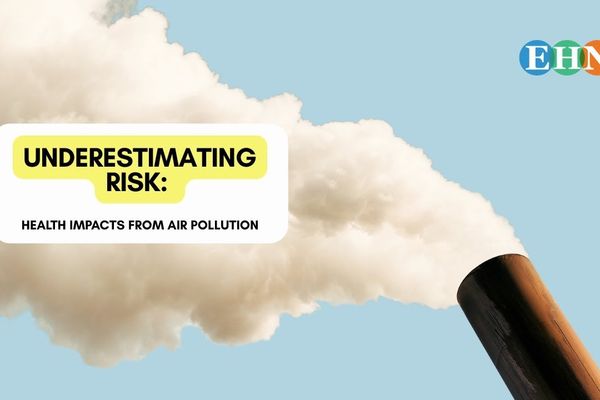
Regulators are underestimating health impacts from air pollution: Study

Regulators are underestimating health impacts from air pollution: Study

"The reality is, we are not exposed to one chemical at a time.”

Pennsylvania governor Josh Shapiro speaks with the state flag and American flag behind him.

Two years into his term, has Gov. Shapiro kept his promises to regulate Pennsylvania’s fracking industry?

A new report assesses the administration’s progress and makes new recommendations

silhouette of people holding hands by a lake at sunset

An open letter from EPA staff to the American public

“We cannot stand by and allow this to happen. We need to hold this administration accountable.”

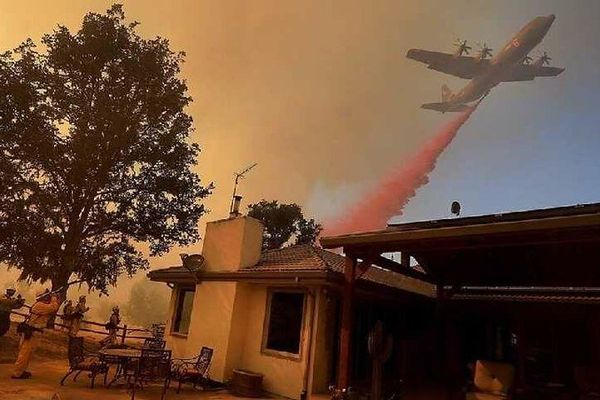
wildfire retardants being sprayed by plane

New evidence links heavy metal pollution with wildfire retardants

“The chemical black box” that blankets wildfire-impacted areas is increasingly under scrutiny.

Stay informed: sign up for The Daily Climate newsletter
Top news on climate impacts, solutions, politics, drivers. Delivered to your inbox week days.