California air rules fail to protect farmworkers as wildfire smoke worsens

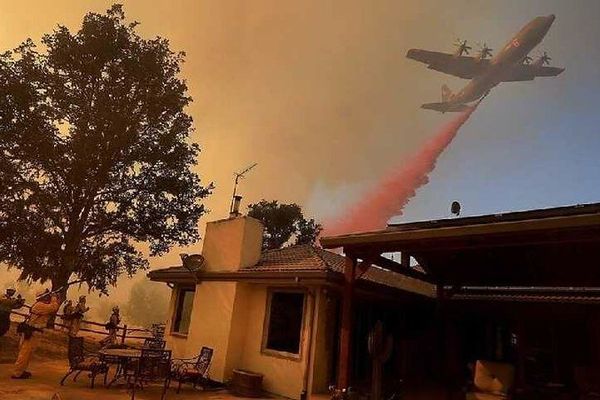
A growing body of evidence suggests California's air quality standards leave farmworkers vulnerable to injury and illness as climate-fueled wildfires worsen.

Rambo Talabong reports for Inside Climate News.


In short:

  • A new study from the University of California, Davis found that the state's current air quality threshold for outdoor work during wildfires is too lenient, with traumatic injuries rising even when pollution levels are deemed "safe."
  • Farmworkers like Adriana, who migrate for agricultural work, often face worsening respiratory problems and are rarely given protective gear or the option to avoid working in smoky conditions.
  • Despite mounting evidence and recommendations to adopt stricter standards like those in Washington State, California’s current regulations remain difficult to enforce and slow to change.

Key quote:

“Almost all air-quality regulations and wildfire-smoke protection policies in the United States rely on predefined thresholds for air-pollutant exposure, which assume that exposure at levels below these thresholds poses no important health risks. However, our research calls these thresholds into question.”

— Timothy Beatty and Goeun Lee, agricultural economists at UC Davis

Why this matters:

Wildfire smoke is a potent health hazard, especially for those laboring outdoors. Farmworkers, many of whom are migrants with limited resources or legal protections, often bear the brunt of climate-driven disasters without adequate safety nets. These workers breathe in high levels of fine particulate matter during wildfires, which can trigger not only respiratory illness but also disorientation and fatigue that lead to physical injuries. Because traumatic injuries like falls are easier to track than long-term illnesses, the full scope of harm from wildfire smoke likely remains hidden in the data. Regulatory thresholds meant to signal danger may fail to account for chronic exposure or compounding health effects. As wildfires become more frequent and intense, and as megafires dominate the landscape, more people — particularly those with the least power to object — will be exposed to unsafe air.

Learn more: Wildfires expose farmworkers to dangerous smoke as climate change intensifies

A river running through a green, rocky environment with a small wooden structure in foreground.

Plans to dispose of mining waste in Norway’s Arctic Ocean worries Sámi fishers, herders

Mining company Blue Moon Metals plans to dispose of its mining waste in Repparfjord, a nationally protected salmon fjord in the Norwegian Arctic that Indigenous Sámi fishers rely on.

Wetlands with green trees, fields and cloud dotted sky.

The next deluge may go differently

Explore how Wisconsin Wetlands Funding aids in restoring ecosystems and managing floodwaters effectively across the region.
Scene of destructive aftermath of Florida hurricane
Credit: Photo by David Sterphone)/Florida National Guard https://www.flickr.com/photos/thenationalguard/ Creative Commons https://creativecommons.org/licenses/by/2.0/

The hidden devastation of hurricanes

Their health effects extend far beyond official death tolls.
shallow focus of person holding a narrow mirror reflecting their eye.

The last frontier of empathy: why we still struggle to see ourselves as animals

Champions of exceptionalism say humans hold a unique moral status. Yet there’s only one species recklessly destroying the planet it needs to survive.

A boat with green fishing nets alongside a dock.

Opinion: How a Texas shrimper stalled Exxon’s $10bn plastics plant

Diane Wilson recognized Exxon’s playbook – and showed how local people can take on even the most entrenched industries.

A palm with fingers splayed planted in the middle of a large green leaf.

Two ways of knowing: How merging science and Indigenous wisdom fuels new discoveries

What becomes possible when we combine the strengths of western science and Indigenous knowledge systems as we navigate humanity’s biggest challenges?

A woman in a beanie cap lays on leaves and grass looking at the sky on a cloudy day.

Is ‘imagination activism’ the antidote to climate doom we’ve been looking for?

A new exhibition in Rio de Janeiro, Brazil, asks, what if the most radical climate tool isn't technology, but the ability to dream?
From our Newsroom
Multiple Houston-area oil and gas facilities that have violated pollution laws are seeking permit renewals

Multiple Houston-area oil and gas facilities that have violated pollution laws are seeking permit renewals

One facility has emitted cancer-causing chemicals into waterways at levels up to 520% higher than legal limits.

Regulators are underestimating health impacts from air pollution: Study

Regulators are underestimating health impacts from air pollution: Study

"The reality is, we are not exposed to one chemical at a time.”

Pennsylvania governor Josh Shapiro speaks with the state flag and American flag behind him.

Two years into his term, has Gov. Shapiro kept his promises to regulate Pennsylvania’s fracking industry?

A new report assesses the administration’s progress and makes new recommendations

silhouette of people holding hands by a lake at sunset

An open letter from EPA staff to the American public

“We cannot stand by and allow this to happen. We need to hold this administration accountable.”

wildfire retardants being sprayed by plane

New evidence links heavy metal pollution with wildfire retardants

“The chemical black box” that blankets wildfire-impacted areas is increasingly under scrutiny.

Stay informed: sign up for The Daily Climate newsletter
Top news on climate impacts, solutions, politics, drivers. Delivered to your inbox week days.