With the outbreak of COVID-19, our society is reeling. Sadly, the uncertainty, displacement and fear you may now feel has been the common, everyday experience for many Native American people for a long time.
But first, we could all use some good news— and fortunately, some exists.
Within the past few weeks, Indigenous communities in the U.S. achieved a pair of substantial victories regarding pipelines. First, legal action by the Standing Rock Sioux Tribe compelled a federal judge in Washington, D.C., to revoke permits for the Dakota Access pipeline. Then another federal judge in Montana ruled that the environmental impact review process for the Keystone XL pipeline was flawed, and he halted its construction through domestic waterways.
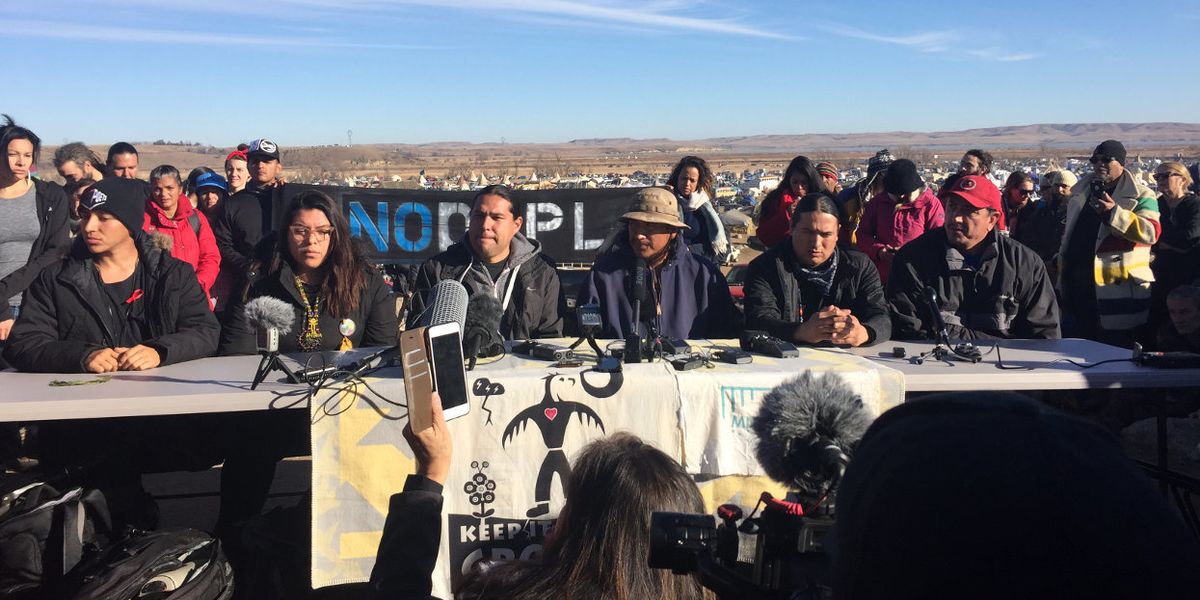
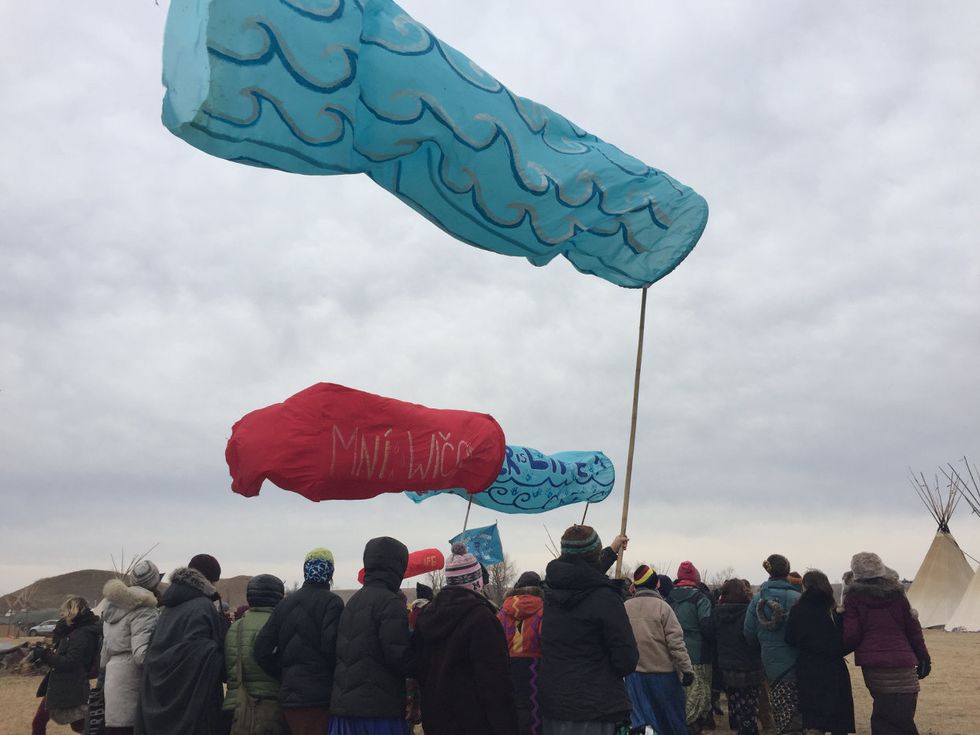
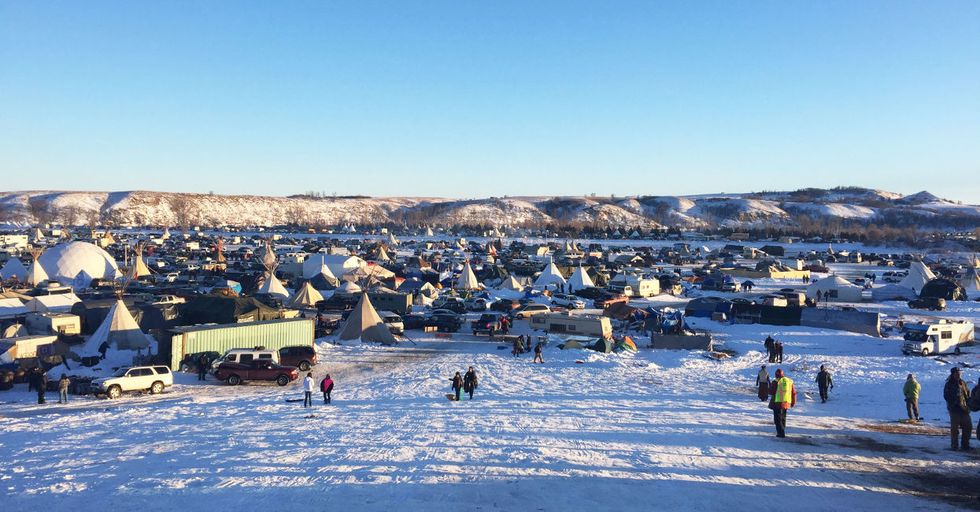
These two rulings justify the stand that I and hundreds of thousands of others took in 2016 and 2017, when we formed NoDAPL protest camps at Standing Rock, as well as our current tribal actions against Keystone XL.
I was surveilled and arrested at Standing Rock for allegedly trespassing on my own ancestral lands and "inciting a riot" for standing with my relatives in a prayer circle.
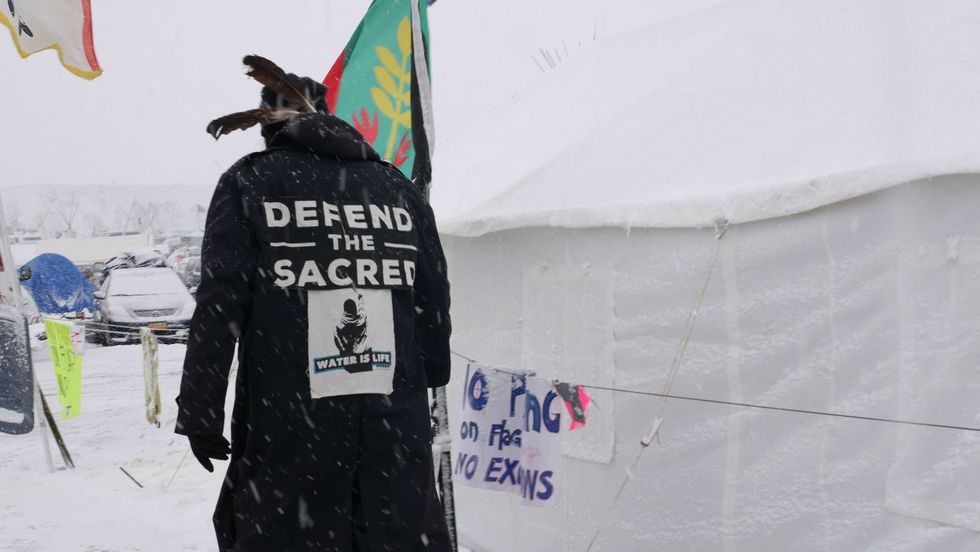
All major charges against me were eventually dropped, but these rulings provide additional vindication. Our rallying cry, "mni wiconi"— Lakota for "water is life"— is as true today as it was then.
We protested because we needed to protect our Grandmother Earth and the generations to come.
I am grateful that these judges have now seen fit to stand up for nature and the future of humankind.
Yet, any sense of victory is tempered — by the COVID-19 pandemic we face together, and by a long history of disappointment.
Dakota Access pipeline protest. (Credit: Kelsey Hill of the Lakota People's Law Project.)
Dakota Access pipeline protest. (Credit: Kelsey Hill of the Lakota People's Law Project.)
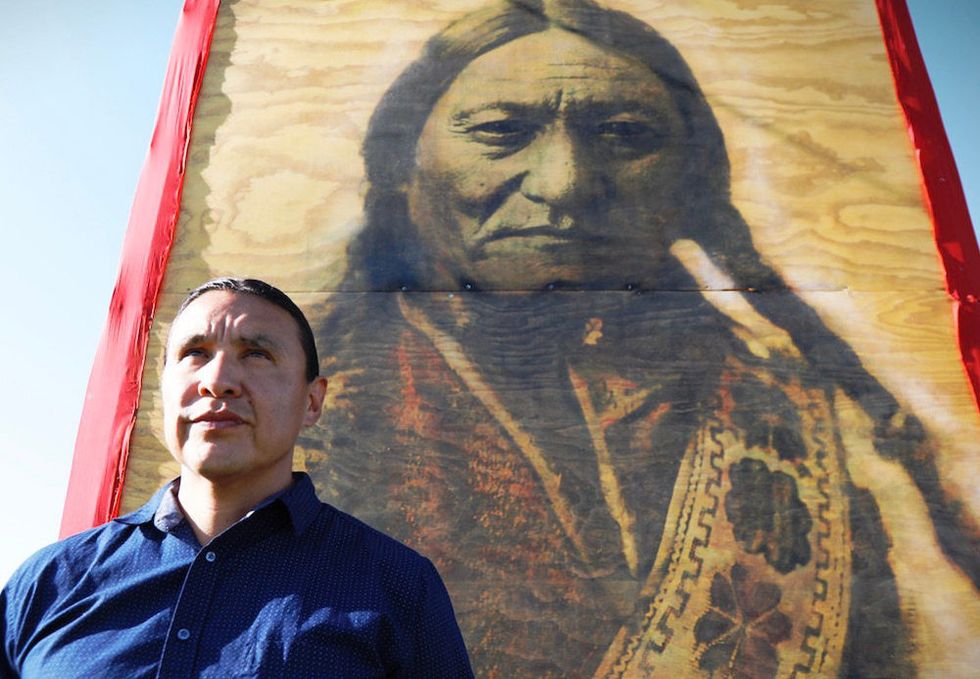
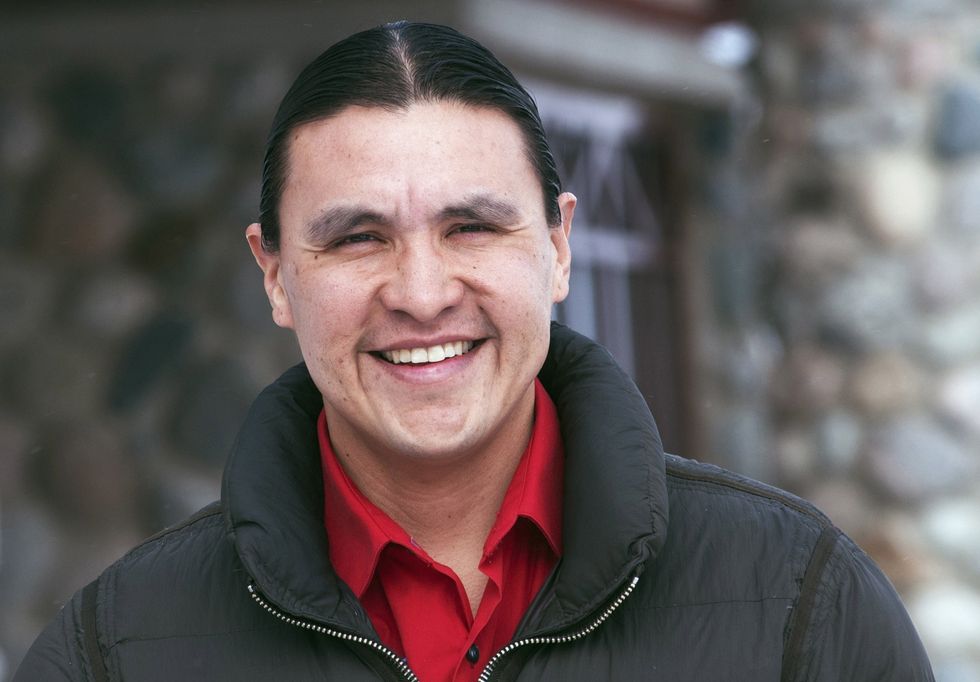
Chase Iron Eyes. (Credit: Credit: Lakota People's Law Project)
Leaders oblivious to science and Indigenous wisdom
We, the first people of this land, have been failed time and again by colonizers. The history of treaties in the U.S. shows clearly that virtually every time a promise is made to us, it's later reneged upon.
When the white man first set foot on these shores, he brought with him a hunger for land and a host of strange diseases, which he weaponized against us in the form of smallpox blankets.
In Bear Soldier District on Standing Rock Nation, a nearly all-white city council recently put a Native family on the street by shutting off the power to their Federal Emergency Management Agency trailer.
Governor Noem has roughly 72,000 Native Americans living in her state. We are at more risk than ever, and she doesn't seem to care. It almost seems like smallpox blankets all over again.
It's stunning to me that many of our leaders don't see the connection.
They're oblivious to both science and Indigenous wisdom, each of which teaches that we must find better ways to live in harmony with our planet before it's too late.
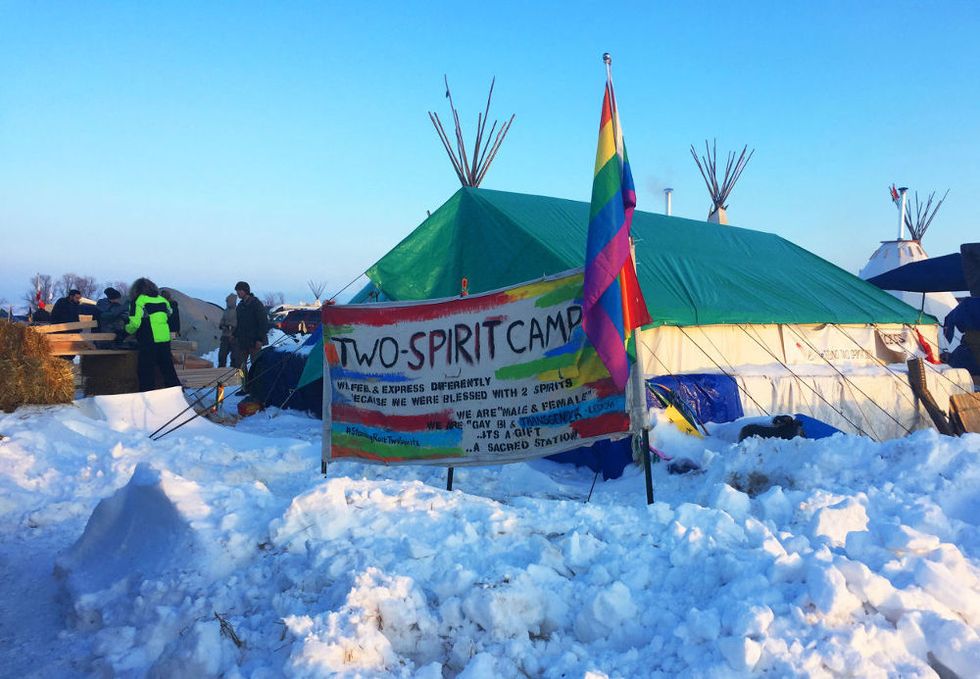
Dakota Access pipeline protest. (Credit: Kelsey Hill of the Lakota People's Law Project.)
Dakota Access pipeline protest. (Credit: Kelsey Hill of the Lakota People's Law Project.)
“The world is a library”
It's infuriating that Keystone XL construction is allowed to continue in South Dakota amid the pandemic. Even before temporary housing developments for oil industry workers, known as man camps, became potential hubs for COVID-19 transmission, they already endangered our people by exacerbating the epidemic of missing and murdered Indigenous women and girls.
These are some of the reasons why, at the Lakota People's Law Project, we're laser focused on our goal of securing justice for the Lakota people. That means protecting Native rights, sovereignty, and health— not just in this time of crisis, but always— and it means keeping an eye to the future.
The climate clock is ticking, we are in crunch time, and everything is on the line.
We must be better, right now and in the days to come, and we must use the lessons of this pandemic in our fight to preserve the planet.
In this moment, we must avoid counterproductive measures like bailing out the dying fossil fuel industry with funds meant to protect ordinary people. Going forward, we should pass a Green New Deal to increase investment in renewable technologies and put people to work in a new, clean energy economy.
Just as these problems are intertwined, so are the solutions.
We Lakota have another saying: "Knowledge is rooted in all things — the world is a library."
Let's read this moment accurately. Let's move forward with increased understanding.
Together, let's do the work it takes to be generous and compassionate toward one another and toward our oldest relative of all, our Grandmother Earth.
Chase's Iron Eyes' distinguished career fighting for the civil rights of Native Americans includes serving as lead local counsel for the Lakota People's Law Project, co-founding the Native news website LastRealIndians.com, and work in the Native Lives Matter movement. In 2016, he was the Democratic congressional nominee for North Dakota.
From the beginning of the movement, Chase was involved on the front lines of the fight against the Dakota Access pipeline, hosting tribal leadership, providing legal services, and joining the water protectors in their prayerful and peaceful protest. Born on Standing Rock Nation, today Chase lives at Pine Ridge, where he also serves as public relations director for Oglala Sioux Tribe President Julian Bear Runner.
Chase holds bachelor's degrees in political science and American Indian studies from the University of North Dakota, and a Juris Doctor of Law degree with an emphasis in Federal Indian Law.
His views do not necessarily represent those of Environmental Health News, The Daily Climate or publisher, Environmental Health Sciences.
Banner photo: Dakota Access pipeline protest. (Credit: Kelsey Hill of the Lakota People's Law Project.)
The heat wave has primarily impacted California, Oregon, and Arizona, resulting in record-breaking temperatures and multiple fatalities.
Most victims were elderly and found in their homes; other deaths include a motorcyclist in Death Valley and a baby in Arizona.
Heat-related deaths are often underreported, as they are frequently attributed to other causes such as heart failure
Key quote:
“The extreme nature of the heat last summer and this summer has meant it’s in the forefront of everyone’s mind, including those in charge of classifying health outcomes and deaths."
— Ashley Ward, director of the Heat Policy Innovation Hub at Duke University
Why this matters:
As the climate crisis intensifies, the frequency and severity of heatwaves are expected to increase, posing a serious threat to public health and the environment. This brutal reminder of our changing climate heightens the pressure for action to mitigate the impacts of global warming. Read more: We are undercounting heat-related deaths in the US.
CAMERON PARISH, La. — Late into the night, John Allaire watches the facility next to his home shoot 300-foot flares from stacks.
He lives within eyesight of southwest Louisiana’s salty shores, where, for decades, he’s witnessed nearly 200 feet of land between it and his property line disappear into the sea. Two-thirds of the land was rebuilt to aid the oil and gas industry’s LNG expansion. LNG — shorthand for liquified natural gas – is natural gas that's cooled to liquid form for easier storage or transport; it equates to 1/600th the volume of natural gas in a gaseous state. It’s used to generate electricity, or fuel stove tops and home heaters, and in industrial processes like manufacturing fertilizer.
In the U.S., at least 30 new LNG terminal facilities have been constructed or proposed since 2016, according to the
Oil and Gas Watch project. Louisiana and Texas’ Gulf Coast, where five facilities are already operating, will host roughly two-thirds of the new LNG terminals – meaning at least 22 Gulf Coast LNG facilities are currently under construction, were recently approved to break ground or are under further regulatory review.
Although the U.S. didn’t ship LNG until 2016, when a freight tanker left, a few miles from where Cameron Parish’s LNG plants are today, last year the country became the global leader in LNG production and export volume, leapfrogging exporters like Qatar and Australia. The
EIA’s most recent annual outlook estimated that between the current year and 2050, U.S. LNG exports will increase by 152%.
Allaire, 68, watches how saltwater collects where rainwater once fed the area’s diminishing coastal wetlands. “We still come down here with the kids and set out the fishing rods. It's not as nice as it used to be,” he told
Environmental Health News (EHN).
That intimacy with nature drew Allaire to the area when he purchased 311 acres in 1998. An environmental engineer and 30-year oil and gas industry veteran, he helped lead environmental assessments and manage clean-ups, and although retired, he still works part-time as an environmental consultant with major petroleum companies. With a lifetime of oil and gas industry expertise, he’s watched the industry's footprint spread across Louisiana and the Gulf of Mexico’s fragile shores and beyond. Now that the footprints are at the edge of his backyard, Allaire is among a cohort of organizers, residents and fisher-folk in the region mobilizing to stop LNG facility construction. For him, the industry’s expansion usurps the right-or-wrong ethics he carried across his consulting career. For anglers, oil and gas infrastructure has destroyed fishing grounds and prevented smaller vessels from accessing the seafood-rich waters of the Calcasieu River.
From the view of Allaire’s white pickup truck as he drives across his property to the ocean’s shore, he points to where a new LNG facility will replace marshlands. Commonwealth LNG intends to clear the land of trees and then backfill the remaining low-lying field.
“You see what’s happening with the environment,” Allaire said. “When the facts change, I got to change my mind about what we’re doing.”
Community bands together
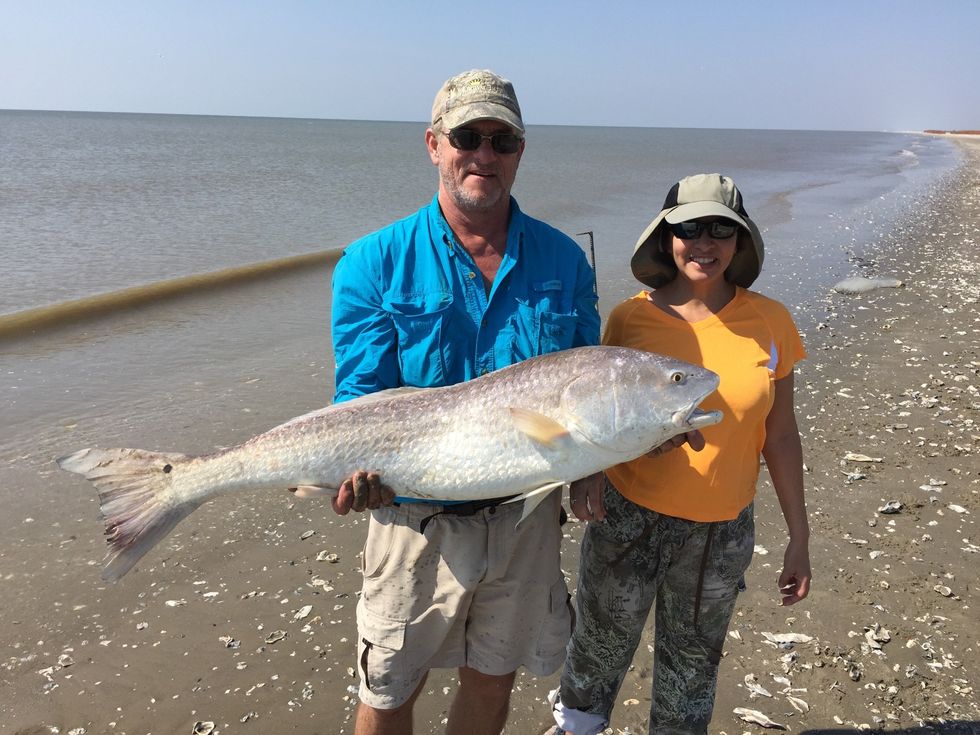
John Allaire, left, purchased 311 acres in Cameron Parish in 1998, and has watched the oil and gas industry's footprint spread to his property.
Credit: John Allaire
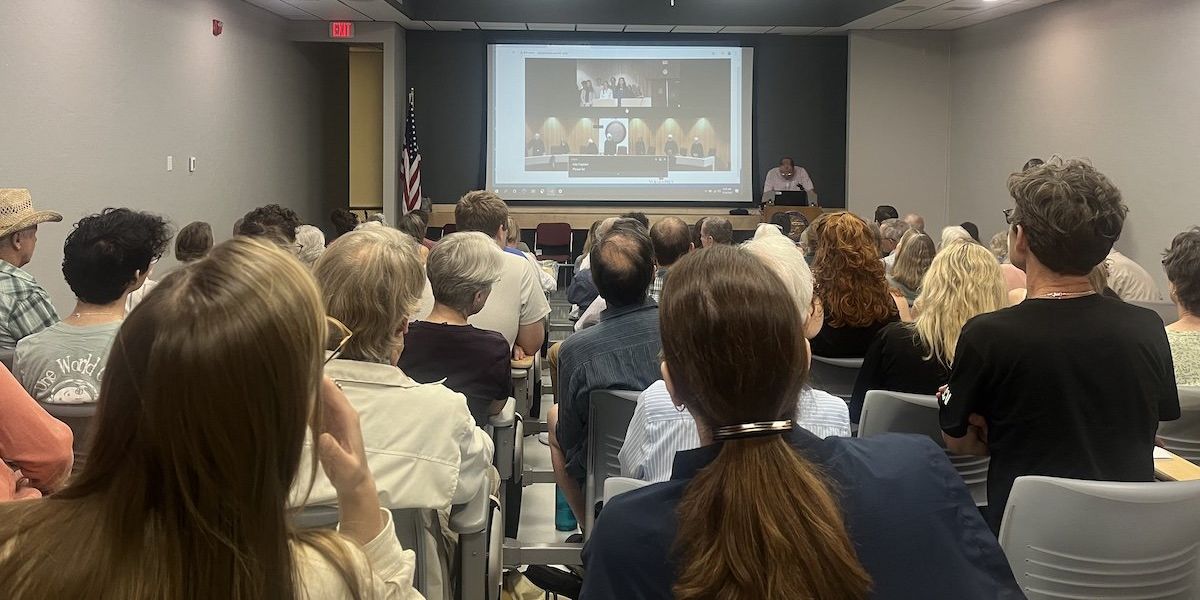
During an Earth Day rally in April, community members gathered in the urban center of Lake Charles to demand local oil and gas industries help deliver a safer, healthier future for all. In between live acts by artists performing south Louisiana’s quintessential zydeco musical style, speakers like James Hiatt, a Calcasieu Parish native with ties to Cameron Parish and a Healthy Gulf organizer, and RISE St. James organizer Sharon Lavigne, who’s fighting against LNG development in rural Plaquemines Parish near the city of New Orleans, asked the nearly 100 in attendance to imagine a day in which the skyline isn’t dotted by oil and gas infrastructure.
Not long ago, it was hard to imagine an Earth Day rally in southwest Louisiana at all. For decades, the area has been decorated with fossil fuel infrastructure. Sunsets on some days are highlighted by the chemicals in the air; at night, thousands of facilities’ lights dot the dark sky.
“It takes a lot of balls for people to start speaking up,” Shreyas Vasudevan, a campaign researcher with the Louisiana Bucket Brigade, told EHN in the days after the rally. In a region with its history and economy intertwined with oil and gas production, “you can get a lot of social criticism – or ostracization, as well – even threats to your life.”
Many are involved in local, regional and national advocacy groups, including the Louisiana Bucket Brigade, Healthy Gulf, the Sierra Club, the Natural Resources Defense Council, the Turtle Island Restoration Network, the Center for Biological Diversity and the National Audubon Society.
“You see what’s happening with the environment,” Allaire said. “When the facts change, I got to change my mind about what we’re doing.” - John Allaire, environmental engineer and 30-year oil and gas industry veteran
But environmental organizers are fighting a multi-billion-dollar industry with federal and state winds at its back. And LNG’s federal support is coupled with existing state initiatives.
Under outgoing Louisiana Gov. John Bel Edwards — a term-limited Democrat — the state pledged a goal of reaching net-zero greenhouse emissions by 2050. Natural gas, which the LNG industry markets as a cleaner-burning alternative, is cited as one of the state’s solutions. Louisiana is the only state that produces a majority of its carbon emissions through fossil fuels refining industries, like LNG, rather than energy production or transportation. Governor Edwards’ office did not return EHN’s request for comment.
This accommodating attitude towards oil and gas industries has resulted in a workforce that’s trained to work in LNG refining facilities across much of the rural Gulf region, said Steven Miles, a lawyer at Baker Botts LLP and a fellow at the Baker Institute’s Center on Energy Studies. Simultaneously, anti-industrialization pushback is lacking. It’s good news for industries like LNG.
“The bad news,” Miles added. “[LNG facilities] are all being jammed in the same areas.”
One rallying cry for opponents is local health. The Environmental Integrity Project found that LNG export terminals emit chemicals like carbon monoxide –potentially deadly– and sulfur dioxide, of which the American Lung Association says long-term exposure can lead to heart disease, cancer, and damage to internal or female reproductive organs.
An analysis of emissions monitoring reports by the advocacy group the Louisiana Bucket Brigade found that Venture Global’s existing Calcasieu Pass facility had more than 2,000 permit violations.That includes exceeding the permit’s authorized air emissions limit to release nitrogen oxides, carbon monoxide, particulate matter and volatile organic compounds 286 out of its first 343 days of operation.
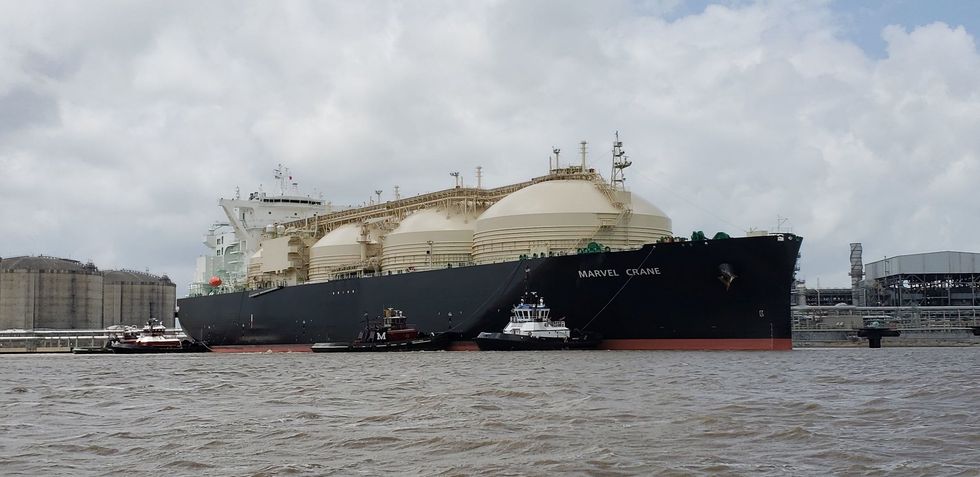
The Marvel Crane, the first liquid natural gas carrier to transport natural gas from the Southwest Louisiana LNG facility, transits a channel in Hackberry, Louisiana, May 28, 2019.
“This is just one facility,” at a time when three more facilities have been proposed in the region and state, Vasudevan said. Venture Global’s operational LNG facility — also known as Calcasieu Pass — “is much smaller than the other facility they’ve proposed.”
In an area that experienced 18 feet of storm surge during Hurricane Laura in 2020 — and just weeks later, struck by Hurricane Delta — Venture Global is planning to build a second export terminal Known as “CP2,” it’s the largest of the roughly two dozen proposed Gulf LNG export terminals, and a key focal point for the region’s local organizing effort.
Residents “don’t really want LNG as much as they want Cameron [Parish] from 1990 back,” Hiatt told EHN of locals’ nostalgia for a community before storms like Rita in 2005 brought up to 15 feet of storm surge, only for Laura to repeat the damage in 2020. Throughout that time, the parish’s population dipped from roughly 10,000 to 5,000. “But the wolf knocking at the door is LNG. Folks in Cameron think that's going to bring back community, bring back the schools, bring back this time before we had all these storms — when Cameron was pretty prosperous.”
“Clearly,” for the oil and gas industry, “the idea is to transform what was once the center of commercial fishing in Louisiana to gas exports,” Cindy Robertson, an environmental activist in southwest Louisiana, told EHN.
Helping fishers’ impacted by LNG is about “actual survival of this unique culture,” Cooke said.
In a measure of organizers’ success, she pointed to a recent permit hearing for Venture Global’s CP2 proposal. Regionally, it’s the only project that’s received an environmental permit, but not its export permit, which remains under federal review. At the meeting, some spoke on the company’s behalf. As an organizer, it was a moment of clarity, Cooke explained. Venture Global officials “had obviously done a lot of coaching and organizing and getting people together in Cameron to speak out on their behalf,” Cooke said. “So, in a way, that was bad. But in another way, it shows that we really had an impact.”
“It also shows that we have a lot to do,” Cooke added.
Environmental organizers like Alyssa Portaro describe a sense of fortitude among activists — she and her husband to the region’s nearby town of Vinton near the Texas-Louisiana border. Since the families’ relocation to their farm, Portaro has worked with Cameron Parish fisher-folk.
“I’ve not witnessed ‘community’ anywhere like there is in Louisiana,” Portaro told EHN. But a New Jersey native, she understands the toll environmental pollution has on low-income communities. “This environment, it’s so at risk — and it’s currently getting sacrificed to big industries.”
“People don’t know what we’d do without oil and gas. It comes at a big price,” she added.
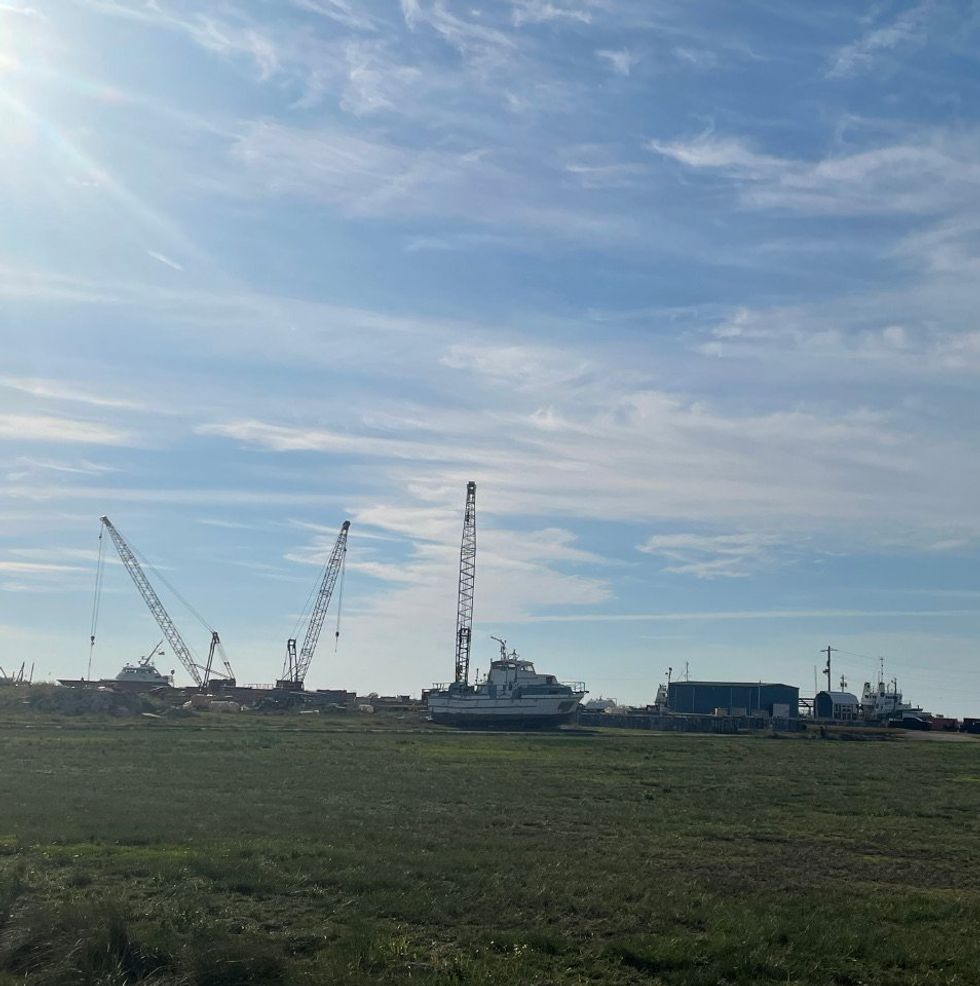
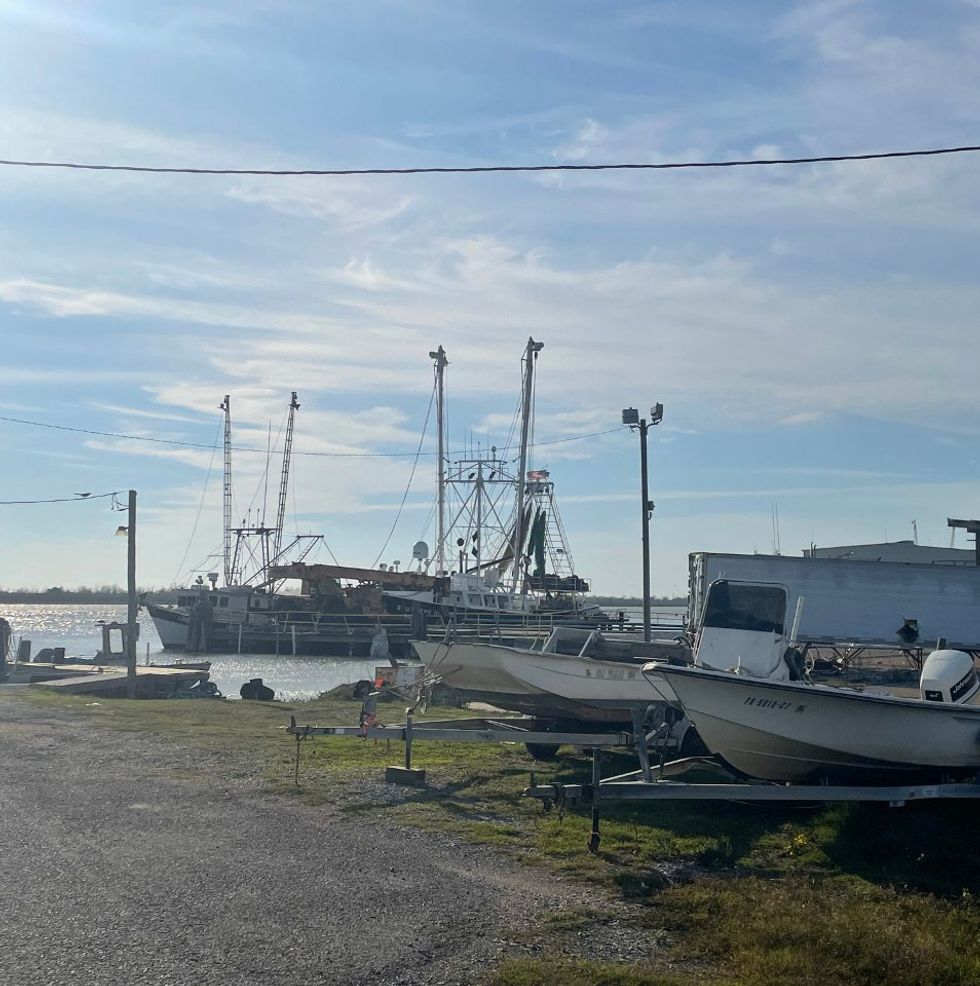
Southwest Louisiana’s Cameron Parish is one of the state’s most rural localities. Marine economies were the area’s economic drivers until natural disasters and LNG facilities began pushing locals out, commercial fishers claim.
Credit: Xander Peters for Environmental Health News
Residents “don’t really want LNG as much as they want Cameron [Parish] from 1990 back,” James Hiatt , a Healthy Gulf organizer, told EHN. "But the wolf knocking at the door is LNG."
Credit: Xander Peters for Environmental Health News
For the most part, Cameron Parish’s life and economy has historically taken place at sea. As new LNG facilities are operational or in planning locally, locals claim the community they once knew is nearly unrecognizable.
Credit: Xander Peters for Environmental Health News
A disappearing parish
The stakes are seemingly higher for a region like southwest Louisiana, which is the epicenter of climate change impacts.
In nearly a century, the state has lost roughly 2,000 square miles of land to coastal erosion. In part driving the state’s erosion crisis is the compounding impacts of Mississippi River infrastructure and oil and gas industry activity, such as dredging canals for shipping purposes, according to a March study published in the journal Nature Sustainability. Louisiana’s Coastal Protection and Restoration Authority said Cameron Parish could lose more land than other coastal parishes over the next 50 years. A recent Climate Central report says the parish will be underwater within that time frame.
On top of erosion and sea level rise impacts, in August, 2023, marshland across southwest Louisiana’s Cameron Parish burned. The fires were among at least 600 across the Bayou State this year. Statewide, roughly 60,000 acres burned — a more than six-fold increase of the state’s average acres burned per year in the past decade alone.
But while the blaze avoided coastal Louisiana communities like Cameron Parish, the fires represented a warning coming from a growing chorus of locals across the region — one that’s echoes by the local commercial fishing population, who claimed to have experienced unusually low yields during the same time, according to a statement from a local environmental group. At the site of the Cameron Parish fires are locations for two proposed LNG expansion projects.
"The idea is to transform what was once the center of commercial fishing in Louisiana to gas exports.” - Cindy Robertson, an environmental activist in southwest Louisiana
It was an unusual occurrence for an area that’s more often itself underwater this time of year due to a storm surge from powerful storms. For LNG expansion’s local opposition, it was a red flag.
As the Louisiana Bucket Brigade has noted prior, the confluence of climate change’s raising of sea levels and the construction of LNG export terminals — some are proposed at the size of nearly 700 football fields — are wiping away the marshland folks like Allaire watched wither. Among their fears is that the future facilities won’t be able to withstand the power of another storm like Laura and its storm surge, which wiped away entire communities in 2020.
Amidst these regional climate impacts, LNG infrastructure has shown potential to exacerbate the accumulation of greenhouse gasses that cause global warming. For the most part, LNG is made up of methane — a greenhouse gas that’s more than 80 times more potent than carbon dioxide in the atmosphere. Among the 22 current LNG facility proposals, the advocacy group Sierra Club described a combined climate pollution output that would roughly equal to that of about 440 coal plants.
The climate impacts prompt some of the LNG industry’s uncertainty going forward. It isn’t clear if Asian countries, key importers of U.S. LNG, will “embrace these energy transition issues,” said David Dismuke, an energy consultant and the former executive director of Louisiana State University’s Center for Energy Studies. Likewise, European nations remain skeptical of embracing LNG as a future staple fuel source.
“They really don't want to have to pull the trigger,” Dismukes added, referring to Europe’s hesitation to commit more resources to exporting LNG from the American market. “They don't want to go down that road.”
While there will be a tapering down of natural gas supply, Miles explained, “we’re going to need natural gas for a long time,” as larger battery storage for renewables is still unavailable.
“I'm not one of these futurists that can tell you where we're going to be, but I just don't see everything being extreme,” Dismukes said. “I don't see what we've already built getting stranded and going away, either.”
For now, LNG seems here to stay. From 2012 to 2022,U.S. natural gas demand — the sum of both domestic consumption and gross exports — rose by a whopping 43%, reported the U.S. Energy Information Administration, or EIA. Meanwhile, in oil and gas hotbeds like Louisiana and Texas, natural gas demand grew by 116%.
Throughout 25 years, Allaire has witnessed southwest Louisiana’s land slowly fade, in part driven by the same industrial spread regionally. Near where the front door of his travel trailer sits underneath the aluminum awning, he points to a chenier ridge located near the end of the property. It’s disappearing, he said.
“See the sand washing over, in here?” Allaire says, as he points towards the stretches of his property. “This pond used to go down for a half mile. This is all that's left of it on this side.”
The Biden administration is providing $1.7 billion to retool 11 auto factories for electric vehicle production, aiming to secure jobs and support union labor.
The Energy Department's funding aims to prevent the closure of unionized auto plants and save over 15,000 jobs.
This initiative is part of Biden’s strategy to boost EV production before the November election, countering potential policy reversals if Trump wins.
The largest allocation, $500 million, goes to General Motors in Lansing, Michigan, to shift from internal combustion engines to EVs.
Key quote:
“Building a clean energy economy can and should be a win-win for union autoworkers and automakers. This investment will create thousands of good-paying, union manufacturing jobs and retain even more — from Lansing, Michigan to Fort Valley, Georgia — by helping auto companies retool, reboot and rehire in the same factories and communities.”
— Joe Biden, President of the United States
Why this matters:
This funding supports the transition to electric vehicles, crucial for reducing greenhouse gas emissions. It also aims to secure jobs in an evolving auto industry, promoting economic stability in key states.
As climate change impacts walleye populations in Wisconsin lakes, Indigenous tribes and conservationists are striving to preserve the traditional practice of spearfishing.
Ojibwe and other Indigenous tribes rely on spearfishing for food, cultural connection, and tradition, but climate change and lakeshore development threaten walleye populations.
Conservation efforts include permits to limit fish catch and fish stocking, but natural reproduction remains a challenge due to environmental changes.
Indigenous knowledge is increasingly valued in conservation strategies to adapt to these changes and ensure sustainable fishing practices.
Key quote:
“We’ve seen things here over the last couple of years that I’ve never seen before. It worries me, what I’ve seen in my lifetime, what’s my grandson going to see in his lifetime?”
— Brian Bisonette, conservation director of the Lac Courte Oreilles Conservation Department
Why this matters:
Climate change and habitat loss threaten Indigenous food sources and cultural traditions. Collaborative conservation efforts aim to preserve these practices for future generations, emphasizing the intersection of environmental and cultural sustainability.
A new version of the popular board game Catan, called New Energies, aims to make discussing climate change more engaging by incorporating elements of renewable energy and fossil fuels.
The HHS Climate Action Plan emphasizes resilience without adequately addressing prevention.
Resilience policies overlook the pervasive and constant health threats posed by climate change.
The approach may lead to accepting climate disasters as inevitable, rather than preventable.
Key quote:
"Resilience is the categorical imperative of business-as-usual; it is crisis managers buying time. For others, resilience is exhausting."
— Ajay Singh Chaudhary, author of The Exhausted of the Earth.
Why this matters:
Focusing solely on resilience without prevention leaves populations, especially the vulnerable, in perpetual danger. This approach risks normalizing climate disasters instead of aiming to mitigate them.
A landmark climate lawsuit in Montana questions whether a state law supporting fossil fuel development infringes on constitutional rights to a healthy environment.
Montana's Supreme Court heard arguments about a law that prohibits considering climate impacts in fossil fuel project approvals, challenged by 16 youths.
Plaintiffs argue the law violates Montana’s constitutional right to a "clean and healthful environment," with potential national implications.
The state’s defense claims Montana's emissions are too minor to affect global climate change, questioning the court's jurisdiction.
Key quote:
“Any environmental case that gets to the Supreme Court is dead on arrival. That’s why people are going to the states.”
— Patrick Parenteau, professor of law emeritus and senior fellow for climate policy at Vermont Law and Graduate School
Why this matters:
The case could set a precedent for constitutional climate rights, influencing environmental policy and legal actions nationwide, especially as federal regulations face challenges. Read more: Youth v. Montana — Young adults speak up.
As mounds of dredged material from the Houston Ship Channel dot their neighborhoods, residents are left without answers as to what dangers could be lurking.