Each review links out to the book through Bookshop.org, which works to connect readers with independent booksellers. Happy reading!
By Mary Shelley I know that a 19th-century novel about the archetypal monster seems like the least summery reading out there. But hear me out: Frankenstein might be the perfect read for our current political times. It's a novel about the blind pursuit of knowledge and the responsibility creators have towards their creations (ring the AI bell, anyone?). It’s also a novel about what happens to the soul in times of profound isolation, and a novel about taking action — however misguided — in the face of injustice. Finally, Frankenstein is a novel about outsiders. About the misplaced fears of a society towards those who are deemed foreign and, therefore, monstrous. Reading it has made my heart ache — for the monster, for its creator, and for ourselves.
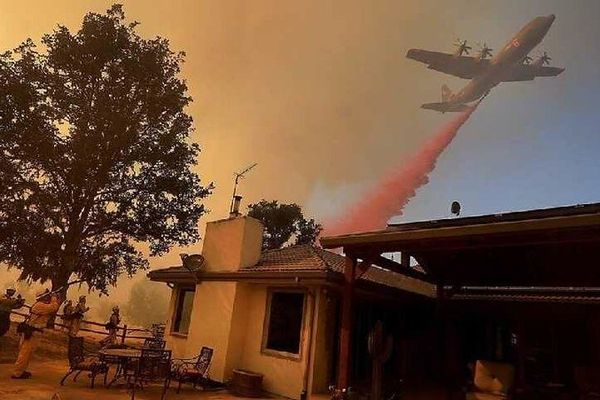
Even if you don’t make it through the entire 576 pages of Kim Stanley Robinson’s ambitious cli-fi novel, read the first chapter. It’s surely one of the most gripping, powerful accounts of climate catastrophe ever attempted. Part of its power comes from the grim knowledge that any given summer could produce the kind of horrific event that Robinson describes in such excruciating detail. In a sense, this is a novel that opens with the climax and spends another several hundred pages considering whether and how a devastating mass casualty event might finally spur the world to take decisive action.
I’m in awe of Robinson’s attempt to shape such a comprehensive survey of international climate policy into a readable narrative. I especially appreciated the compassion and thoughtfulness with which Robinson considers the emotional trauma of climate change and climate inaction. I was impressed by how he threads so many climate challenges and solutions and even if that tapestry only partly succeeded for me, he manages to steer us away from complete despair and toward a place of hope in the end.
It’s a heavy topic for a beach read, but this pleasantly tiny book by a historian of 20th-century Europe inspires hope and can be read in a single sitting. It was published in 2017 in response to rising authoritarianism in the United States, and focuses on the lessons Americans can learn from European countries that lost their democracies to fascism, communism, and Nazism.
Snyder’s 20 lessons include specific directives like “Believe in truth,” “Defend institutions,” and “Remember professional ethics.” Each lesson is explained with stories about how past failures in these realms empowered totalitarian regimes, and suggestions for how America can avoid the same fate. I found it comforting to be reminded that we’re not the first country to face these challenges, and that we can learn from the mistakes of the past to avoid repeating history and hold the line against encroaching tyranny.
Susana Monsó, a professor of philosophy in Madrid, makes her publishing debut with a thoughtful and often surprising journey into the minds of nonhuman animals and their relationship to the concept — and reality — of death. Drawing on behavioral science and the study of animal cognition, Monsó dismantles the notion that awareness of mortality is a uniquely human trait.Monsó takes time to explore well-known and obscure stories of grief in the animal kingdom, highlighting the diversity in how different species perceive the loss of life, and how their responses may in some ways mirror — or challenge — our own.
As someone who has always been fascinated by animal behavior, I sometimes find myself wondering where the boundary exists between being perceptive to emotional and social patterns in animals, and projecting an idea of those behaviors based on our own internal experiences and biases. Monsó is meticulous in considering preconceptions about animals’ emotional capacities without ever falling into an anthropomorphic mindset, and in doing so, she presents an intriguing reminder that even in death, humans may not be so unique after all.
I have always been intrigued by behavior, both animal and human. As I have dug into my own brain, I have become increasingly curious about how other people’s brains work as well. Sociopath is a gripping and thought-provoking exploration into the complex world of people who exhibit sociopathic tendencies. She challenges readers to reconsider what they know about these individuals, providing a nuanced view that encourages both empathy and caution. It was fascinating to hear such an open and honest experience from Gagne. It was also fascinating to learn how society’s perception of and role in mental health research and stigmatization of sociopathy have played a big part in how it is understood and in its overall diagnosis.
Far from just an academic study, this book is a compelling narrative that holds the reader’s attention through real-life examples and case studies. The author offers an insightful and chilling perspective on the psychology behind sociopathy, delving deep into the traits, behaviors, and manipulations that define this personality disorder.
The combination of thorough research and storytelling makes Sociopath an essential read for anyone interested in psychology, criminology, or human behavior. It is sure to leave a lasting impact.
What most struck me about this book was how well it highlights the transformative power of education, showing how it can serve as a path to self-liberation. Westover’s story of growing up in a strict, survivalist family in rural Idaho is both heart-wrenching and awe-inspiring. Her experience will resonate with anyone who has ever questioned their upbringing or grappled with the tension between loyalty to family and the desire to forge one’s own path.
Westovers’s journey from isolation and ignorance to the pursuit of knowledge, ultimately earning a PhD from the University of Cambridge, is a testament to the resilience of the human spirit. The writing is beautifully honest and emotionally resonant, allowing readers to deeply connect with her struggles, triumphs, and moments of self-discovery.
Whether you're drawn to stories of personal transformation, family dynamics, or the importance of education, Educated is a thought-provoking read that will leave you reflecting on the value of knowledge and the courage it takes to seek it.
Note: I think these two memoirs were even more impactful because I listened to the authors tell their own stories, creating a deeper connection.
There’s something comforting to me in learning that the future doesn’t happen after the present, that everything I think is real is a subjective illusion, that a rock is an event, not a thing, and that when I go to the beach, time literally does move more slowly there. And this is all science-based, not psychedelics. Carlo Ravelli is a theoretical physicist, named one of the world’s 100 most influential global thinkers by Foreign Policy magazine, and sometimes called the successor to Stephen Hawking. He writes wonderfully.
This is the first in a series which chronicles the life and adventures of a Florida police diver, Sloan McPherson, a likeable, almost normal police officer who is also a single mom with a family background of treasure hunters and smugglers. She’s always in a little bit of trouble, but is always just a little bit smarter or luckier than her criminal or personal nemesis.. The series lightly touches on the stupidity of much of human bureaucracy, and throws in a dash of science now and then. It provides a bit of simple good triumphing over evil, which is a wonderful escape in these times we are living through.
In the early 2010s, Dominion Energy first proposed routes across North Carolina, Virginia, and West Virginia for the Atlantic Coast Pipeline (ACP) project. A very early route would have encroached on the family farm where I grew up, where my children and I live today. It got our attention. When the route shifted to a different mountain range crossing in a county just south of ours, threatening different families, homesteads, small businesses, and lives, we still felt the same. The pipeline galvanized an amazing group of people to work together. This was indeed a David vs. Goliath battle.
Gaslight is the story of this fight in Virginia, and the individuals who banded together to stop the pipeline. People from all walks of life, backgrounds, professions, and political perspectives stood together, researched together, fought back with information, and would not back away from the truths that existed behind the corporate greed and misinformation. The demise of the ACP was a great success for advocates, environmentalists, every regular person in its greater blast zone, surrounding communities, and for our climate.
In 2023, however, Congress took the unprecedented step, led by West Virginia Senator Joe Manchin just prior to his retirement, of passing a debt ceiling bill that automatically greenlit the Mountain Valley Pipeline, a new pipeline with similar environmental concerns, with its construction fueled by the very same misinformation and greed. The MVP has been operating now for a year and still deals with lawsuits from residents whose drinking water and properties have been adversely affected by its construction and operation.
Helen Macdonald’s collection of naturalist essays served as an excellent antidote to my tendency to doomscroll. In the introduction, the author notes, “What science does is what I would like more literature to do too: show us that we are living in an exquisitely complicated world that is not all about us.” This resonated with me, pushing back against the human tendency to center everything around our own experiences, encouraging both humility and curiosity.
Macdonald, a writer, poet, illustrator, and naturalist, mixes stories from her own life with facts about history and nature. In a series of 41 bite-sized essays, the author contemplates topics like migration, belonging, and fragility through the lens of birds and other animals. Her writing is clear and beautiful, making you think about big ideas like home, change, and feeling fragile.
An adventure story of Dr. Elzada Clover and her graduate student Lois Jotter, the first two women who survived running the Colorado River through the Grand Canyon in 1938. But more importantly, they were the first to survey and map the botany of the canyon. By diving into the lives of these botanists at the University of Michigan, the book gives an interesting overview of academic life at the time and the societal challenges women faced in both academia and while conducting scientific field work.
Much of children’s literature is replete with a living, breathing natural world in which trees and creatures talk, rivers sing, and often, nature steps in to save the day. Upon becoming adults, we are advised to “put away childish things,” and abandon quaint notions such as the idea of a living planet deserving of legal protections. Our western democracy grants legal standing and “personhood” to corporations, including the right to sue their perceived opponents into submission — and sometimes ruin — yet perversely, rivers that have flowed for thousands of years have had, for the most part, no such rights.
With that, the writer pays homage to the birth and ongoing efforts of the modern-day Rights of Nature movement, which has gained some traction in the past 50-something years, while further reminding us that nature — as a nurturer and provider to be revered and respected — has been woven into the fabric of Indigenous cultures throughout millennia.
In the spirit of John McPhee, drives his ideas and concerns home by taking to the field to immerse his writing in three of the world’s great river systems. Macfarlane advises that, should we have difficulty imagining what makes a living river, we should instead look to what constitutes a dying river — rivers that never reach their intended destination; rivers choked in plastic and the refuse of modern culture; rivers that stink of pollution, toxic algal blooms, and all manner of bloated, rotting, carcasses.
Is A River Alive? is at times heartbreaking, often frustrating, and yet not without hope. As I enter my 17th year as a curator of environmental news, I also know that human civilization has pushed our planetary boundaries to the breaking point and beyond. The planet will survive, but at what cost? What will be the ultimate price of our willful ignorance — our frivolity? Water is life, we are reminded. Each and every one of us is a living, breathing, waterbody.