Greenspan Bell: Pump the breaks on climate tax talk
Flawed models, downplayed risk and uncertainty—why we need to pump the brakes on carbon tax clamoring and ask the hard questions
The oddly broad-based support for a carbon tax should make us wake up and pay attention to the important policy details.
As bad news continues to roll in regarding the accelerating impacts of greenhouse gases accumulating in the atmosphere, there is increasing discussion about imposing a carbon tax. Economists across the political spectrum support it, from Irwin Seltzer's camp that remains "uncertain as to whether there is a global warming phenomenon" to William Nordhaus, who unequivocally views climate change as a threat.
A carbon tax is problematic because the models currently used to calculate it are flawed, the costing approach downplays risk, and politically it could hobble development of additional, potentially more effective means of addressing climate change.
As in most things, the devil is in the details.
Price, cost and climate policy
Cost is significant in sorting out the consequences of any action, even one directed against an existential threat. When countries go to war, they must figure out some way to pay for it. Worries about cost become politically fraught when the benefits of spending are not immediate or easy to see, as is the issue for climate change mitigation.
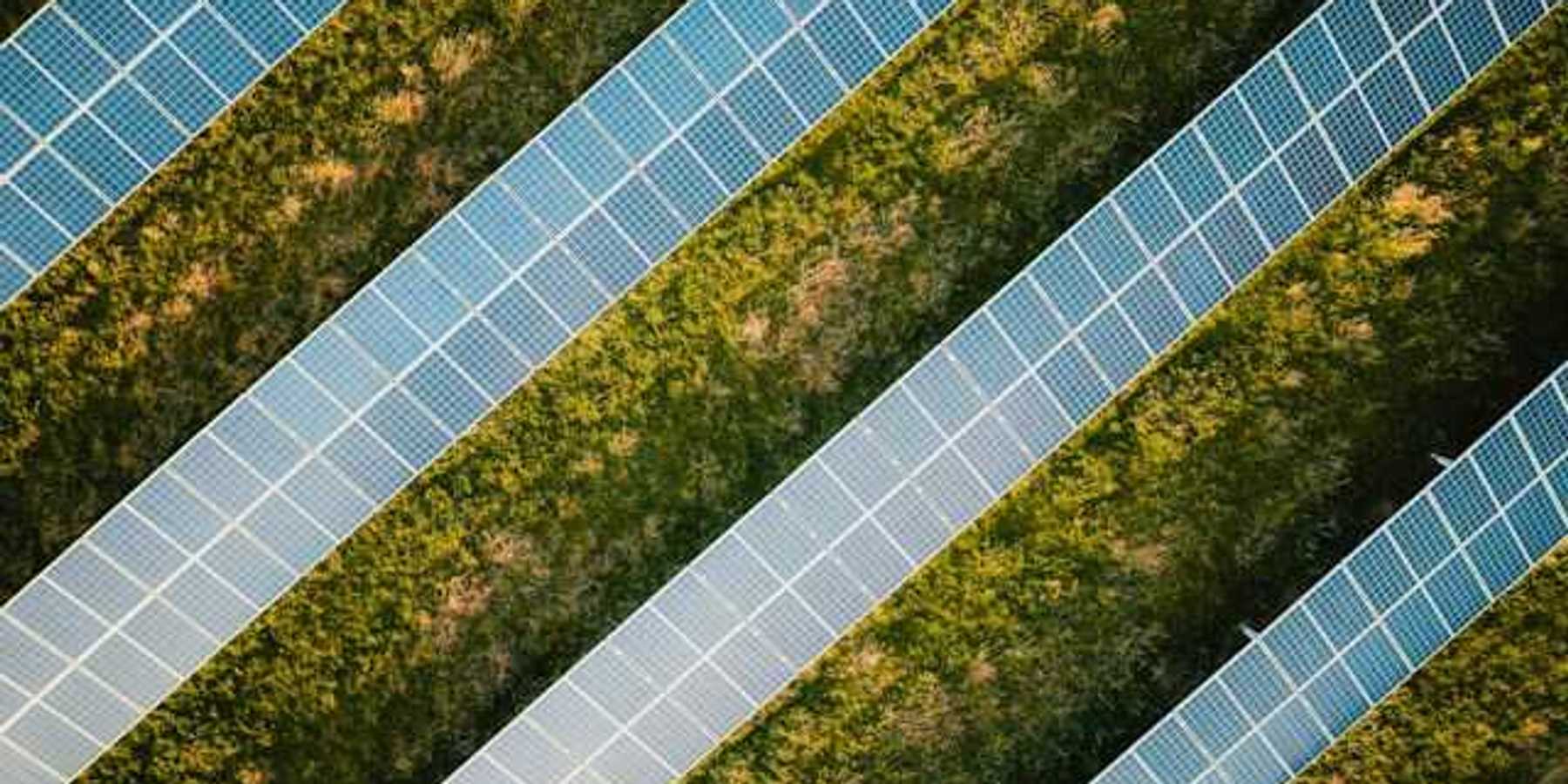
Putting a price on carbon might incubate new industries or spur job growth – for example expanding solar production and installation – even as it shuts down other businesses like coal mining. But the benefits and the damage are rarely evenly distributed: the coal miners losing jobs in West Virginia do not necessarily land jobs manufacturing or installing solar panels.
The time lag between investment and seeing results can be decades, and there will be inevitable policy failures as society experiments to address a challenge unparalleled in human history. With hard choices to be made, some people and their livelihoods will suffer.
How has cost been calculated?
With rising anxiety about these issues, the economists' voices have grown increasingly powerful. Their role is to provide guidance on how much society should spend in order to avoid damage caused by putting carbon dioxide into the atmosphere. These calculations often use Integrated Assessment Models (IAM), which purport to reconstruct the real world in mathematical formulas and computer runs.
To calculate the damage caused by greenhouse gas emissions, IAMs incorporate data from other disciplines, including engineering, technology, behavior and climate science, ending with a comparison of the costs and benefits of emission cuts in monetary terms. What policy makers may not fully appreciate is how frail, and sometimes misleading, the assumptions behind the modeling are.
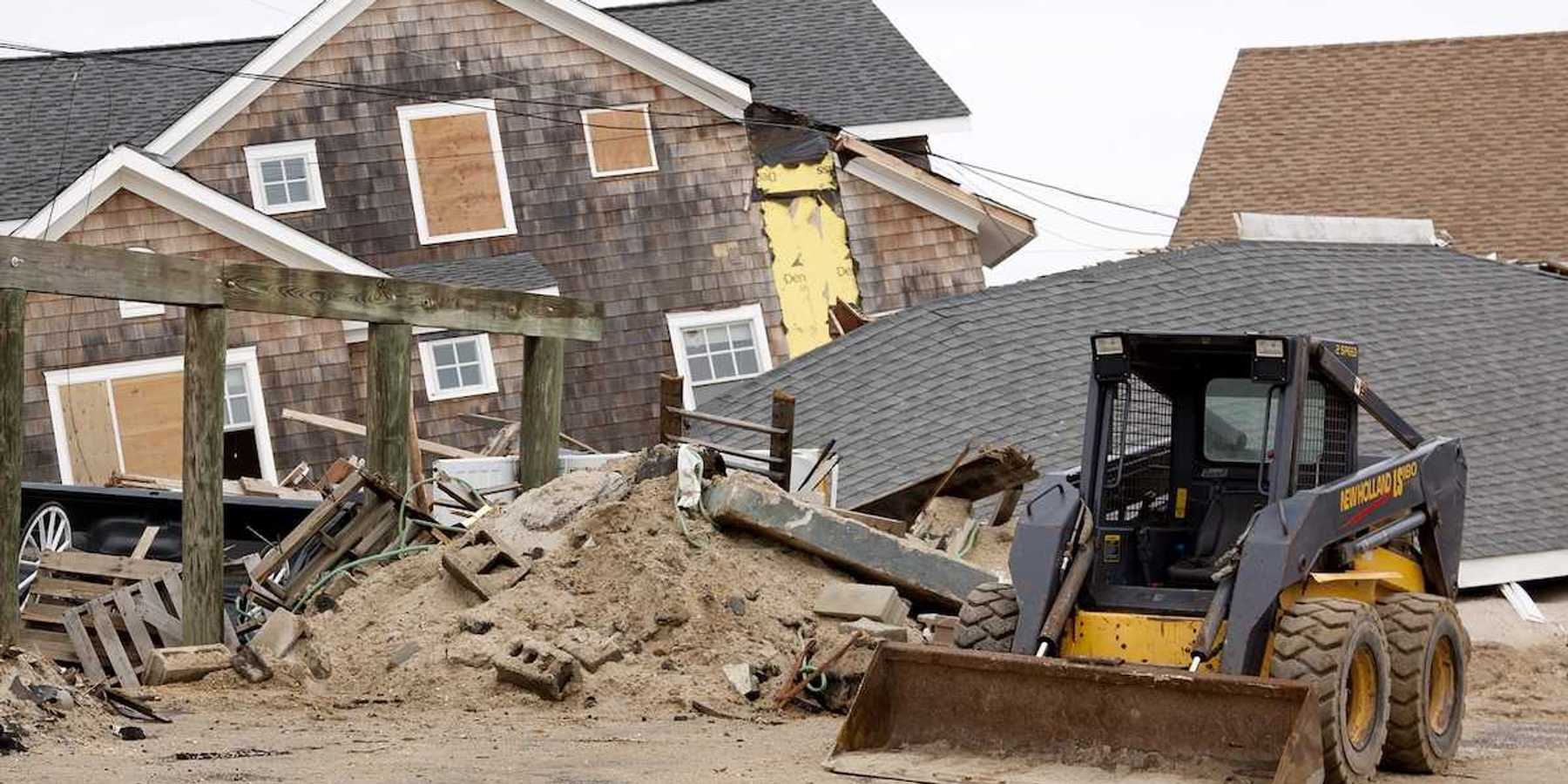
The first is how they assess damage. Climate science tells us that warming puts an incalculable number of pressures on our closed-system Earth. Some are known, some are just being understood and likely, there are some big surprises down the road. A model should account, at the very least, for the obvious things like: damages to agriculture that impact food production, availability of fresh water, damage to coastal areas from sea level rise, loss of sea life caused by acidifying oceans and the spread of tropical diseases as temperatures rise.
A model fully attuned to the reality of climate change would go well beyond these to consider other important, less explored impacts, such as how melting will impact geology as weight shifts on landmasses that have been historically frozen beneath snow and ice, to cite just one example. The IAM would account for a dynamic unfolding process – including the possibility of abrupt, catastrophic changes – something science is still trying to figure out.
But IAMs don't, for the most part, because to do so would be close to impossible. Modelers must select which science to use and what is left out and, they must come to conclusions about the future. This puts them at odds with the earth scientists on whose work they rely because, while the IAMs represent themselves as reconstructing reality to make climate predictions, the best science cautions that "… anthropogenic emissions rates have no analogue in Earth's recent history [so that] unforeseeable future responses of the climate system are possible…."
The key point is that models, especially those that evaluate the impact of policies, are tools. They can never reconstruct reality. Because of that, they should convey uncertainty, not the opposite. But numbers can be deceptive and IAMs routinely churn out very precise-appearing numbers – with important policy implications – like the highly influential 2008 study that calculated that the "real" costs imposed by warming warranted a carbon tax of $42 per ton of carbon in 2015, with that tax rising to $217 per ton by 2105. Relying on these calculations, the U.S. Government gave its blessing to spending $42 in 2020 and $69 in 2050 to eliminate a metric ton of CO2.
IAMs recommend how much is prudent to spend, both now and into the future, but it would be wise to heed economics Nobel Prize winner Daniel Kahneman's admonition that economists "are quite good at explaining what has happened after it has happened, but rarely before."
Other entry points to this massive challenge?
The second vulnerability in relying on modeling is the assumption that the most important objective of climate policy should be that it imposes the least cost on society. Ask yourself if someone stricken with a potentially fatal cancer would start evaluation of treatment options by asking which costs the least.
A different starting point is to ask what are the risks humanity faces in a rapidly warming world. This shifts the inquiry to values and ethics: how much risk each of us is willing to tolerate today and for our children and their children? The tools used to manage those risks and the costs of achieving those goals are not unimportant, but the inquiry begins with a fundamental focus on human survival. From there, it makes sense to weigh regulatory measures for economic efficiency: if there is more than one way to abate greenhouse gases, it would be wise to use the least costly, most efficacious method.
There is a minority view in economics that endorses a risk-focused approach. Martin Weitzman from Harvard University is critical of what he calls a "debate centered on technicalities." For Weitzman, the folks who construct climate models have not paid sufficient attention to the most challenging part of the changing world they seek to understand. This is the "fat tail" – the possibility of extreme climate change that falls on the farthest edge of a probability distribution of temperature rise. He is critical of the tools used to make conventional economics recommendations, calling it "peculiar and disturbing" that standard cost-benefit analysis is immune to the possibility of extreme outcomes.
There is no doubt about extreme risk. Numerous reliable sources document the very high chance that current patterns of energy consumption are leading to warming of global surface temperature beyond 10° Fahrenheit during this century. James Hansen (and many others scientists) characterize the economic cost of a business-as-usual approach as "incalculable," asking how global governance and stability will be sustained when there will be "hundreds of millions of climate refugees from places such as Pakistan and China." In an article published in March in Nature Geoscience, researchers concluded that the anthropogenic carbon release rate is "unprecedented during the past 66 million years. "
MIT scientists brought this home graphically, using gambling wheels (much like TV's Wheel of Fortune) and data from the then-latest report of the UNFCCC Intergovernmental Panel on Climate Change. Their 2007 results closely reinforce Weitzman's, showing that current emissions rates would prove catastrophic.
Good economist that he is, Weitzman keeps his reference points within the economics profession. But his message reinforces messages from retired military, the insurance industry and scientists like Hansen who say that delaying action on a risk of this magnitude has significant costs –impactful opportunities are frittered away. Prioritizing risk, as Weitzman does, essentially turns environmental economics on its head.
Putting a price on carbon?
If risk and values are the reason to get serious about controlling greenhouse gas emissions, how do we decide which tools to use to get to that result? Can a carbon tax deliver? And if so, is it an exclusive tool, and how will the tax be set? This introduces a cascading series of questions.
The first is: what will it take to get a tax enacted? Some of the proponents of a carbon tax see this as a grand bargain in which carbon taxes would substitute for other regulatory measures that they don't like as well. Seltzer, a fair representative of the right, hints that the exchange includes getting rid of other non-carbon related taxes and of even "far blunter regulation," presumably government regulations like the Clean Power Rule controlling carbon from power plants or fuel efficiency standards.
This kind of a deal would be equivalent to saying that for this most complex of human challenges we will self-limit our arsenal of weapons. The Canadian province of British Columbia, which has a carbon tax, took the opposite tack, being quite clear that the tax is but one tool in an expansive tool box. Although a carbon tax offers the allure of one-stop shopping, putting every egg into that shaky basket of uncertainty – a never-before-tried solution - would seem imprudent.
Assuming that a tax is the right strategy (whether free standing or as part of a multifaceted approach) and can get through the political process, what is the right amount? This brings us back to significant defects in the tools being offered to the job: IAMs and technical fine-tuning. It brings us back to a more fundamental question, whether setting a price on carbon is about cost – or about risk. When risk is the starting point, social values and a prudent approach to protecting human life should guide everything else; a tax must be high enough to significantly change current energy consumption behavior.
Even if you accept that the actual number is a technical decision (and can accept the imperfections of models to guide policy makers to a decision), to tax or not is a strategic and highly political decision. Is there a Congress brave enough to enact a carbon tax that actually changes behavior? Will successive Congresses keep it in place in a fickle political environment? Does political will exist to ramp prices up at an ever-increasing level – to make fossil fuel use sufficiently costly that consumers will abandon them in favor of renewables and energy efficiency? Will policy makers finally take the long view or will they be constrained by shorter term objectives, like getting reelected? Fortunately reporters are starting to focus sharply on these critical questions.
Ultimately, none of these core questions can be answered through mathematics or modeling. Better to take the wise advice of Bruce Springsteen's E Street Band guitarist Steven Van Zandt: "You have to hurt people economically to have them do the right thing morally."