Pilot project for wireless EV charging launched on Indiana highway

Indiana has launched a pioneering pilot project on U.S. Highway 52, testing wireless electric vehicle charging technology aimed at reducing range anxiety and supporting long-haul truck electrification.

Kristoffer Tigue reports for Inside Climate News.


In short:

  • Indiana is testing a new wireless charging technology on U.S. Highway 52, designed to power electric vehicles as they drive.
  • The project involves a partnership with Purdue University and Cummins Inc., aiming to make EVs more accessible and cost-effective.
  • Although the technology is still in the pilot phase, it has the potential to reduce range anxiety and lower battery costs.

Key quote:

"Wouldn't it really be something if we could just drive over the road and catch your charge for your vehicle as you drive across it?"

— Blake Dollier, public relations director, INDOT

Why this matters:

The significance of EV-charging roads lies in their potential to address two critical challenges in the transition to a low-carbon transportation system. They offer a solution to range anxiety, a common concern among consumers considering the switch to electric vehicles. By enabling continuous charging while on the road, these technologies alleviate fears of running out of power during long journeys, thus encouraging greater adoption of electric vehicles.


An oil tower with flames during a gas flare against a blue sky

Equipment issue led to excessive LNG Canada flaring, docs reveal

LNG Canada delayed reporting ‘integrity issue’ to regulators and never fully informed the public, while locals raised concerns about noise, smoke and emissions.

an underwater view of a coral reef with fish

Great Barrier Reef and climate change: See the largest effort to save Australia’s gem

Australia’s Reef Restoration and Adaptation Program is racing to keep the Great Barrier Reef alive by collecting coral spawn at sea and breeding millions of baby corals in high-tech tanks for reseeding.

A teal calculator rests on a white surface.

New calculator shows exactly how much environmental damage is behind your internet searches

The internet is responsible for 3.7 per cent of global carbon emissions, outpacing air travel. If the internet were a country, it would be the fourth-largest polluter in the world.

A man wearing a hard hat standing in front of solar panels

The consequences of Trump's war on climate in 7 charts

Seven snapshots reveal how climate rollbacks altered the trajectory of U.S. energy, environmental protection, and economic security.
Two people wearing protective gear looking at a laptop in front of a mining waste pond

In hunt for rare earths, companies are scouring mining waste

Tailings and acid mine drainage from mines contain critical minerals needed for clean energy technologies; now, researchers are developing new techniques for retrieving these key metals.

A hospital worker in a cafeteria kitchen

Morrison Healthcare recognized as one of modern healthcare’s Best in Business Winners for sustainability

Morrison Healthcare has been named a Modern Healthcare Best in Business winner for sustainability, recognizing its plant-forward culinary strategy and efforts to cut carbon emissions across hospital food systems.

brown concrete building under blue sky during daytime

Climate change and health

Climate change, combined with other natural and human-made stressors, is intensifying existing health threats and creating new ones, with impacts varying by age, income, and location.

From our Newsroom
Multiple Houston-area oil and gas facilities that have violated pollution laws are seeking permit renewals

Multiple Houston-area oil and gas facilities that have violated pollution laws are seeking permit renewals

One facility has emitted cancer-causing chemicals into waterways at levels up to 520% higher than legal limits.

Regulators are underestimating health impacts from air pollution: Study

Regulators are underestimating health impacts from air pollution: Study

"The reality is, we are not exposed to one chemical at a time.”

Pennsylvania governor Josh Shapiro speaks with the state flag and American flag behind him.

Two years into his term, has Gov. Shapiro kept his promises to regulate Pennsylvania’s fracking industry?

A new report assesses the administration’s progress and makes new recommendations

silhouette of people holding hands by a lake at sunset

An open letter from EPA staff to the American public

“We cannot stand by and allow this to happen. We need to hold this administration accountable.”

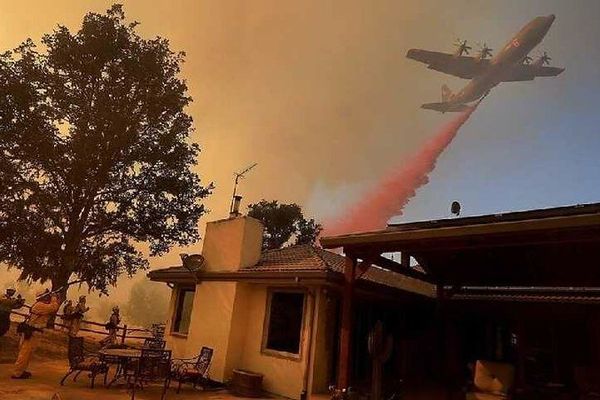
wildfire retardants being sprayed by plane

New evidence links heavy metal pollution with wildfire retardants

“The chemical black box” that blankets wildfire-impacted areas is increasingly under scrutiny.

Stay informed: sign up for The Daily Climate newsletter
Top news on climate impacts, solutions, politics, drivers. Delivered to your inbox week days.