PITTSBURGH — Hospitals save lives — but they’re also complex ecosystems that generate toxic waste, rely on fossil fuels and instigate health problems due to harmful emissions.
Change comes hard to healthcare institutions, but a growing movement of doctors, nurses, medical school students and hospital system executives are working to clean up the industry.
https://ehsciences.activehosted.com/app/forms/integrate/103
Around 650 health care professionals from around the world gathered in Pittsburgh last week to strategize about ways to reduce waste and air pollution, disinvest from fossil fuels, better integrate communities, drive down the industry’s climate-warming emissions and hear success stories from people on the front lines of this work.
“[This] is not just a conference — we’re intentionally building a movement,” said Gary Cohen, president and co-founder of Health Care Without Harm, the organization that hosts the CleanMed conference, during his opening remarks. “This is the work of our lifetime. Are we ready to get going?”
Healthcare’s environmental toll
Ironically, the healthcare industry takes a significant toll on the environment in ways that negatively impact human health. The sector accounts for an estimated 4.4% of total global greenhouse gas emissions and up to 9.8% of U.S. greenhouse gas emissions.
Related: Visiting health care professionals take “environmental justice tour” of Pittsburgh
Health damages from the U.S. healthcare sector’s pollution – including greenhouse gasses, carcinogenic emissions and other toxic air pollutants – from 2003-2013 are estimated to have cost Americans more than 400,000 years of full health, defined as years lived free of disease or disability. It’s estimated that nearly eight million, or one in five deaths globally, are caused by air pollution — more than the number of deaths caused by AIDS, malaria and tuberculosis combined.
Institutional investments are also problematic: The U.S. has more than 1,200 private hospital systems, which invest an estimated $10 billion in fossil fuels.Cleaning up the healthcare sector
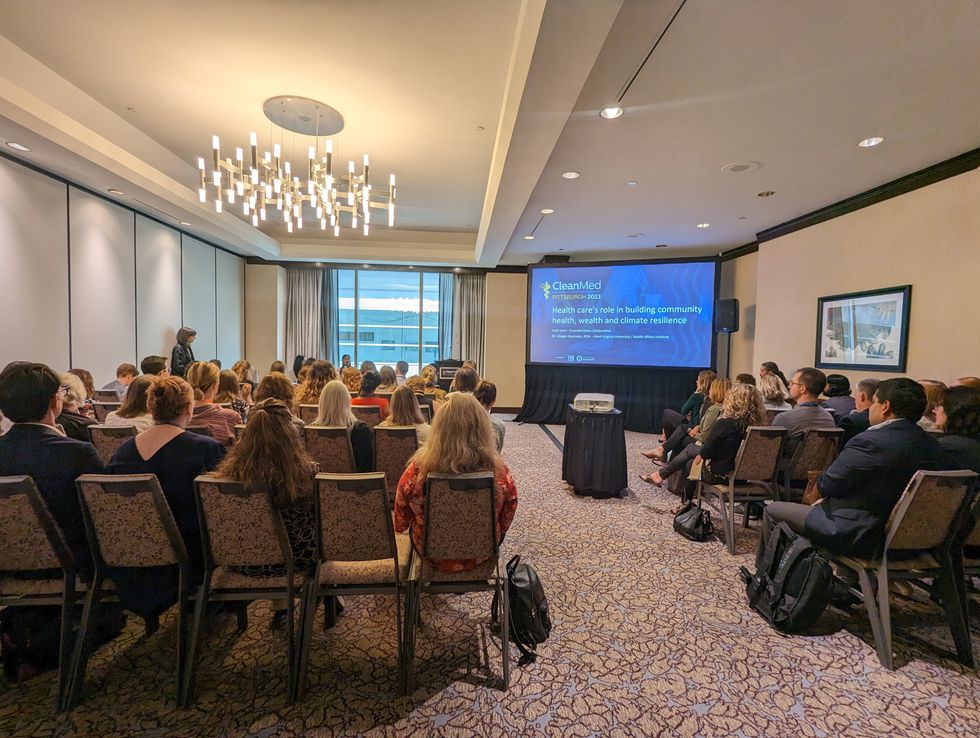
People who have successfully initiated new sustainability programs or policies at their organizations shared tools and tips.
Credit: Kristina Marusic for Environmental Health News
The doctors and nurses attending CleanMed were joined by operations managers, sustainability directors, budget analysts, medical device providers and health-care-strategy consultants, along with people in numerous other roles.
People who have successfully initiated new sustainability programs or policies at their organizations shared tools and tips.
Elizabeth McLellan was one of those people. In the early 2000s, while working as a nurse administrator at Maine Medical Center, she was troubled by the huge volume of unused supplies like gloves, gowns, gauze, bandages and masks going into the trash because they’d been left in a patient’s room or opened in an operating room.
McLellan had lived and worked abroad and knew there was a dire need for these supplies in other parts of the world, so she started collecting them. There was nowhere on site at her hospital to store the supplies she saved, so she took them home.
By 2009 the bottom floor of her house was filled with about 11,000 pounds of rescued medical supplies, which she eventually figured out how to warehouse, ship and donate to hospitals in need around the world. After running the project entirely by herself for years, McLellan scaled the operation into a regional nonprofit, Partners for World Health, with 10 staff members and 800 volunteers, that has saved more than 180,000 pounds of medical supplies from landfills and shipped them to countries in need including Ukraine, Syria, Turkey, Zambia, Haiti, Ethiopia, South Sudan and Kenya.
“It’s easier to ask for forgiveness than for permission,” she said in a session about hospitals making progress toward becoming zero-waste. “That has worked my whole career, and it worked for this project, too.”
In one of two talks about reducing single-use plastics, Dr. Sara Angelilli, director of perioperative education at the Allegheny Health Network, talked about implementing reusable respirators. Dr. Preetri Preeti Mehrotra, a senior medical director at Beth Israel Deaconess Medical Center, shared tips on finding the people who “can help pull the levers,” and discussed both infection control and financial benefits in switching to reusable products. And Daniel Vukelich, president of the Association of Medical Device Reprocessors, cautioned about the false promise of “chemical recycling” of single-use plastics, which is associated with a host of climate and environmental health concerns. Health Care Without Harm is also calling for the global plastics treaty currently in its second round of talks this week in Paris, to not allow medical exemptions.
Other health care professionals shared advice about incorporating environmental justice and community health advocacy into clinical care by setting and meeting renewable energy goals, managing hazardous pharmaceutical waste, getting clinicians involved in climate action and increasing patient access to healthy and sustainable foods inside hospitals and at home. Health Care Without Harm partners with hospitals around the world to help them meet these types of goals through its Practice GreenHealth program.
“In the last year or two, hospitals are increasingly looking beyond their four walls when talking about community resilience and environmental health,” Paul Bogart, executive director of Health Care Without Harm, told EHN. “They’re starting to think about economic drivers of community health and social determinants of health — things like housing, transportation, employment and exposure to polluting facilities.”
“That type of work, for many health care institutions, is just beginning,” Bogart added. “Those relationships with community leaders are just beginning.”
Why Pittsburgh?
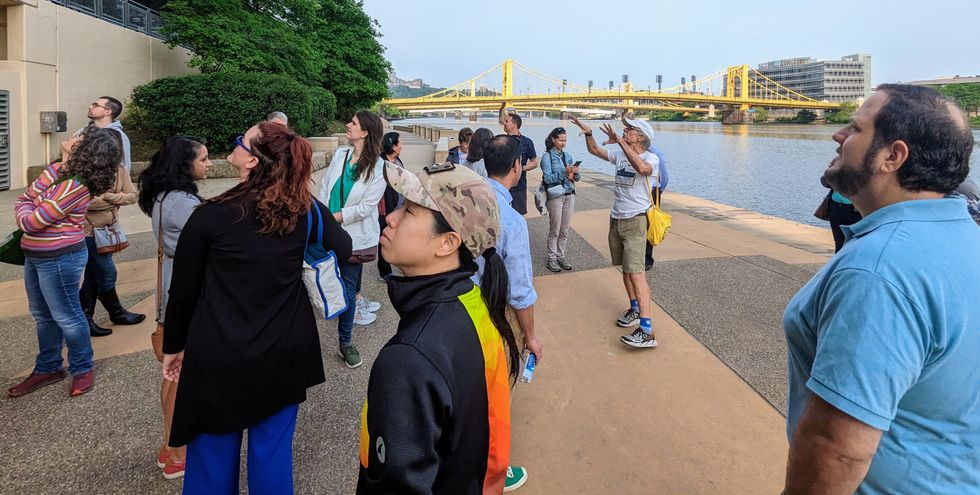 Walking along the Allegheny River with scenic views of the city’s iconic yellow bridges, the group learned about how pollution from the steel industry was once so bad that Pittsburgh was nicknamed “hell with the lid off."Credit: Kristina Marusic for Environmental Health News
 Attendees representing at least 15 countries, including Argentina, Australia, Belgium, Brazil, Japan, Nepal, South Korea and Taiwan attended the CleanMed conference.
Previous conferences have been held in cities across the U.S. and across the world, and conference organizers connect what’s happening locally with the broader movement.
Related: A guide to environmental health in southwestern Pennsylvania
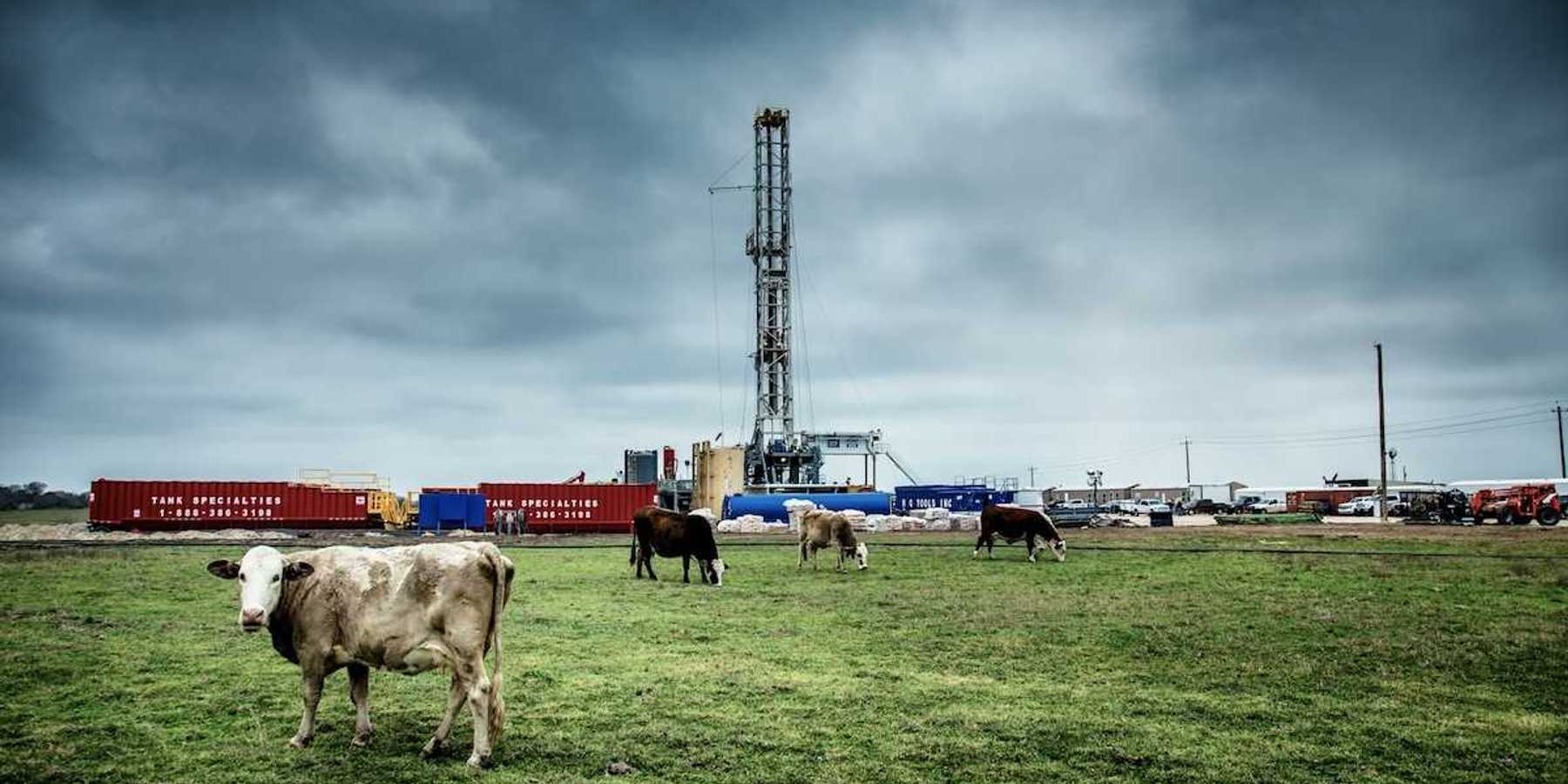
In Pittsburgh, that meant acknowledging the city’s industrial history, discussing ongoing problems with air pollution and childhood lead exposure and addressing the significant role that extractive industries, particularly fracking and petrochemical development, play in shaping the region’s health. It also meant asking questions about the health care industry’s obligations to communities impacted by these problems.
“The fossil fuel and petrochemical industries require externalizing harm,” said Cohen during a plenary on building partnerships between health care institutions and community advocacy. “We need to understand who is harmed by an economy that’s based on fossil fuels and toxic chemicals … What does it mean for the health care industry to truly partner with these communities to help build community health, wealth and resilience?”