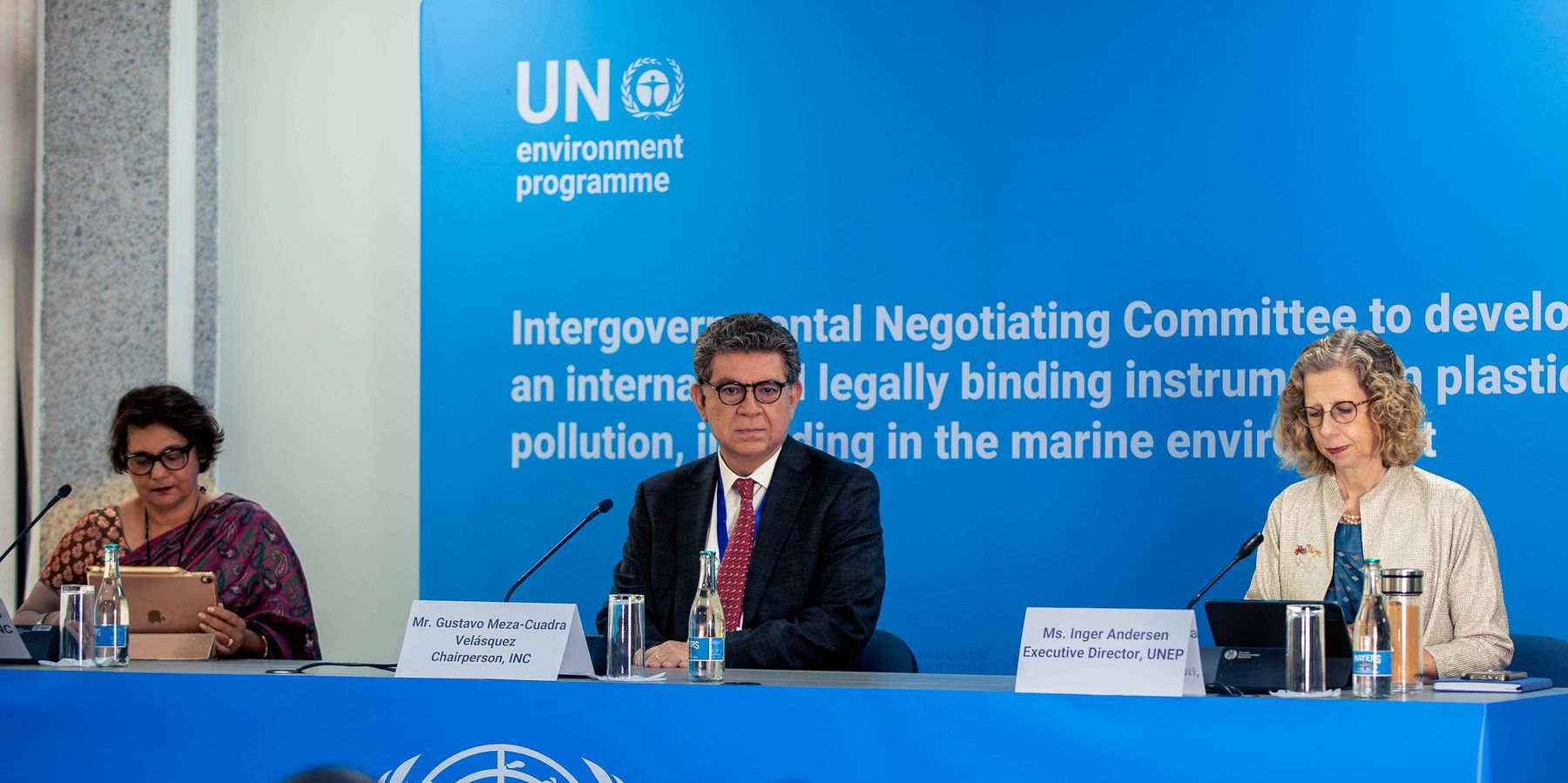
Everything you need to know for the fourth round of global plastic pollution treaty talks
Countries will meet this month in Ottawa to move forward on the historic treaty — but obstacles remain.
In the first three sessions of treaty talks, negotiators from about 175 countries — along with industry representatives, environmentalists and others — met to advance a treaty to address global plastic pollution.
What’s at stake in the plastic treaty talks?
The plastic crisis is threatening both the planet and human and wildlife health.
- Global plastic waste is set to almost triple by 2060.
- The world generates roughly 400 million tons of plastic waste each year.
- Less than 10% of plastic ever made has been recycled.
The treaty is the first international attempt to address this.
What’s the state of the plastic treaty?
Consensus was elusive at the last round of talks in Kenya.
There is a High Ambition Coalition of countries that wants an end to plastic pollution by 2040. There is also a Global Coalition for Plastics Sustainability — largely nations economically reliant on fossil fuels such as Saudi Arabia, Russia, Iran, Cuba, China and Bahrain — that has positioned itself as the counterbalance to the High Ambition Coalition and is pushing for a larger focus on addressing plastic waste (via chemical and mechanical recycling and other means) rather than plastic bans or production limits. The U.S. is not part of either.
Some sticking points include:
- Regulating the chemicals in plastic production
- Plastic production caps
- The role of chemical recycling and bioplastics
Where can I learn more about the plastic treaty?
You can see all of the details of the upcoming treaty meeting at the UN Environment Programme website.
Want to learn more broadly about the treaty and how plastic pollution impacts our health? Our newsroom has been hard at work on exploring these issues. Below we have articles to help you understand the treaty process and progress, plastic impacts to our health and chemical recycling and bioplastics.
And follow our newsroom on X, Instagram or Facebook to stay up-to-date on this historic treaty.Plastic treaty coverage
“Plastic will overwhelm us:” Scientists say health should be the core of global plastic treaty
Opinion: Pete Myers discusses the "Health Scientists' Global Plastic Treaty"
Plastics treaty draft underway, but will the most impacted countries be included?
Opinion: UN plastics treaty should prioritize health and climate change
Op-Ed: How the United Nations could avoid silencing voices during Plastic Treaty negotiations
Scientists: US needs to support a strong global agreement to curb plastic pollution
Plastic and our health
Plastic chemicals are more numerable and less regulated than previously thought
Recycling plastics “extremely problematic” due to toxic chemical additives
Every stage of plastic production and use is harming human health
Massive new database on how plastic chemicals harm our health
Chemical recycling and bioplastics
Bioplastics: sustainable solution or distraction from the plastic waste crisis?
Chemical recycling grows — along with concerns about its environmental impacts
This will be a big year in shaping the future of chemical recycling
Chemical recycling “a dangerous deception” for solving plastic pollution: Report
Q&A: Director of sustainability at Eastman Chemical Company talks chemical recycling
Latest chemical recycling plant closing spurs concern over the industry’s viability