Let's take a deep breath and look at some positive news

Let's take a deep breath and look at some positive news

Weekend Reader, Sunday March 25

We often hear from readers about the lack of positive news on our pages. Yup. We cover the environment and climate change, and for the most part, the news isn't good. But exceptions to the rule abound.


Here's a parade of upbeat stories from just the past week.

From Science Magazine: Buried in the 2,000+ page omnibus spending bill passed by Congress are some of the biggest increases in funding for scientific research in the past decade. NOAA, USGS, the National Science Foundation, and DOE's Science Office will all see larger budgets.

Another rider buried in the budget bill would prohibit federal funds from being used to build the border wall through the Santa Ana National Wildlife Refuge in Texas. (NBC News)

And the immense $1.3 trillion spending bill initially included 80 anti-environment riders. But cuts to EPA's budget and DOE's Renewables Office were removed from the bill. (Inside Climate News)

Big Oil's lead attorney in a climate lawsuit brought by the cities of San Francisco and Oakland acknowledged in court that human-caused climate change is real. The trial continues. (Associated Press)

And in Oregon, another suit brought on behalf of 21 young people against the U.S. Government for climate inaction has cleared a major hurdle. A federal judge denied a government move to dismiss the suit as too broad.

The New York Times has an optimistic report on China's pollution cleanup efforts

Fortune reports that McDonald's is launching an ambitious plan to cut its greenhouse gas emissions by one-third.

There's a great story about using predators instead of pesticides to protect crops: Cherry orchards in Michigan use kestrels (a small falcon species) to drive off smaller birds who feed on cherries.

Miami TV meteorologist John Morales wrote an eloquent rant in refusing an invitation to moderate a climate "debate" featuring the Heartland Institute. (AGU)

Factcheck.org dissects a recent op-ed by Rep. Lamar Smith, the climate-denying Chair of the House Science Committee. It isn't pretty. Let's hear it for factcheckers.

Octoparole? The Canadian Press reports on the Vancouver Aquarium's release of a giant Pacific octopus into the wild. The female octopus was showing signs of mating behavior, but had no prospects in the Aquarium's tank. Now, it's cruising the Pacific.

As for more good news, please feel free to send us anything you see. Or, like the kids in Washington DC and elsewhere this weekend, feel free to make your own.

Top Weekend News

The New York Times reports on near-record low Arctic ice cover this winter.

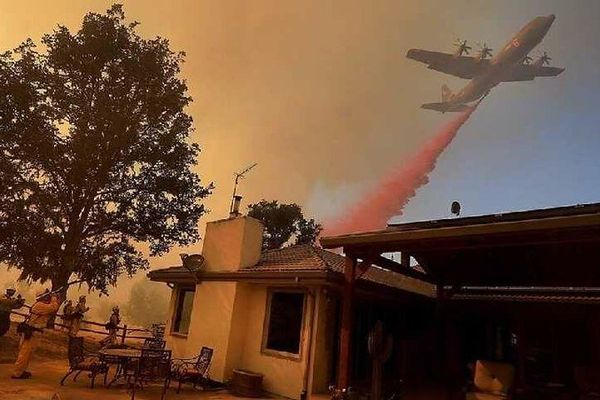
Drought and rising temperatures could drastically increase wildfires in the western U.S. (Outside Online)

Former EPA Administrator Gina McCarthy appeared on Real Time with Bill Maher. It's worth six minutes to watch.

From CleanTechnica: New research finds that extreme temperature fluctuations can be linked to a higher rate of heart attacks.

While we were focused on guns, Canada focused on pipelines: Over 100 arrests, including two members of Parliament, took place at a protest of the construction of the Trans Mountain Pipeline.

Opinions and Editorials

The Jacksonville, FL Times-Union editorializes on the U.S. military's preparedness for climate impacts.

The Montana Standard spanks its home-state cabinet member, Interior Secretary Ryan Zinke.

On PRI's Living On Earth, Peter Dykstra and Steve Curwood talk about an oil company scrubbing the word "oil" from its name; using animals to take the place of farm chemicals; and a crucial court case about DDT.

This Week in Trump's Science/Environment Purge

House Oversight Chair Trey Gowdy, best known for his pursuit of Benghazi, is now seeking answers on Interior Secretary Ryan Zinke's $139,000 expenditure on new office doors. Dare I say "Door-Gate?"

As the Senate debated the massive $1.3 trillion spending bill, Idaho Senator Jim Risch briefly stalled the proceedings. A rider to the bill called for re-naming an Idaho Wilderness Preserve after the late Cecil Andrus, former Idaho Governor and Risch's political archrival.

EPA may be preparing to side with automakers in lowering fuel efficiency standards. (Auto News)

At Vox, David Roberts warns of another attempt to bail out dirty power plants.
Climate change is accelerating health threats worldwide

Climate change is accelerating health threats worldwide

The Lancet Countdown - established in 2016 to annually assess the effects of climate change on health - released a ten year report and accompanying editorial.


In short:

  • For the first time, the report quantifies heat-related deaths attributable to climate change, estimated at about 370,000 a year. The past 11 years have been the hottest ever recorded.
  • The report examined 54 indicators of climate change-driven health impacts and found that many health threats had increased or accelerated over the past decade.
  • Populations least responsible for climate change are experiencing the highest impacts.


Key quote:

“Over the past 10 years, a strong evidence-based case has been made that responding to climate change could be the greatest health opportunity of the 21st century.”


Why this matters:

The report points out how fossil fuel interests are blocking progress on climate change. It tracks not only heat-related deaths, as mentioned above, but also other climate related effects on health caused by floods, landslides, droughts, viruses, and more. It also tracks improvements, for example, estimating that the transition to clean energy prevented 400,000 deaths in 2023 just through improved indoor air quality. Health professionals are trusted sources of information and can speak for policy change and action for a healthier future.


Related EHN coverage:


More resources: The Lancet Countdown on health and climate change


Source:

Romanello, Marina et al. (2026), The 2026 report of the Lancet Countdown on health and climate change: a decade of escalating health harms and a decisive moment for all. The Lancet.

Related editorial, Climate change and health: 10 years on, what next? The Lancet.

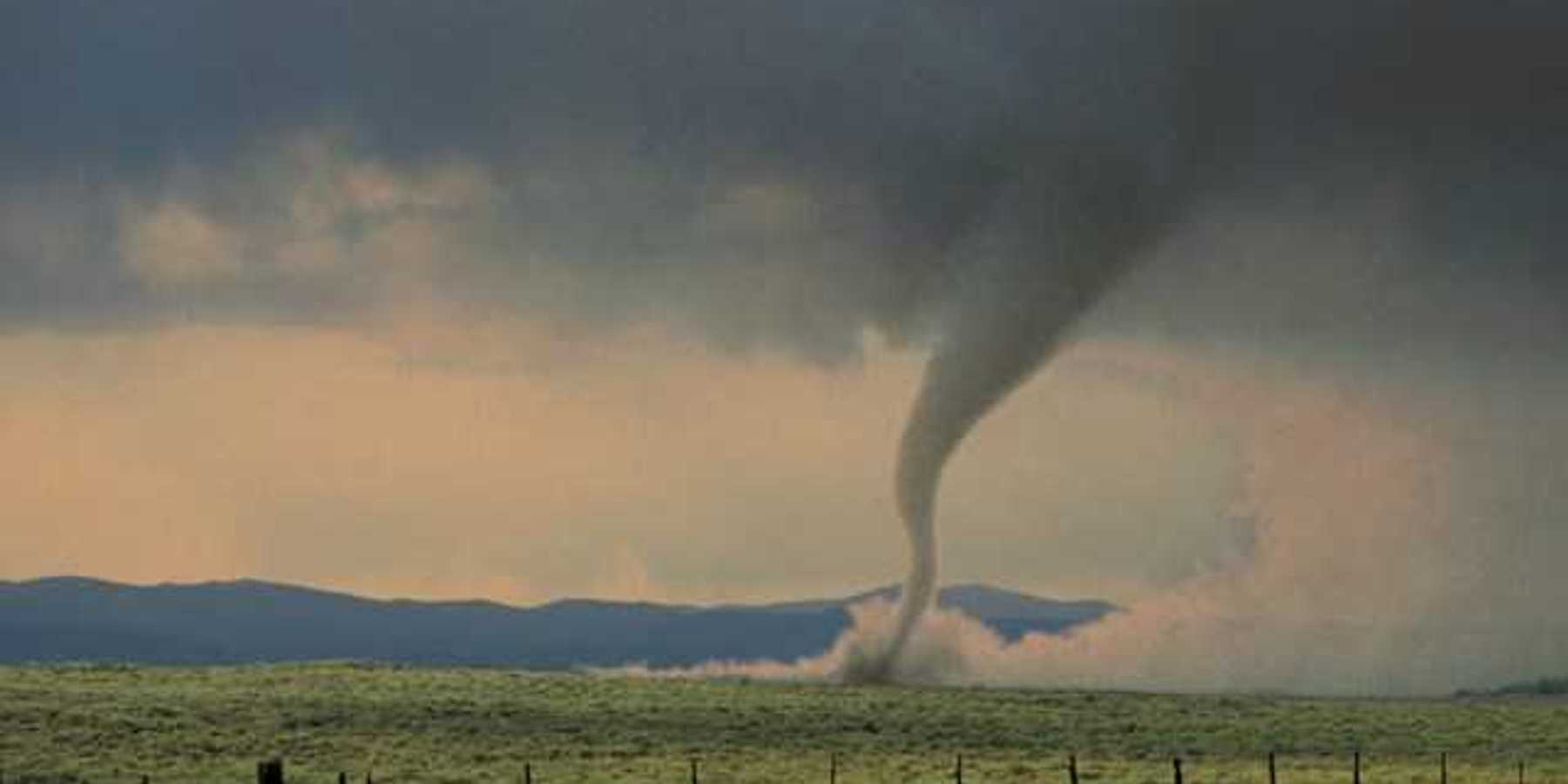
A tornado coming through a field with blue mountains in the background

Climate change and tornadoes: what the science says

Climate change and tornadoes have a complicated relationship, and these 10 points explain what researchers know about tornado trends, shifting risk and why the record is hard to read.

The silhouette of a person on a stand-up paddleboard next to a bunch of mangroves

A report says nature-based solutions could be answer to climate change issues

A recent report recommends nature-based solutions as part of New Mexico's response to climate change issues.
A small leopard in the middle of the jungle

The Tropical Forest Forever Facility  rainforest fund needs billions before it launches

The TFFF rainforest fund aims to make forest conservation more profitable than deforestation. But a lack of money may prevent it from getting off the ground.
Heavy flooding from monsoon rain and tide from river in Dohar Bangladesh
Credit: sohelparvezhaque/BigStock Photo ID: 141461279

El Niño will increase risk of death in childbirth for millions, say midwives

Effects of extreme weather expected in countries that already have high maternal and newborn death rates.

Data center giving the appearance of newly constructed and empty of personnel

Climate funders convened a data center forum. They triggered a reckoning

One of the country’s biggest climate funders tried to bring tech giants, green groups, energy associations and labor unions together on data centers. Now it’s become the target.

Illustration of sun beating down on an overheating Earth
Credit: revers/BigStock Photo ID: 398245823

Global warming remains unchecked, experts warn at UN’s COP31 climate summit

Current climate and energy policies will have devastating consequences for ecosystems and communities worldwide, new reports show.
From our Newsroom
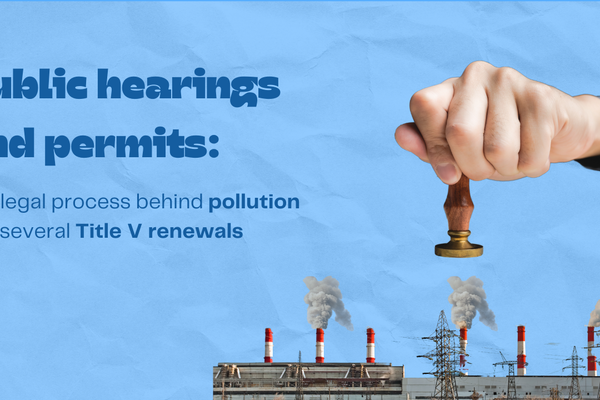
Multiple Houston-area oil and gas facilities that have violated pollution laws are seeking permit renewals

Multiple Houston-area oil and gas facilities that have violated pollution laws are seeking permit renewals

One facility has emitted cancer-causing chemicals into waterways at levels up to 520% higher than legal limits.

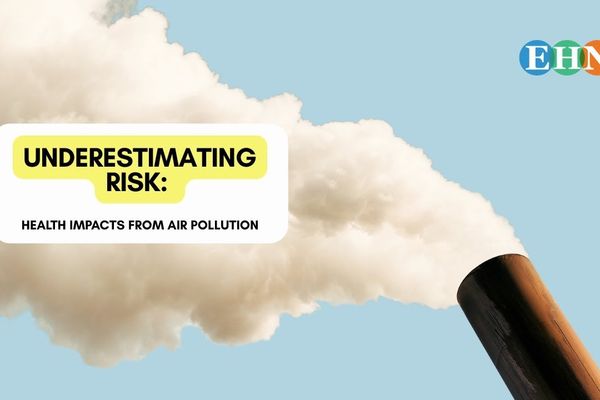
Regulators are underestimating health impacts from air pollution: Study

Regulators are underestimating health impacts from air pollution: Study

"The reality is, we are not exposed to one chemical at a time.”

Pennsylvania governor Josh Shapiro speaks with the state flag and American flag behind him.

Two years into his term, has Gov. Shapiro kept his promises to regulate Pennsylvania’s fracking industry?

A new report assesses the administration’s progress and makes new recommendations

silhouette of people holding hands by a lake at sunset

An open letter from EPA staff to the American public

“We cannot stand by and allow this to happen. We need to hold this administration accountable.”

wildfire retardants being sprayed by plane

New evidence links heavy metal pollution with wildfire retardants

“The chemical black box” that blankets wildfire-impacted areas is increasingly under scrutiny.

Stay informed: sign up for The Daily Climate newsletter
Top news on climate impacts, solutions, politics, drivers. Delivered to your inbox week days.